
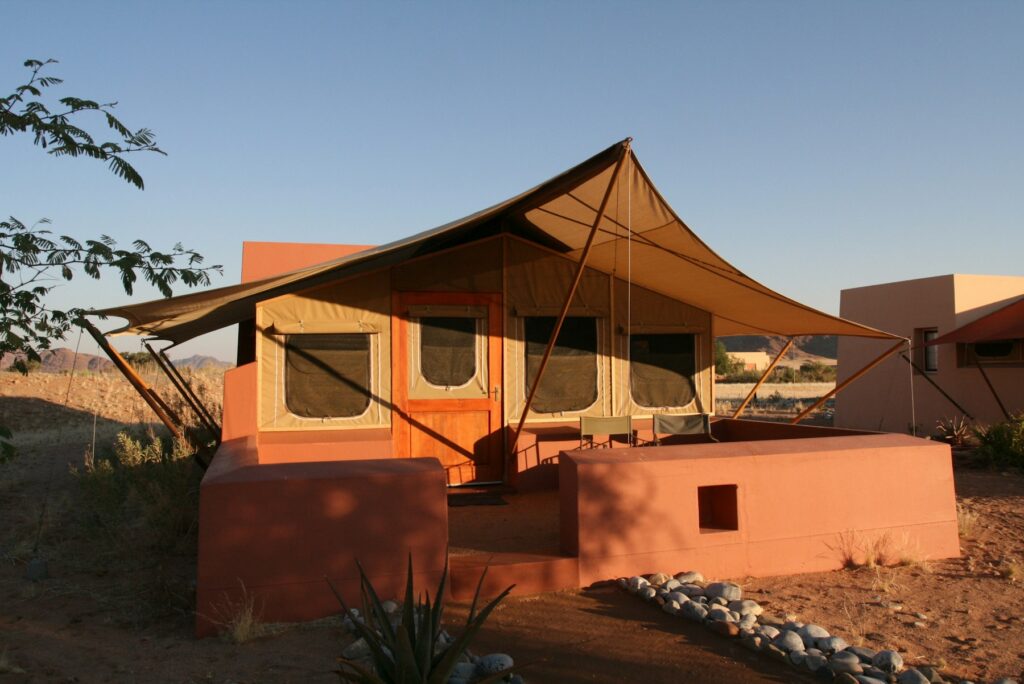
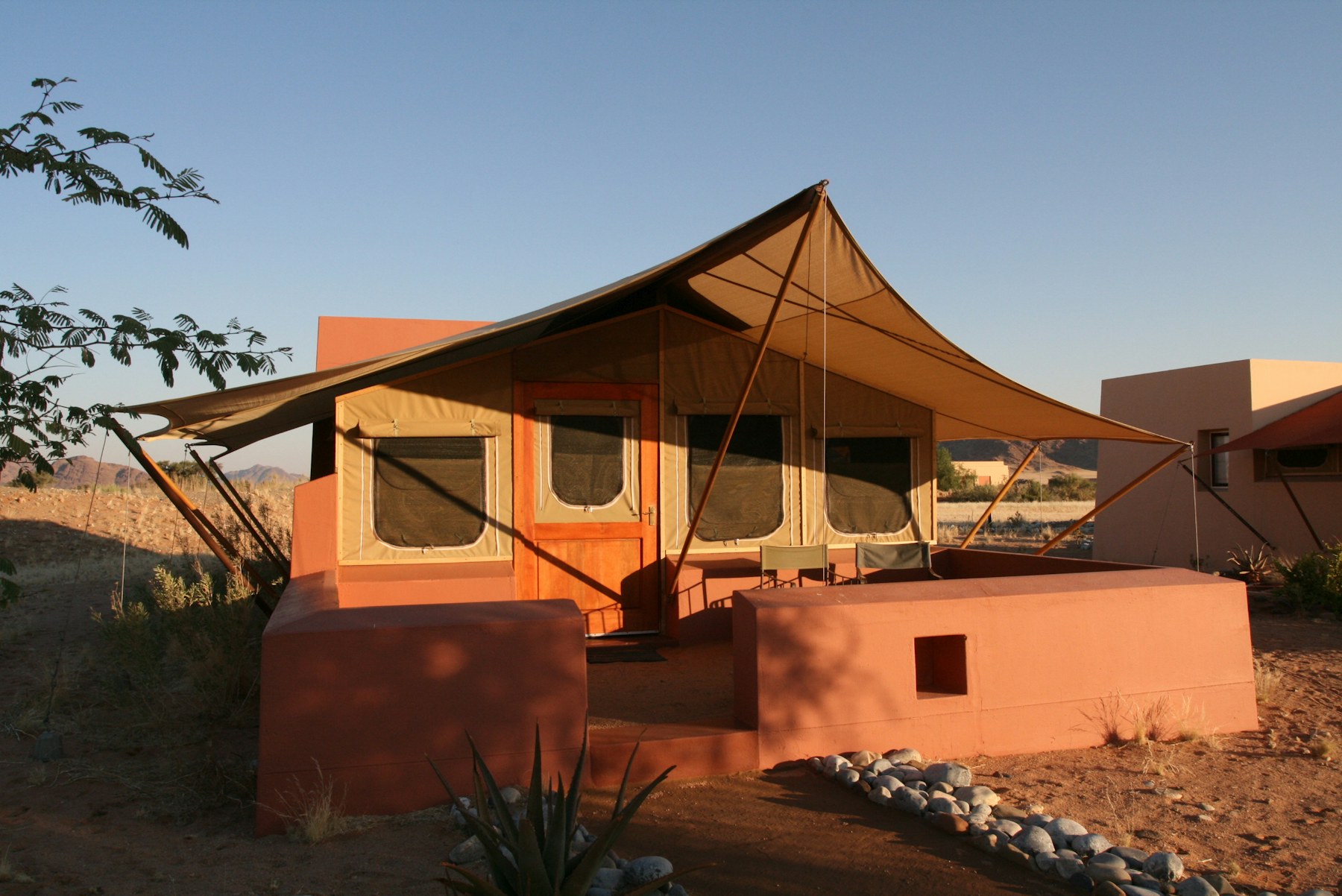
Namibia public campsites range from developed national-park facilities to simple community or municipal grounds. A first-time camper should expect variation: one site may have electricity, hot water and a shop, while the next offers little more than a marked pitch, shared ablutions and an extraordinary landscape.
The strength of Namibia public campsites is access to places where nights, dawns and wildlife are central to the journey. The trade-off is self-sufficiency. Confirm facilities for the exact campsite and date, carry enough water and arrive with time to understand the layout before dark.
In this guide
Namibia public campsites: a practical overview
Bookings for popular Namibia public campsites can fill early, especially in Etosha and the Sesriem area. Reserve critical nights first, keep the confirmation offline and distinguish between a campsite booking and a park entry permit. Rules, gate times and facility status can change, so verify them close to travel.
Read the facility list literally
If a listing does not mention electricity, a private bathroom, shade or a shop, do not assume it exists. Namibia public campsites sometimes share ablutions across several pitches, and maintenance or water heating can be interrupted. Pack so that a temporary inconvenience does not become a crisis.
Ask whether sockets use the plug type your equipment needs and whether power runs all night. A headlamp, power bank and modest lighting setup remain useful even at an electrified site.
Carry drinking water and a simple meal
Tap water quality and availability vary by place and season. For Namibia public campsites, carry sufficient drinking water from a reliable source and use local water according to staff guidance. Keep an emergency meal that does not depend on a shop or a working freezer.
Store food in sealed containers and never feed animals. In baboon or jackal areas, secure everything with a smell, including rubbish and toiletries. Wildlife that learns to raid camps becomes a danger to people and often pays the highest price.
Arrive before dark
Daylight makes it easier to find the pitch, inspect the ground, identify ablutions and understand wildlife warnings. Namibia public campsites can be confusing at night, and reversing near tents or fire pits is risky after a tiring drive.
Set up only within the allocated area and ask before changing sites. Note the nearest emergency point, water tap and route to the gate. If strong wind is forecast, orient the tent and vehicle before darkness removes the useful visual clues.
Reserve the scarce camping nights first
Compare campsites and alternative stays around Sesriem, Etosha and other high-demand regions before locking the full route.
Use fire and waste systems carefully
Light a fire only where permitted and in the provided place. Wind, dry vegetation and sparks make casual fires dangerous. Namibia public campsites may restrict wood collection, so buy approved firewood rather than removing branches from the surroundings.
Extinguish fires completely and follow the site’s rubbish system. When bins are absent or unsecured, carry waste to the next suitable facility. Do not burn plastic, foil or food tins.
Keep the campsite considerate
Sound travels through still desert air. At Namibia public campsites, low voices, dim lights and respect for quiet hours protect the experience everyone came for. Position bright lamps away from neighbouring tents and switch them off when not needed.
Use shared bathrooms efficiently, supervise children and leave taps and sinks clean. A friendly greeting helps, but do not walk through another pitch as a shortcut.
Final checks before you travel
- Save the booking confirmation and gate details offline.
- Carry drinking water, food and a backup light.
- Bring suitable plugs, charging options and tyre equipment.
- Secure food and rubbish from wildlife.
- Arrive, set up and cook before dark when possible.
Check current park and facility information through Namibia Wildlife Resorts and the campsite operator. Our accommodation hub helps compare camping with lodges. Prepared campers find that Namibia public campsites offer not fewer comforts, but a different kind of richness: space, quiet and direct contact with the landscape.