

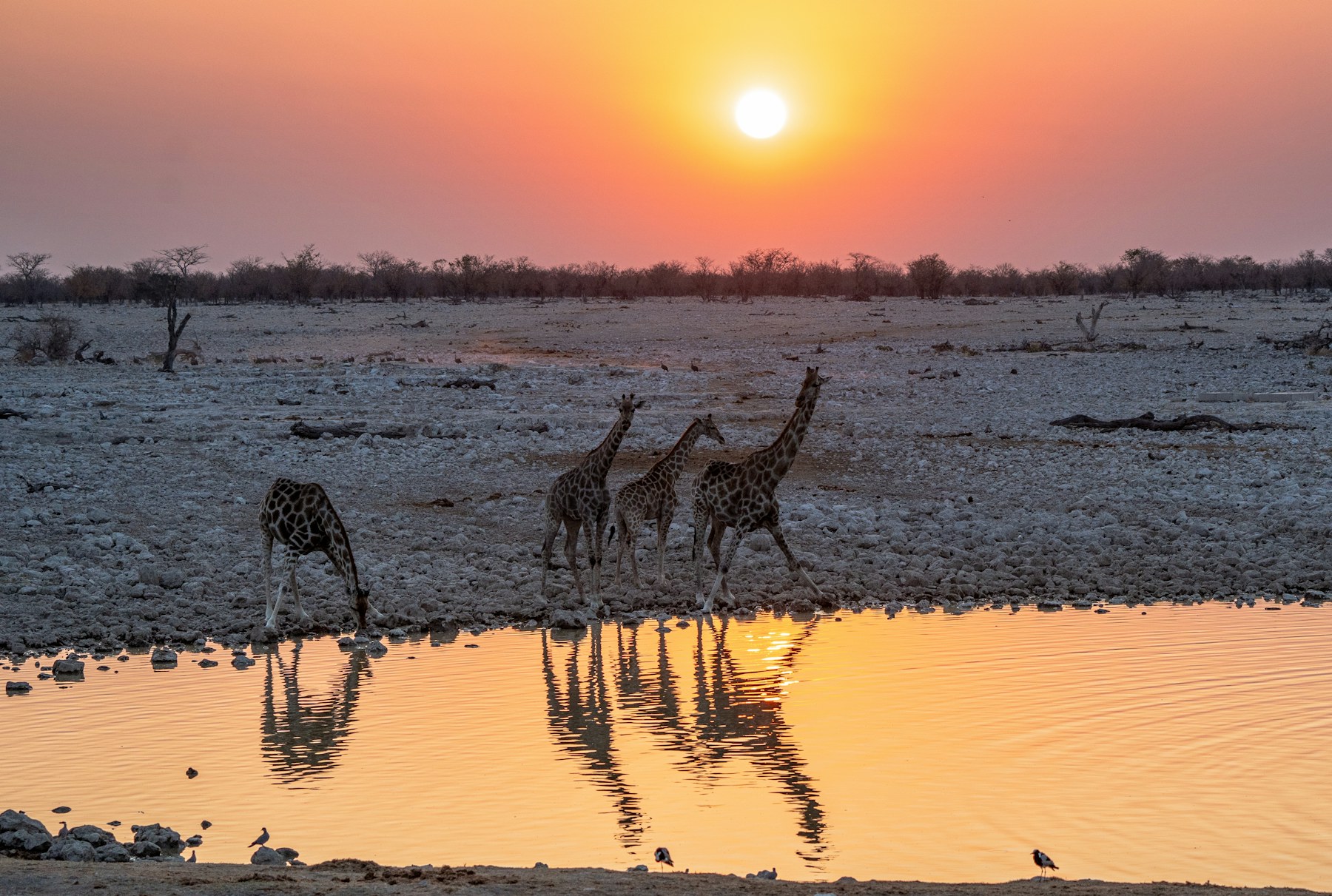
An Okaukuejo safari places travellers in Etosha’s busy western-central sector, with access to a network of waterholes and the camp’s floodlit waterhole after the driving day ends. The density of named stops makes it tempting to cover too much. In practice, fewer waterholes and longer observation often produce the richer day.
A practical Okaukuejo safari plan uses two or three nights, early starts within current gate rules, a midday camp break and loops that can be shortened when heat, road conditions or an extended sighting changes the schedule.
In this guide
Okaukuejo safari: a practical overview
Build an Okaukuejo safari around one northern or eastern loop at a time rather than crossing large distances to chase reports. Wildlife moves, and yesterday’s sighting is not a reservation. The camp waterhole adds a valuable stationary option, especially after gates close, but it should be approached quietly and without guaranteed expectations.
Start with a compact morning loop
Leave once the gate permits and use the cool hours for nearby waterholes. An Okaukuejo safari does not require driving at the first legal second; preparing food, water and cameras the night before creates a calm departure.
Choose a loop with an easy return for breakfast or lunch. If a sighting develops, stay with it instead of abandoning the moment to keep an arbitrary schedule.
Read the whole waterhole
Scan the approaches, tree line and sky as well as the water. During an Okaukuejo safari, tracks, alarm calls and herd posture can be as informative as the animals already visible.
Park without blocking the road, switch off when appropriate and keep voices low. Give elephants and other animals open access and enough space to choose their route.
Use midday for rest and observation
Heat and glare can make continuous driving tiring. Return to camp, eat, drink and review the map. An Okaukuejo safari with a midday break is often safer and more attentive than a ten-hour drive with diminishing concentration.
The camp waterhole may remain active during the day. Sit in shade, protect quiet and let a long, stationary view replace another rushed loop.
Stay close to the sector you want to explore
Compare Okaukuejo and nearby alternatives by gate access, meal arrangements and the daily loops that matter to you.
Protect the return-to-gate margin
Choose an afternoon circuit that can be shortened without backtracking. On an Okaukuejo safari, a late sighting should not force speeding or a rule breach. Know the current gate time and begin the return well before it becomes urgent.
Dust and low sun reduce visibility. Increase following distance and slow for bends, animals and stopped vehicles.
Use the floodlit waterhole responsibly
After dark, the waterhole can reveal behaviour that is missed on daytime drives. An Okaukuejo safari continues from the seating area, but the setting depends on visitors limiting noise, screens and bright light.
Dress warmly in winter, supervise children and move quietly. Do not interpret an empty hour as failure; the landscape is not performing on demand.
Final checks before you travel
- Confirm gate times and current park rules.
- Plan compact loops with a simple return option.
- Carry water, snacks, binoculars and warm layers.
- Leave wildlife an open path to water.
- Return early enough that no speeding is needed.
Check current facilities and notices on the official Okaukuejo Resort page. Our Etosha guide helps compare sectors. The strongest Okaukuejo safari plan is patient, compact and willing to let one waterhole replace five hurried ones.