
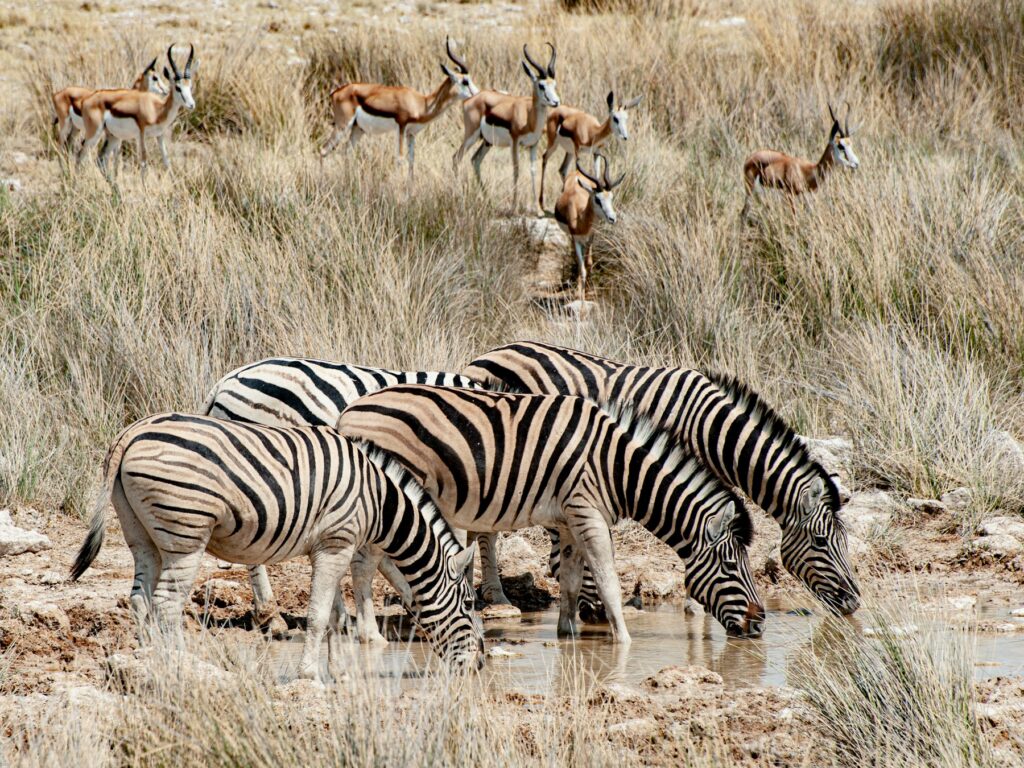
Etosha dry season travel is popular because scarce surface water can concentrate animals around established waterholes. It does not turn wildlife into a timetable. Sightings still depend on patience, temperature, wind, recent rain and the choices made by animals that move freely across a vast park.
From roughly the cooler winter months into the hotter build-up before the rains, conditions change noticeably. An Etosha dry season plan therefore needs flexible game-drive loops, protection from dust and sun, realistic rest periods and current checks of gate, road and waterhole conditions.
In this guide
Etosha dry season: a practical overview
The practical advantage of the Etosha dry season is visibility: vegetation is often thinner and water sources become natural observation points. The practical cost is dust, busier camps, cold early starts in mid-winter and increasingly intense heat later in the season. Build each day around a small area rather than racing between distant names on the map.
Waterholes reward time, not constant movement
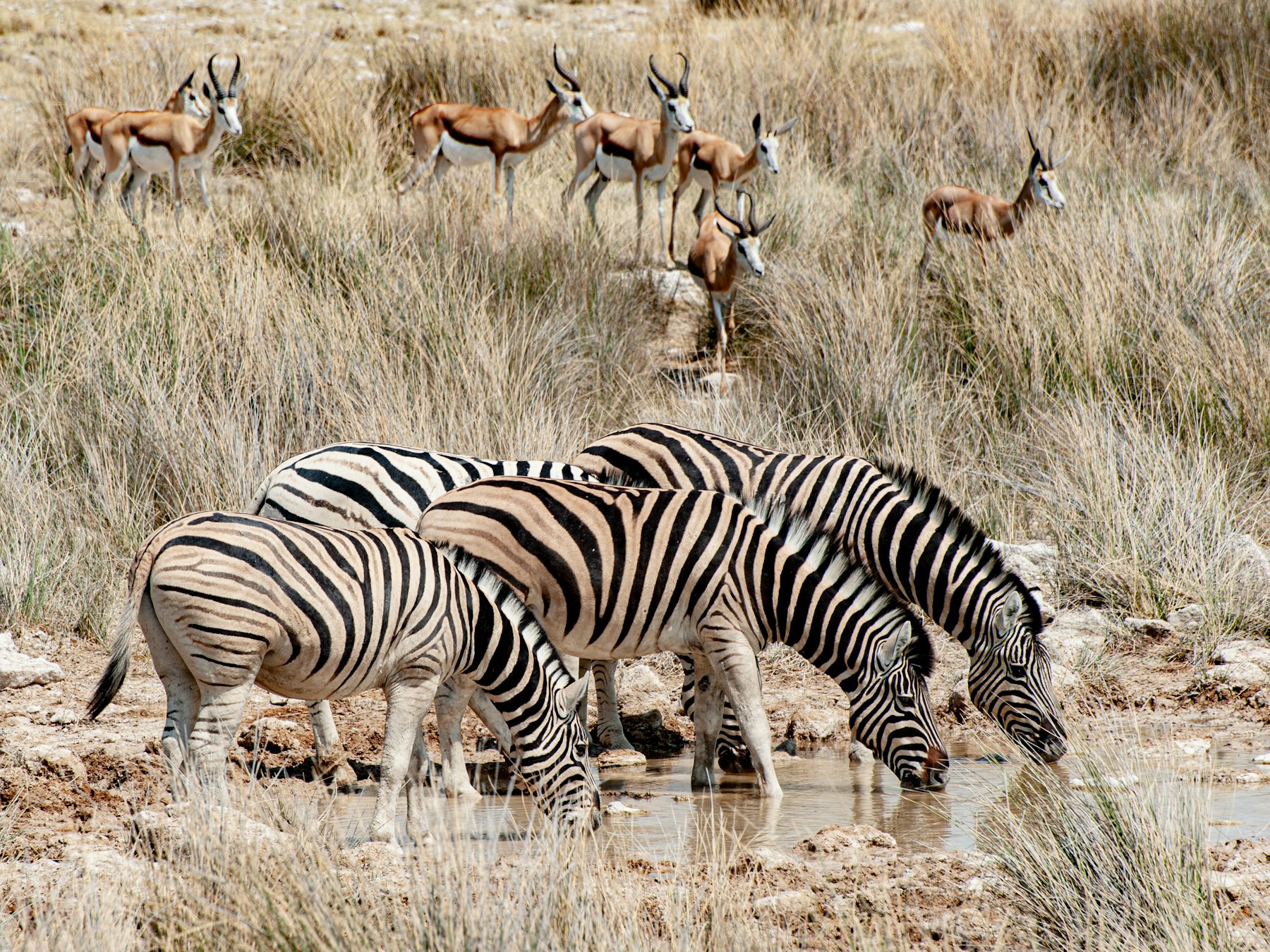
An Etosha dry season waterhole can be quiet for an hour and transform in minutes. Stop in the designated viewing area, switch off the engine when appropriate and observe the wider scene rather than only the nearest animal. Herd behaviour, alarm calls and the arrival of smaller species often tell the story before a headline sighting appears.
Avoid blocking the road or another vehicle’s exit. Never leave the vehicle outside approved areas, and keep voices low. When a waterhole becomes crowded, a less famous nearby option can produce a calmer and equally rewarding encounter.
Use the cooler hours well
Early morning and late afternoon are important during the Etosha dry season, but gate times set the usable window. Prepare cameras, water and route notes the evening before. Midday can still be productive at waterholes, yet it is also the sensible time for lunch, shade and a break from continuous driving.
Winter dawns may be surprisingly cold in an open vehicle, while afternoons can be warm. Later in the dry season, heat and glare become more demanding. Dress in layers, use sun protection and keep more drinking water than the day appears to require.
Expect dust and protect equipment
Etosha dry season roads and parking areas can be dusty, especially behind other vehicles. Increase following distance and close windows before an oncoming vehicle passes. Dust reduces visibility, enters camera equipment and can make contact lenses uncomfortable.
Store lenses and binoculars in easy-to-close bags, carry a blower rather than rubbing dusty glass, and cover luggage in the rear of the vehicle. A daily check of tyre pressure and the engine compartment should follow the rental company’s instructions rather than improvised mechanical work.
Choose the right Etosha base
Compare stays around the park by gate and sector, then match each booking to the loops you realistically want to drive.
Book a route through the park, not a single base
For a first Etosha dry season visit, three nights usually allow two full game-viewing days. Staying in two areas can reduce backtracking, but moving camp every night creates packing pressure. Choose the arrangement that keeps daily loops short and respects gate times.
Camp waterholes, including the famous one at Okaukuejo, can add valuable observation time after driving ends. Treat any sighting as a bonus, maintain quiet after dark and use a red or dim light where camp rules allow so other visitors retain their night vision.
Keep wildlife welfare ahead of photographs
The Etosha dry season brings vehicles together around limited water. Give elephants and other animals a clear route, never surround them and do not edge forward for a closer image. If an animal changes direction or behaviour because of the vehicle, more distance is needed.
Stay on authorised roads, follow staff instructions and never feed wildlife. Ethical viewing often produces better photographs because animals continue natural behaviour instead of reacting to pressure.
Final checks before you travel
- Confirm current gate times and park rules.
- Pack warm layers for winter dawns and strong sun protection.
- Carry water, snacks and a simple camera-cleaning kit.
- Limit each drive to a realistic cluster of waterholes.
- Leave animals an open route to and from water.
Check current resort and park information with Namibia Wildlife Resorts before departure. Our Etosha destination guide helps compare sectors. The best Etosha dry season plan combines early starts with patience, shade and enough time for the park to reveal itself.