
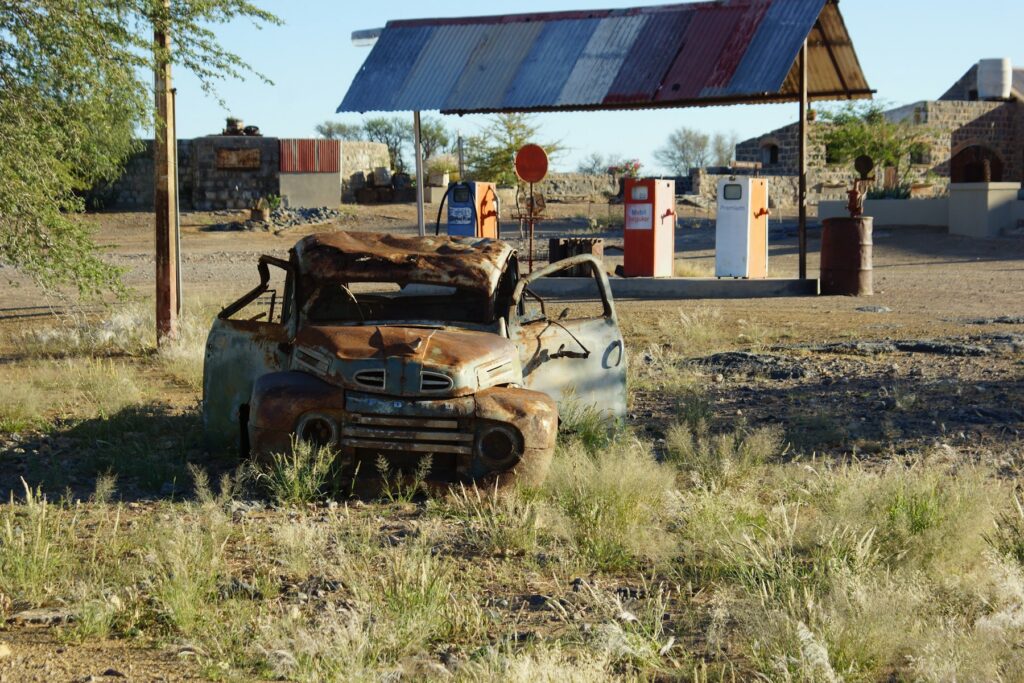

Namibia fuel range planning is less about finding one maximum distance and more about building margin into every remote day. Tank size, vehicle load, road surface, wind, tyre pressure, detours and driving style all change consumption, while a mapped fuel stop may be closed, out of supply or unable to accept the expected payment method.
The practical rule is simple: refuel at reliable opportunities and never make the next pump the only possible outcome. Good Namibia fuel range preparation uses the rental company’s figures, the actual route and a clear fallback rather than internet estimates for a different vehicle.
In this guide
Namibia fuel range: a practical overview
Begin with the vehicle’s usable tank capacity and realistic consumption on gravel, not its advertised best figure. Namibia fuel range calculations should include a reserve agreed with the rental provider. Extra containers must be approved, suitable for fuel and secured correctly; ordinary water bottles or improvised storage are dangerous and may breach the hire agreement.
Get the right figures at handover
Ask the rental representative to explain tank capacity, gauge behaviour, expected range and the recommended reserve. Namibia fuel range varies sharply between a small car and a loaded four-wheel-drive. Photograph the fuel type and note whether the vehicle has one tank or an auxiliary system.
Do not rely on a dashboard estimate until you understand how it behaves. Reset the trip meter after filling and compare distance with the gauge during the first easy legs. If the reading seems abnormal, contact the provider before entering a remote area.
Mark primary and backup fuel stops
List the dependable towns on each day, then add a backup before and after the intended stop. Namibia fuel range planning should treat lodge pumps and very small settlements as useful possibilities, not guaranteed public stations, unless recently confirmed.
Ask the next accommodation about current availability and opening hours. Local information is strongest when it names a station and date. Carry both card and cash where practical, but do not display or store cash carelessly.
Use the full-tank habit
Refuel before leaving a major town even when the gauge is not low. A full tank turns a missed station or short detour into an inconvenience instead of an emergency. Namibia fuel range margin is especially valuable on Sundays, public holidays and early departures.
Avoid waiting for the warning light. Gravel, headwinds or searching for an address can consume more than planned. The small time cost of topping up is usually worth the flexibility it creates.
Plan the vehicle and route together
Compare rental options only after you know the longest remote legs and any restrictions on auxiliary tanks or fuel containers.
Use extra fuel only with approval
Some remote itineraries genuinely require additional capacity, but the rental company must confirm the correct container, mounting and filling procedure. Namibia fuel range is not improved safely by carrying loose containers inside the passenger compartment.
Keep fuel separate from drinking water and label containers clearly. Never fill near an ignition source, and follow station staff instructions. If the approved setup leaks or smells strongly, stop using it and contact the provider.
Know what to do if the plan fails
If the next station is unavailable, assess the last confirmed fuel, the next verified option and daylight before continuing. Namibia fuel range problems become more serious when a driver presses on without information. Return to a known place if that is the safer option.
When stranded, stay with the vehicle unless immediate danger requires moving. Use the rental emergency contact, share the road number or GPS position and conserve water and phone power. Do not accept unverified fuel or mechanical advice that could damage the vehicle.
Final checks before you travel
- Record tank capacity, fuel type and realistic consumption.
- Mark a primary and backup station for every remote leg.
- Refuel at dependable opportunities, not only when low.
- Carry approved extra fuel only when the route requires it.
- Save rental and accommodation contact details offline.
Review the Namibia Tourism Board transportation guidance and confirm route-specific advice with the rental company. Our self-drive hub brings the wider checklist together. Conservative Namibia fuel range planning protects both the itinerary and the people travelling it.