
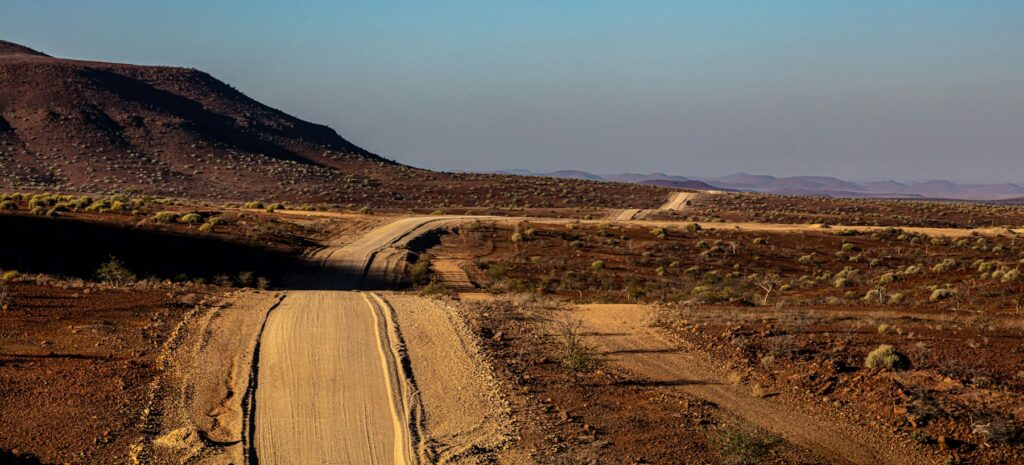
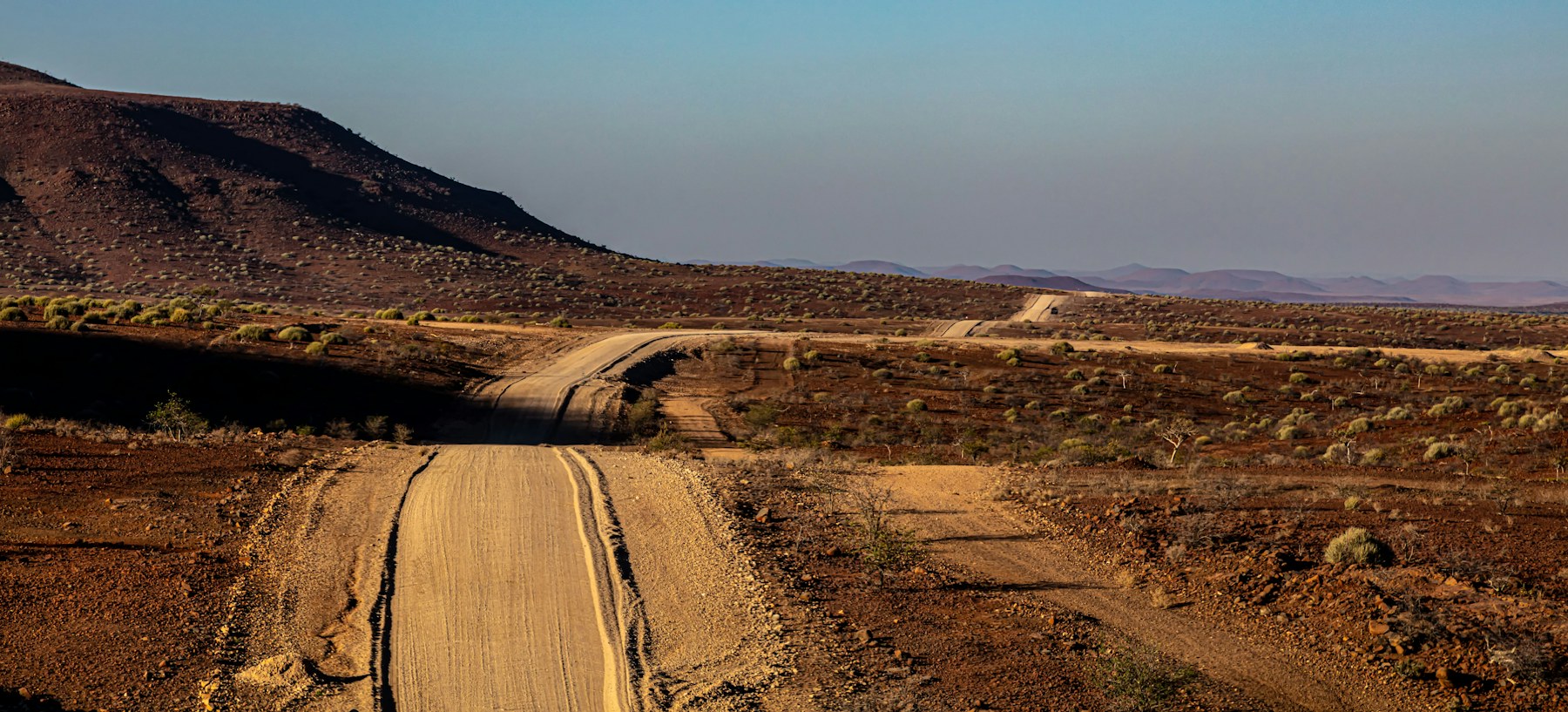
Namibia road classifications help travellers read a route, but the letter on the map is not a guarantee of surface, width or current condition. B roads are the principal national corridors, while C and D roads include many secondary and district routes; surfaces and maintenance can still change along a single journey.
The useful way to apply Namibia road classifications is to combine them with the rental agreement, current local advice, weather and a conservative arrival time. A road number informs the plan. It does not replace attention to corrugations, dust, animals, loose gravel or sudden water damage.
In this guide
Namibia road classifications: a practical overview
Most classic visitor routes use a mixture of paved B roads and gravel C or D roads. Namibia road classifications indicate a network hierarchy, not a personal speed recommendation. The tourism authority advises slower speeds on gravel and extra time. Follow the posted limit, but reduce speed further whenever the surface, visibility or vehicle demands it.
B roads are the main arteries
B routes connect major towns, borders and regions, and many are paved. They are normally the fastest legs in a national itinerary, but Namibia road classifications do not remove risks such as fatigue, animals, crosswinds and long overtaking distances. Services can also be far apart outside the main centres.
A smooth surface can tempt drivers to extend the day. Keep planned rest and fuel stops, avoid night driving and do not assume the next town has late-opening services. Even on a B road, sunset should not be the target arrival time.
C roads vary widely
C roads carry important regional traffic and may be paved, gravel or a mixture. For travellers, this is where Namibia road classifications need the most context. A well-graded C road can feel straightforward, while another may be narrow, corrugated or damaged after unusual weather.
Ask the accommodation or rental company about the specific route, not whether C roads are generally suitable. A response about yesterday’s conditions on a named road is more valuable than a national rule of thumb.
D roads require more margin
D roads serve district and local connections and are often gravel. Some are common tourism routes; others are quiet tracks where traffic and assistance are limited. Namibia road classifications alone cannot tell a traveller whether a particular D road is allowed under the hire contract.
Check exclusions for riverbeds, sand, mountain passes and four-wheel-drive-only sections. If a route looks dramatically shorter but leaves the normal tourist corridor, confirm it before departure rather than discovering a restriction at the turn-off.
Choose a vehicle for the whole route
Compare self-drive options after mapping every B, C and D road you intend to use, including accommodation access roads.
Adjust to the surface you can see
On loose gravel, make steering and braking inputs gradual, increase following distance and slow before bends. Dust can hide potholes and oncoming vehicles. Namibia road classifications never justify holding a fixed speed when the safe speed is lower.
Pull fully off the driving line only where the shoulder is stable and visibility is clear. Avoid sudden swerves for small animals or stones; controlled slowing is usually safer. If a tyre fails, stop in the safest available place and contact the rental company according to its procedure.
Calculate travel time with buffers
Map estimates can assume uninterrupted progress. Add fuel, food, viewpoints, roadworks and slower gravel sections. In practice, Namibia road classifications are most useful when they help identify where a long paved leg becomes a slower secondary route.
For important arrivals, build a one- to two-hour daylight margin rather than a few spare minutes. The buffer is not wasted if the day goes well: it becomes time for check-in, a walk or an early dinner.
Final checks before you travel
- Check the rental agreement against every planned road.
- Ask for current conditions using the exact road number.
- Reduce speed for gravel, dust and blind rises.
- Carry water and refuel before remote stretches.
- Plan every arrival with daylight to spare.
Use the Namibia Tourism Board transportation guidance alongside current local reports. Our self-drive Namibia guide covers the wider preparation. Namibia road classifications are valuable shorthand, but the safest decision is always based on the road directly ahead.