
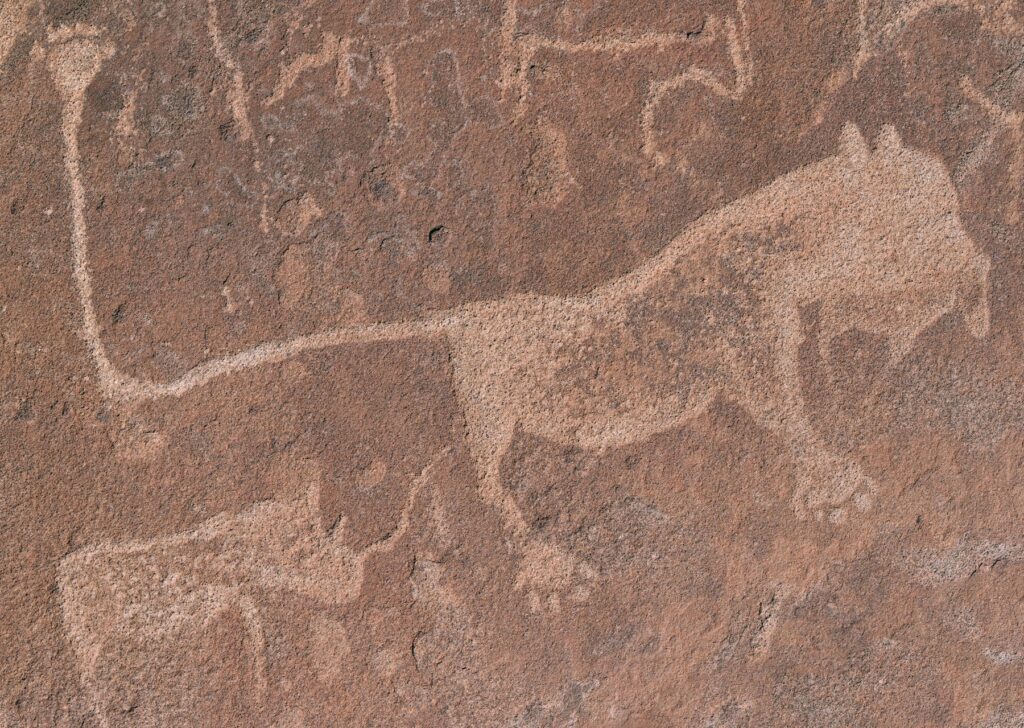
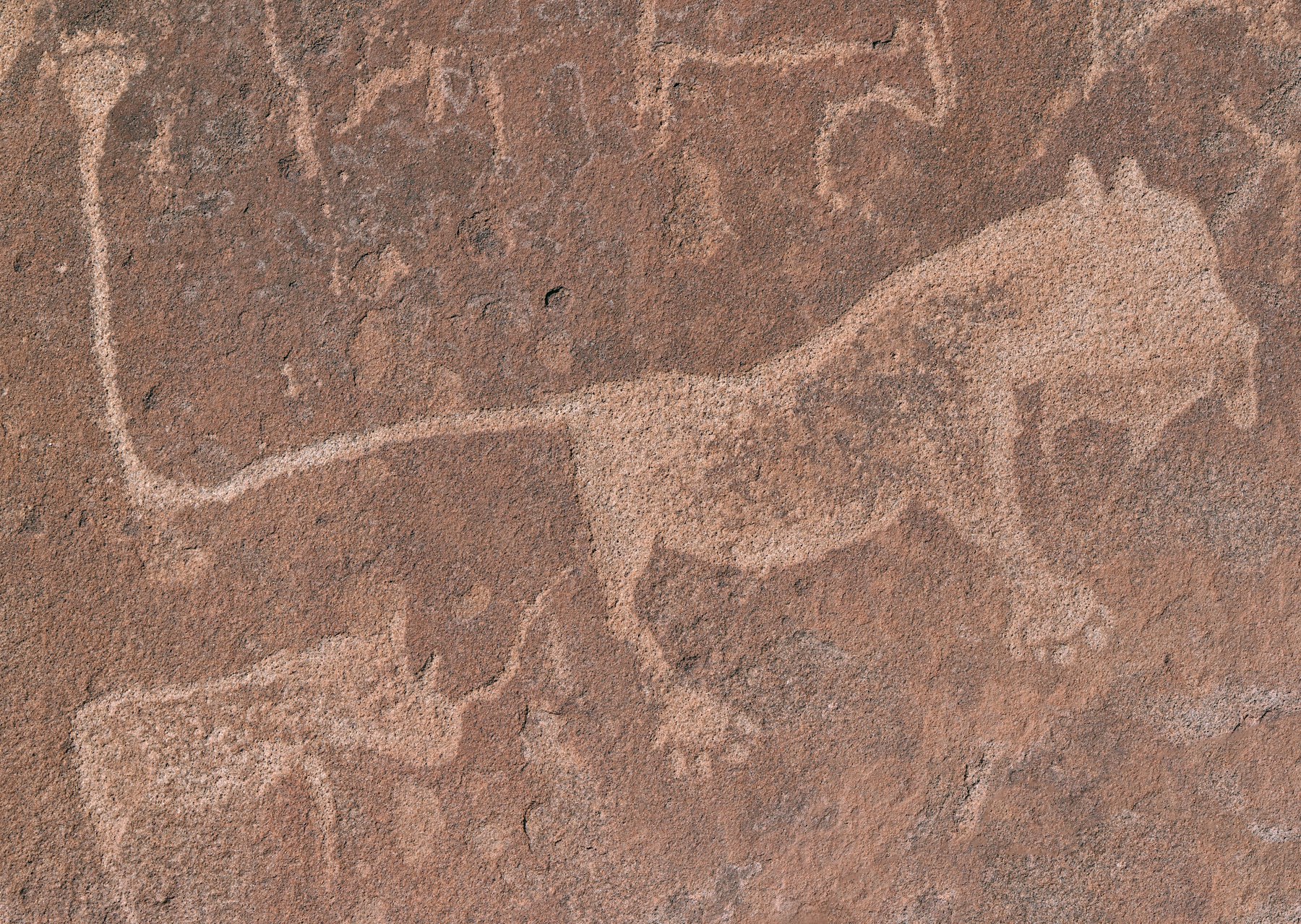
Namibian rock art includes engravings and paintings made across long periods and very different landscapes. The images are not decoration detached from place: water, animal movement, shelter, belief, travel and later interpretation all form part of the context visitors need.
The basic rule for Namibian rock art is simple: look, listen and leave every surface unchanged. Touching, tracing, wetting, chalking or walking outside the managed route can cause irreversible damage, even when the mark made by one visitor seems invisible.
In this guide
Namibian rock art: a practical overview
Important Namibian rock art sites include Twyfelfontein and the Brandberg area, with access and guiding arrangements that differ. Use the official entry, pay required fees and follow local guides. Directions shared online should never be used to enter an unmanaged or culturally sensitive site without permission.
Use guiding as interpretation, not a formality
A guide explains why a panel sits where it does, what research can support and where meanings remain uncertain. Namibian rock art deserves more than a quick identification of animals.
Ask questions respectfully and avoid pressing guides to provide a single dramatic story. Archaeological interpretation changes with evidence, and some knowledge may not be appropriate to share.
Never touch, trace or wet the surface
Oils, moisture and abrasion accelerate deterioration. With Namibian rock art, even placing a finger beside an image for scale risks contact. Use the guide’s pointing method and keep bags or walking poles away from the rock.
Do not move stones, make rubbings or add graffiti. If another visitor behaves unsafely, alert the guide or site staff rather than starting a confrontation on the rock face.
Photograph without altering the site
Follow current rules on cameras, flash and commercial use. Namibian rock art can be difficult to photograph under harsh light, but water or chalk must never be used to increase contrast.
Photograph people only with consent, including guides. A useful caption should name the site accurately and avoid presenting speculation as fact.
Stay long enough to understand the landscape
Compare Damaraland bases by guided heritage access and realistic travel time, not only distance on the map.
Avoid myths and careless labels
Terms such as ‘primitive’ flatten living histories and diverse communities. Discuss Namibian rock art through evidence, local interpretation and respect for the people connected to the landscape.
Do not assume every animal image is a hunting record or every geometric mark has a known meaning. Good interpretation makes uncertainty visible.
Support the systems that protect the sites
Entrance fees, local guiding and community enterprises help make heritage protection viable. A responsible Namibian rock art visit uses official channels rather than seeking free access around a gate.
Buy crafts directly where appropriate, ask before bargaining and avoid purchasing any object represented as an archaeological artefact. Removing heritage material is unethical and may be illegal.
Final checks before you travel
- Enter through official access and use required guides.
- Never touch, wet, trace or chalk an image.
- Stay on the managed path and protect the wider site.
- Ask consent before photographing people.
- Describe uncertainty honestly in captions and stories.
The UNESCO Twyfelfontein listing explains the international significance of one major concentration. Our Damaraland guide adds route planning. Read the site’s own interpretation before repeating a guidebook story, and correct image captions that reduce a complex record to an unsupported claim. Namibian rock art survives through restraint: the most respectful visitor takes away understanding and leaves no new mark.