
Rehoboth
The home town of the Baster community, on the central plateau south of Windhoek, with a distinct history and identity of its own.
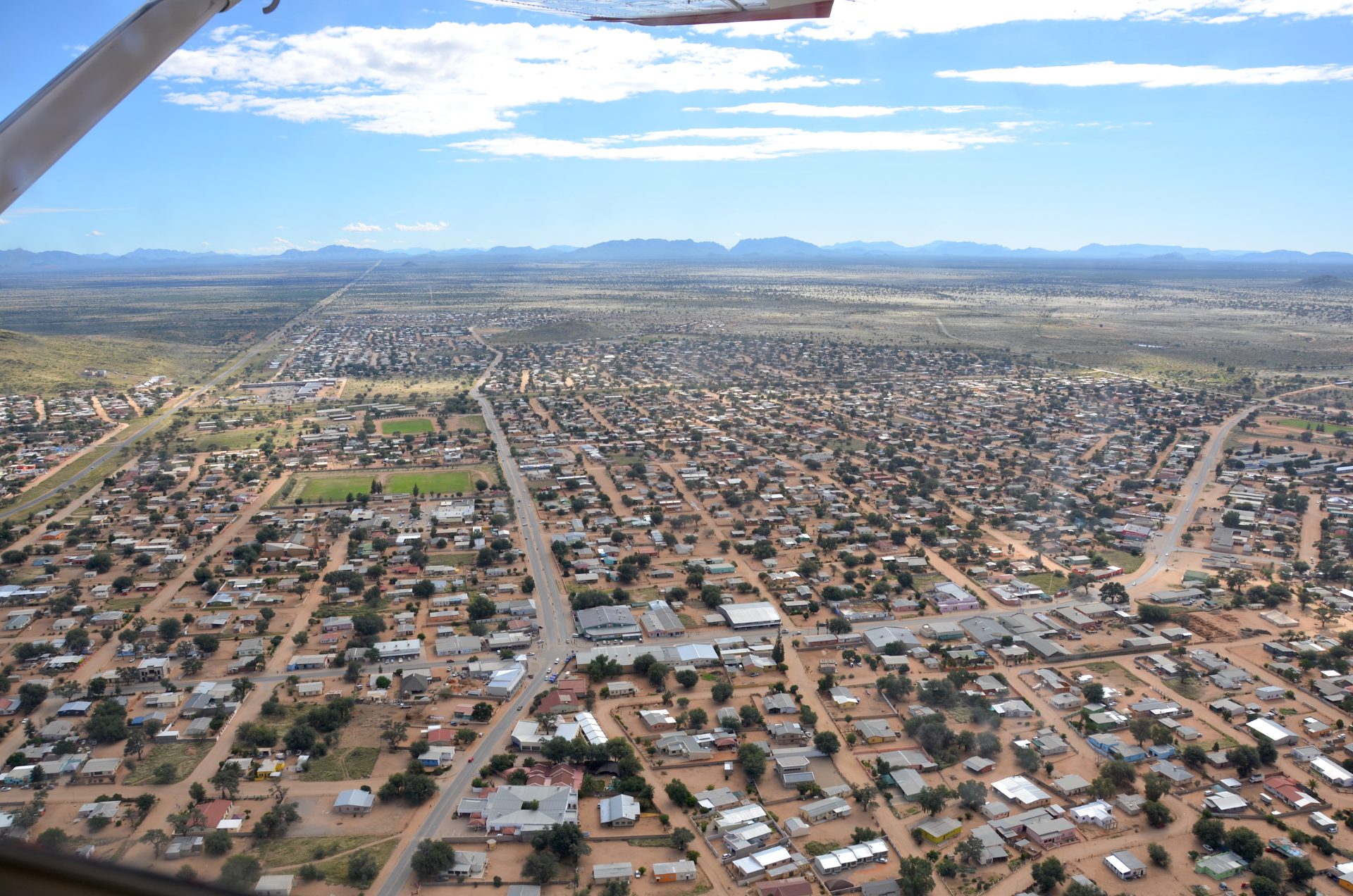
Rehoboth sits on the central Namibian plateau around 90 km south of Windhoek on the B1, the country’s main north-south highway. It is the home town of the Baster community, an Afrikaans-speaking people of mixed Khoikhoi and European descent who trekked north from the Cape Colony in the 1860s and 1870s and established their own semi-autonomous territory here in 1872. For most travellers today it is a brief stop on the long drive south, but it holds a distinct place in Namibia’s layered history and identity.
Photo: Olga Ernst & Hp.Baumeler, CC BY-SA 4.0, via Wikimedia Commons.
Geographic setting
Rehoboth lies at roughly 1,400 metres above sea level on the edge of the Kalahari sandveld, in a transitional landscape of camelthorn savanna and low hills between the Khomas Highland to the north and the drier plains further south. The town grew up around a spring, which gave rise to its biblical name, meaning “there is room” or “wide open spaces”.
Historical context
The Baster community’s origins lie in the Cape Colony, where families of mixed Khoikhoi, enslaved and European descent formed a distinct Afrikaans-speaking community over the eighteenth and nineteenth centuries. Facing increasing restrictions under Cape colonial rule, a group trekked north through Namaqualand and across the Orange River, eventually settling at Rehoboth’s spring in 1870. In 1872 they adopted the “Vaderlike Wette” (Paternal Laws), a written constitution establishing a self-governing community under an elected Kaptein (Captain) and council.
This self-governance was contested and periodically curtailed under German colonial rule from the 1880s, including armed conflict in 1915, and again under South African administration during the twentieth century, when Rehoboth was designated a separate administrative area under apartheid-era policy. The Baster community has continued to campaign for recognition of historical land and governance rights since Namibian independence in 1990.
Present-day character
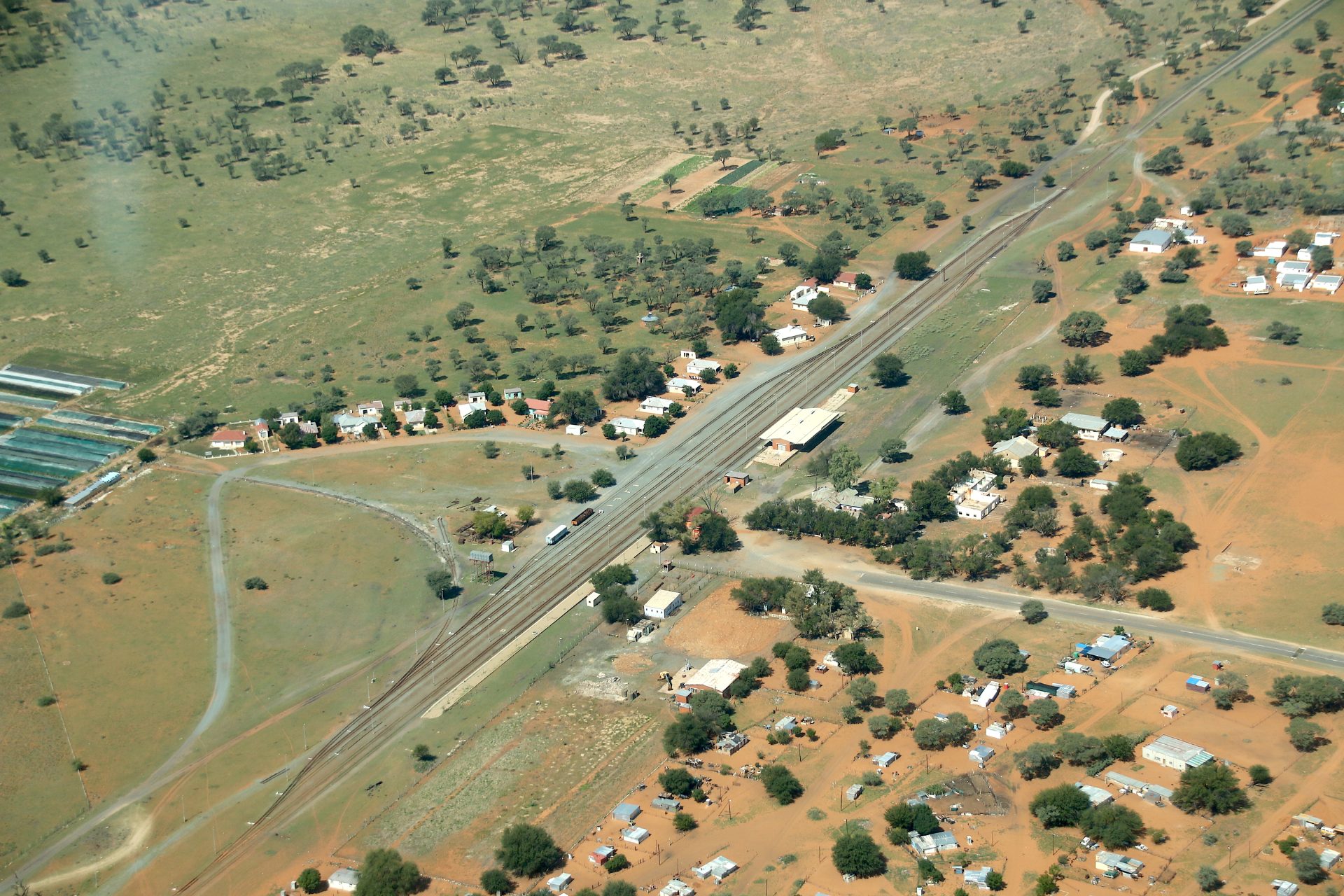
Rehoboth today is a working service town for the surrounding farming district, with schools, shops, fuel stations and small businesses lining the B1 corridor. Afrikaans remains widely spoken alongside other Namibian languages, and Baster identity and history remain an active part of civic life, including community organisations and periodic commemorative events.
Photo: Hp.Baumeler, CC BY-SA 4.0, via Wikimedia Commons.
Why visit
Rehoboth is not a headline attraction, but it rewards travellers with an interest in Namibia’s community histories beyond the standard safari and desert circuit. The Rehoboth Museum documents Baster history, migration and governance, and the town itself offers an accessible, unhurried introduction to a community whose history is not widely covered elsewhere.
Main sights and experiences
The Rehoboth Museum, housed in a historic building in the town centre, is the main visitor attraction, with exhibits on Baster migration, the Vaderlike Wette and community life. The town’s older residential streets and church buildings reflect its nineteenth-century mission and settlement origins. Rehoboth’s original spring, from which the town takes its name, remains a point of local historical interest, though it is no longer a developed spa facility.
Accommodation context
Rehoboth has a small number of guesthouses and a hotel aimed mainly at transit travellers and business visitors, along with a municipal rest camp. Most visitors either pass through without staying or use it as a convenient overnight stop between Windhoek and destinations further south such as Mariental, Keetmanshoop or the Fish River Canyon. See our accommodation hub for accommodation across Namibia, including nearby Windhoek.
Where to stay near Rehoboth
Rehoboth is 90 km south of Windhoek on the B1 and is usually a fuel-and-coffee stop rather than an overnight. Live availability below shows what is bookable in and around the town.
Check live availabilityBrowse all central Namibia accommodation
Some booking links are affiliate links. We may earn a commission at no extra cost to you. See our affiliate disclosure.
Food, shopping, fuel and supplies
As one of the larger towns on the B1 south of Windhoek, Rehoboth has supermarkets, fuel stations, banks and basic services, making it a practical stop to refuel and restock before continuing south into more sparsely served country.
How to get there
Rehoboth is reached via the tarred B1 highway, around an hour’s drive south of Windhoek and well within range of a standard rental vehicle. It also lies on the TransNamib railway line linking Windhoek to the south.
Getting around
The town centre is small and walkable, with the museum, main shops and church buildings within easy reach of each other and of roadside parking on the B1.
Best time to visit
Rehoboth can be visited at any time of year, since it functions mainly as a service stop rather than a seasonal destination. The cooler, drier months from May to September are generally more comfortable for exploring on foot.
Suggested length of stay
An hour or two is enough to visit the museum and walk through the town centre. Most travellers treat Rehoboth as a stop rather than a base, though an overnight stay can help break up a long drive south.
Day trips and nearby attractions
Rehoboth is well placed for a short detour from the B1 for travellers heading toward Mariental and the Kalahari, or toward Windhoek and the central highlands. It does not have major natural attractions of its own within easy day-trip range.
Road and vehicle considerations
The B1 through Rehoboth is fully tarred and suitable for any vehicle. No special preparation is needed beyond normal long-distance driving precautions in Namibia.
Responsible travel
Visitors interested in Baster history should approach it as a living community identity rather than a historical curiosity, and should follow any guidance given at the museum about respectful engagement with community history and ongoing land and governance discussions.
Related destinations
Okahandja. Another historic town on the B1, north of Windhoek.
Windhoek. Namibia’s capital, north of Rehoboth on the B1.
Mariental. The next major town south, gateway to Hardap Dam.
Windhoek and Central Namibia. The wider region Rehoboth belongs to.
Frequently asked questions
Who are the Rehoboth Basters?
The Basters are an Afrikaans-speaking community of mixed Khoikhoi and European descent who trekked from the Cape Colony and settled at Rehoboth in 1870, establishing a self-governing territory in 1872.
Is Rehoboth worth stopping for?
Yes, particularly for travellers interested in the Rehoboth Museum and Baster history; otherwise it functions mainly as a practical stop on the B1.
Planning a stop in Rehoboth?
See the wider Windhoek and Central Namibia region, build a self-drive route along the B1, or check the practical planning guides before you go.
Windhoek and Central Namibia hub Self-Drive Namibia guide Itineraries Travel PlanningLast reviewed: 27 July 2026.