

Walvis Bay
Namibia’s principal working port, where a huge tidal lagoon of flamingos meets container ships, saltpans and the edge of the Namib dunes.
Destinations › Namibia Coast › Walvis Bay
Walvis Bay is Namibia’s principal port city, set on a broad natural bay roughly 30 kilometres south of Swakopmund on the Atlantic coast. Unlike its more overtly touristy neighbour, Walvis Bay is a working town first and a destination second: its harbour handles the great majority of Namibia’s seaborne trade and much of the transit cargo moving to and from landlocked Botswana, Zambia, Zimbabwe and the Democratic Republic of Congo. What draws visitors is the striking contrast around that industry, a huge tidal lagoon thick with flamingos and pelicans, pale saltpans, a lighthouse spit patrolled by Cape fur seals, and some of the highest dunes in the Namib pressing in from the south.
For most visitors Walvis Bay works as a day-trip base from Swakopmund or as a stop on the way south towards Sesriem and Sossusvlei, though the lagoon and surrounding wetlands reward a slower visit in their own right.
A working port with an unusual history
Walvis Bay sits at the point where the Kuiseb River’s dry delta meets the sea, on one of the only natural deep-water harbours along Namibia’s otherwise exposed, sandbar-lined coastline. This sheltered bay is the reason a port exists here at all. To the north and east lie the gravel plains of the central Namib; to the south, the dune sea of the Namib-Naukluft National Park begins almost at the edge of town, with Dune 7 among the first large dunes travellers encounter.
The Walvis Bay Lagoon, a shallow tidal wetland on the town’s southern edge, and the adjoining saltpans separate the built-up area from the open desert, creating an unusual landscape where port cranes, flamingos and sand dunes are often visible within the same view.
Walvis Bay’s natural harbour was noted by early European navigators along the south-western African coast, and its sheltered water made it valuable long before the rest of what became German South West Africa attracted colonial interest. Britain annexed Walvis Bay in 1878 and incorporated it into the Cape Colony in 1884, shortly before Germany declared a protectorate over the surrounding territory. As a result, Walvis Bay followed a separate administrative path for over a century: it remained under British and then South African control as an exclave even while the rest of the territory passed from German colonial rule to South African administration under a League of Nations, and later United Nations, mandate.
When Namibia became independent in 1990, Walvis Bay and its surrounding enclave remained under South African administration, a source of significant tension given the port’s economic importance. South Africa formally transferred sovereignty over Walvis Bay to Namibia on 1 March 1994, finally reuniting the port with the rest of the country. This unusual history explains why Walvis Bay’s development, infrastructure and administrative institutions grew up somewhat separately from the rest of Namibia for much of the twentieth century.
Today Walvis Bay is Namibia’s principal commercial port and one of the country’s most important economic centres outside Windhoek. The harbour handles container traffic, bulk cargo, fishing fleets and, increasingly, transit freight bound for landlocked neighbours through what is marketed as the Walvis Bay Corridor network, including road and rail links towards Botswana, Zambia and beyond. Fishing and fish processing have long been mainstays of the local economy, alongside salt production, shipping services and, more recently, growing interest from the logistics and energy sectors. The town itself is functional and low-rise, organised around the harbour, the lagoon-side waterfront and residential suburbs, with a noticeably more industrial feel than the guesthouse-lined streets of Swakopmund.
Walvis Bay Lagoon and birdlife
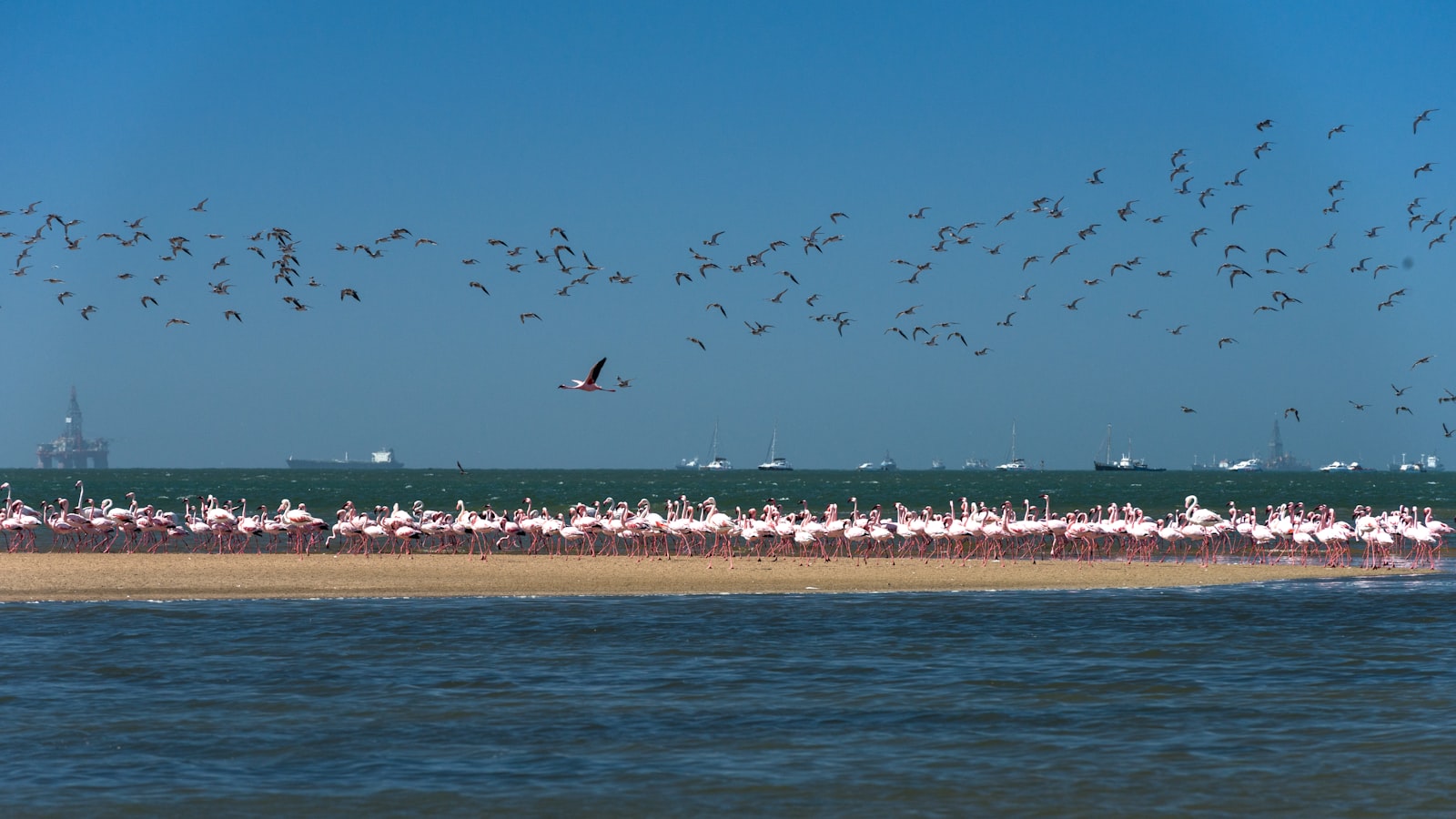
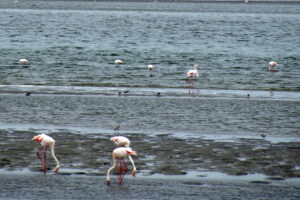
The Walvis Bay wetlands, recognised as a Wetland of International Importance under the Ramsar Convention, are among the most significant coastal bird habitats in southern Africa. The lagoon and adjacent saltworks regularly hold large numbers of greater and lesser flamingos, along with pelicans, terns, plovers and a wide range of migratory wading birds that pass through on route between Europe, Asia and the southern African coast. The shallow, nutrient-rich water and the algae that colour parts of the saltpans pink provide feeding grounds that can support tens of thousands of birds at a time, depending on season and water conditions. A paved promenade along part of the lagoon shore allows visitors to view the birds without disturbing them, and this is one of the easiest, most reliable birdwatching experiences anywhere on the Namibian coast.
Main attractions and experiences
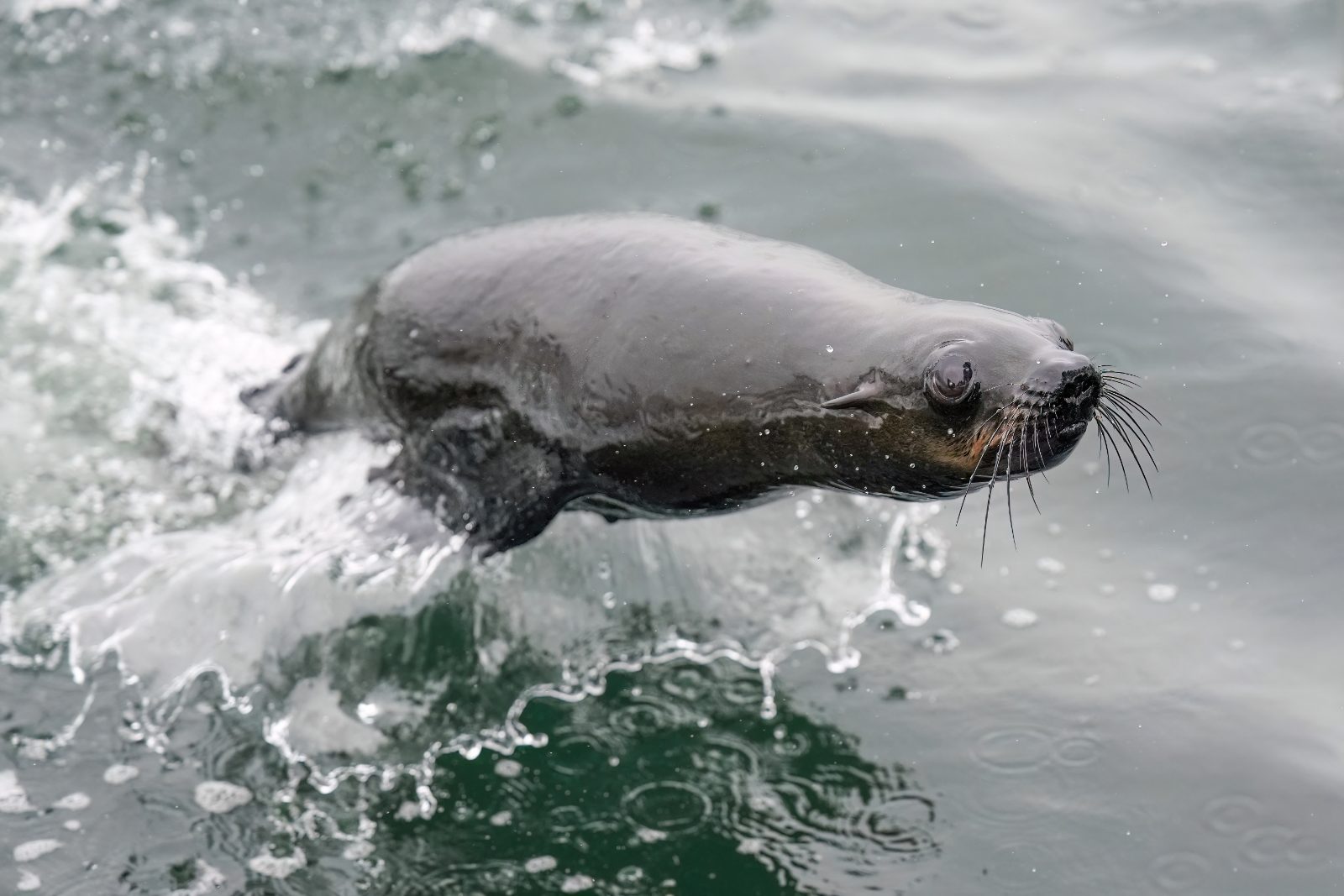
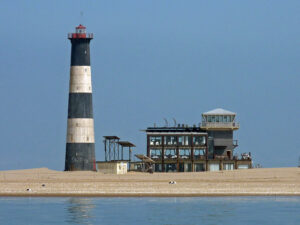
Pelican Point. A long, low sand spit enclosing the bay to the north, home to a lighthouse and a large colony of Cape fur seals. Access is across soft sand and is normally done with a local operator familiar with the route; boat-based tours into the bay also pass close to the seal colony and the spit.

Sandwich Harbour. A remote lagoon and dune system roughly 45–55 km south of Walvis Bay inside the Namib-Naukluft National Park, where towering dunes drop directly into the sea. The area is ecologically sensitive and the access route crosses soft sand and a tidal beach, so it is normally visited on a guided 4×4 excursion rather than attempted independently.
The saltworks. South of the lagoon, extensive solar evaporation ponds produce salt on an industrial scale. The pans are striking to look at, tinted pink and orange by salt-tolerant algae and brine shrimp, and form part of the wider wetland system used by wading birds.
Dune 7. One of the tallest dunes in the immediate area, a short drive from town towards the airport. It is a popular spot to climb for views back over the Kuiseb Delta and out towards the port, and a common location for sandboarding.
The waterfront. A redeveloped stretch of the lagoon shore with restaurants, cafés and a marina area, popular for an evening walk or meal with views over the water.
Marine and outdoor activities
A number of local operators run boat trips into the bay and lagoon, kayaking excursions around Pelican Point, and quad-biking or sandboarding trips onto the surrounding dunes. Boat trips are often described as an opportunity to see seals, and sometimes dolphins, in the bay, though sightings of any particular species are never guaranteed and depend on the day, the season and the animals themselves. Anyone booking a marine or dune activity should choose an operator who follows local guidelines on keeping a safe and respectful distance from wildlife.
Tours and activities
Much of what makes Walvis Bay worthwhile, the lagoon’s birdlife, dolphin and seal sightings, and the dunes at Sandwich Harbour, is easiest to experience with an operator who knows the tides, the wildlife patterns and the safe driving lines through the dune belt. Boat cruises, kayaking trips and 4×4 excursions each suit a different pace and budget.
We’ve researched and compared the main bookable options, including duration, departure points and traveller reviews, on a dedicated page. Explore tours and activities in Walvis Bay for the current options.
Cultural and conservation context
The Walvis Bay wetlands are managed with their Ramsar status in mind, and the lagoon promenade is designed to keep visitors on a fixed path rather than walking out across the mudflats where birds feed and roost. Sandwich Harbour and the surrounding dune sea fall inside the Namib-Naukluft National Park, Namibia’s largest protected area, where conservation rules on vehicle access and off-road driving apply. Visitors should treat both areas as working conservation sites rather than open recreation ground.
Accommodation areas
Accommodation in Walvis Bay is concentrated along the lagoon waterfront, where several hotels and guesthouses look directly over the water and the flamingos, and in residential areas further back from the shore. Options range from business-oriented hotels serving the port and logistics trade to smaller guesthouses aimed at leisure travellers. Many visitors choose to stay in Swakopmund instead and treat Walvis Bay as a half-day or full-day excursion, given how short the drive between the two towns is. You can browse Walvis Bay accommodation by price and type on the accommodation hub.
Where to stay and what to book in Walvis Bay
Walvis Bay is quieter and cheaper than Swakopmund, and most visitors stay near the lagoon or in the CBD. These three cover the usual price bands; the map and availability search cover the whole bay.
Places to stay near Walvis Bay
Kleines Nest Bed and Breakfast
Kleines Nest Bed and Breakfast is a bed and_breakfast in Walvis Bay. Check current availability and rates using the…
Price Guide: N$1,215–N$1,245
View Property DetailsLangholm Hotel
Langholm Hotel is a hotel in Walvis Bay. Check current availability and rates using the booking link on this page.
Price Guide: N$1,900
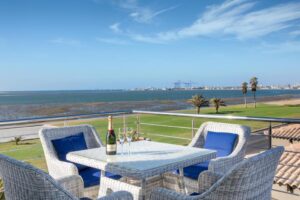
View Property DetailsFlamingo Villas Boutique Hotel
Flamingo Villas Boutique Hotel is a hotel in Walvis Bay. Check current availability and rates using the booking…
Price Guide: N$4,140–N$4,350
View Property Details
Check live availabilityBrowse all Walvis Bay accommodation
Tours and activities in Walvis Bay
Sandwich Harbour Dune and Seal Tour
Combine dune driving, a huge seal colony and Walvis Bay's wetlands birdlife on this full-day Sandwich Harbour tour.
View Tour DetailsWalvis Bay Dolphin Cruise to Pelican Point
Sail out to Pelican Point on this classic Walvis Bay dolphin cruise, with oysters and sparkling wine included.
View Tour DetailsPelican Point Kayaking Tour with Seals
Paddle alongside a permanent seal colony on this half-day Pelican Point kayaking tour near Walvis Bay.
View Tour Details

See all Walvis Bay tours and activities
Some booking links are affiliate links. We may earn a commission at no extra cost to you. See our affiliate disclosure.
Food, shopping and supplies
As one of Namibia’s larger towns, Walvis Bay has a full range of supermarkets, banks, fuel stations, pharmacies and shopping centres, generally more geared towards residents and the port workforce than to tourists. Seafood features prominently on menus given the town’s fishing industry. Self-drivers heading further south towards Sesriem and Sossusvlei, or north towards Damaraland, often use Walvis Bay or Swakopmund as a last reliable stop for fuel and supplies before longer stretches of road with fewer services.
Getting there and around
Walvis Bay is connected to Swakopmund and Windhoek by tarred road, making it one of the more straightforward Namibian destinations to reach by self-drive; the B2 links Windhoek to Swakopmund, from where a short coastal road continues south to Walvis Bay. Walvis Bay Airport, a little inland from town, handles scheduled domestic flights connecting to Hosea Kutako International Airport near Windhoek, and is a useful alternative for travellers who prefer not to drive the full distance from the capital.
The town centre and lagoon promenade are easy to navigate on foot or by car. A vehicle is useful for reaching Dune 7, the saltworks viewpoints and Pelican Point, and is essential for any onward journey towards Sandwich Harbour, which should only be attempted with an experienced guide given the soft sand and tidal risk.
Planning your visit
Walvis Bay’s climate is dominated by the cold Benguela Current offshore, which keeps temperatures mild year-round but also brings frequent morning fog, especially in the cooler months. Fog tends to burn off by mid-morning, leaving clear, breezy afternoons. Because the climate changes relatively little through the year, Walvis Bay can be visited at any time; birdwatchers may find bird numbers on the lagoon vary with season and rainfall elsewhere in southern Africa, since many species are migratory.
Most visitors allow half a day to a full day for Walvis Bay, combining the lagoon promenade, a drive past the saltworks and Dune 7, and perhaps a boat or kayak trip to Pelican Point. Travellers with a strong interest in birdlife, or who plan to add a guided excursion to Sandwich Harbour, may prefer to base themselves here for one or two nights rather than visiting as a day trip from Swakopmund.
A typical day might begin with an early walk or drive along the lagoon promenade while the flamingos are feeding, followed by a look at the saltworks and a stop at Dune 7 mid-morning once the fog has cleared. Afternoons work well for a boat or kayak trip towards Pelican Point, before finishing with a meal on the waterfront. Travellers with an extra day can add a guided Sandwich Harbour excursion or use Walvis Bay as a staging point before heading south towards Solitaire and Sesriem.
Swakopmund is roughly 30 minutes north and is easily combined with Walvis Bay in a single day. Sandwich Harbour lies to the south within the Namib-Naukluft National Park. The C14 route east over the Kuiseb Pass towards Solitaire and on to Sesriem and Sossusvlei is a common onward journey for self-drivers heading into the dune sea proper.
Safety and responsible travel
The roads linking Walvis Bay to Swakopmund and Windhoek are tarred and well maintained, suitable for any standard vehicle. Routes onto the dunes, to Pelican Point or towards Sandwich Harbour require a 4×4 and, in the case of Sandwich Harbour, local knowledge of tides and soft-sand conditions; these are best done with a guide rather than independently.
Morning fog can reduce visibility on the roads and make early starts to activities less predictable; allow extra time and check conditions with your accommodation or tour operator. The lagoon and saltpans are working wetlands rather than a beach, so visitors should stay on the designated promenade and viewing areas rather than walking out onto the mudflats. South of town, the combination of soft sand and tidal water at Sandwich Harbour has caught out unprepared drivers in the past, which is why guided access is the norm.
Keep a respectful distance from flamingos and other birds on the lagoon, avoid loud noise or sudden movement that could flush a feeding flock, and stay on the promenade or other designated viewing points. Around Pelican Point, follow your guide’s instructions on approaching the seal colony, and do not attempt to feed or touch the animals. If visiting Sandwich Harbour or the surrounding dunes, stay on existing tracks rather than creating new ones, since dune vegetation and surface crusts in the Namib recover very slowly from vehicle damage.
Frequently asked questions
Is Walvis Bay worth visiting if I am already staying in Swakopmund?
Yes. The lagoon’s birdlife, the saltworks and Pelican Point are different enough from Swakopmund’s town-based attractions to make the short drive worthwhile, even as a half-day trip.
Can I see flamingos in Walvis Bay all year round?
Flamingos are present in the lagoon for much of the year, though numbers vary with water levels, food availability and season, since many birds using the site are migratory.
Do I need a 4×4 to visit Walvis Bay itself?
No. The town and lagoon promenade are reached on tarred roads suitable for any vehicle. A 4×4 and local guidance are only needed for excursions onto the dunes, to Pelican Point or towards Sandwich Harbour.
Can I drive to Sandwich Harbour on my own?
Independent access is discouraged. The route crosses soft sand and a tidal beach inside a national park, and guided trips with experienced operators are the normal and safer way to visit.
Where to go next
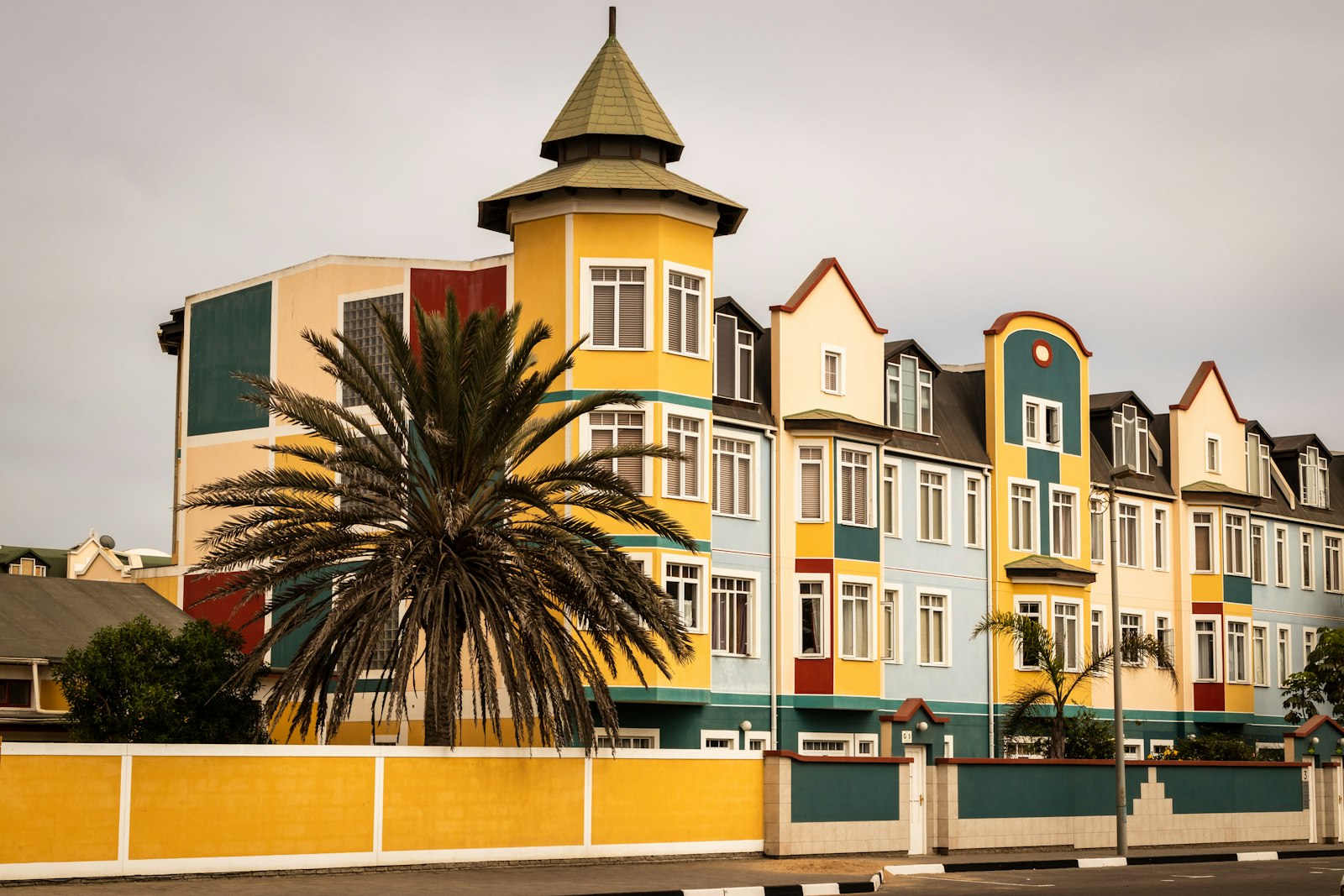
Swakopmund
The coastal town most visitors pair with a Walvis Bay day trip, 30 minutes north.
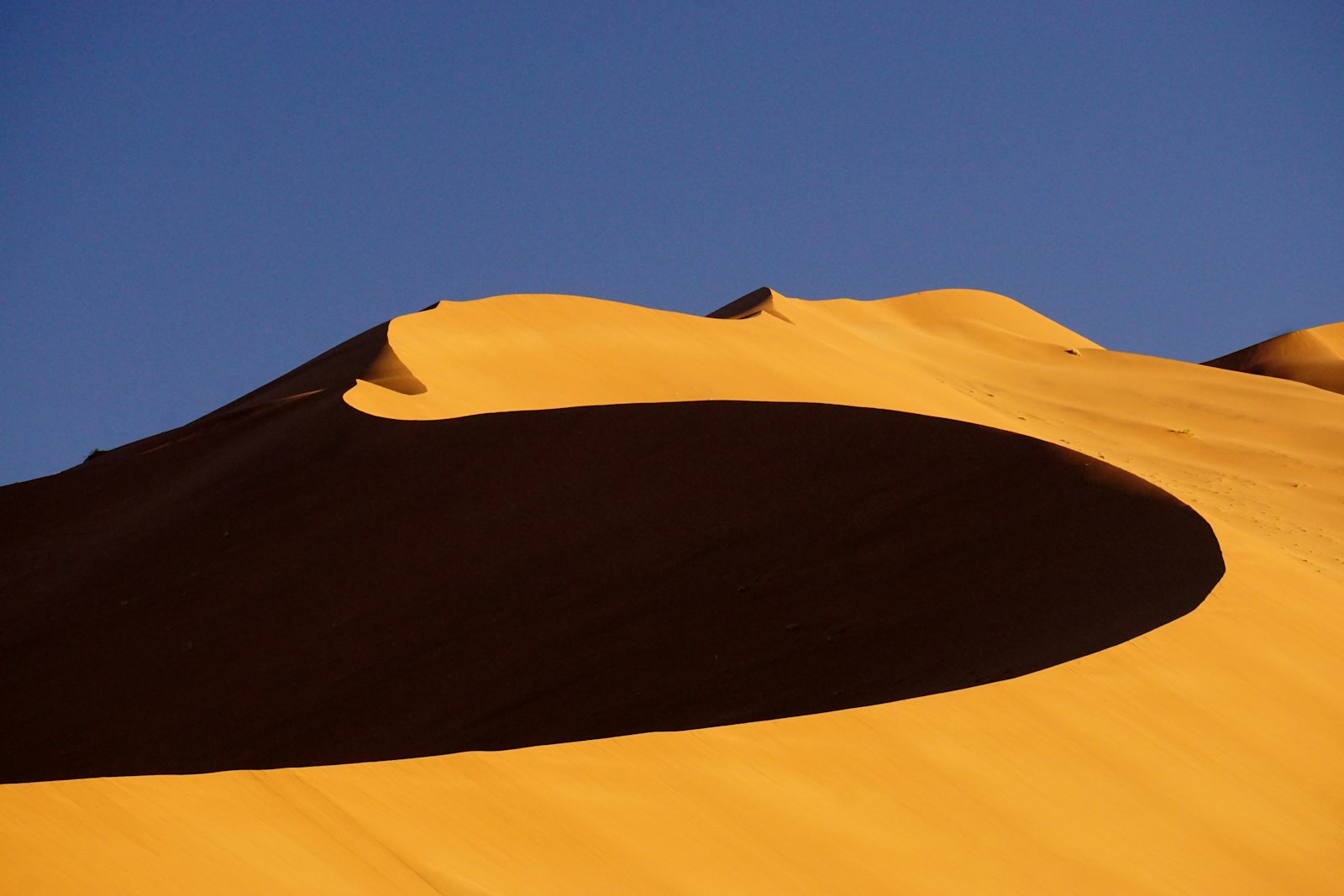
Sossusvlei
Onward via the C14 and Kuiseb Pass into the dune sea proper.
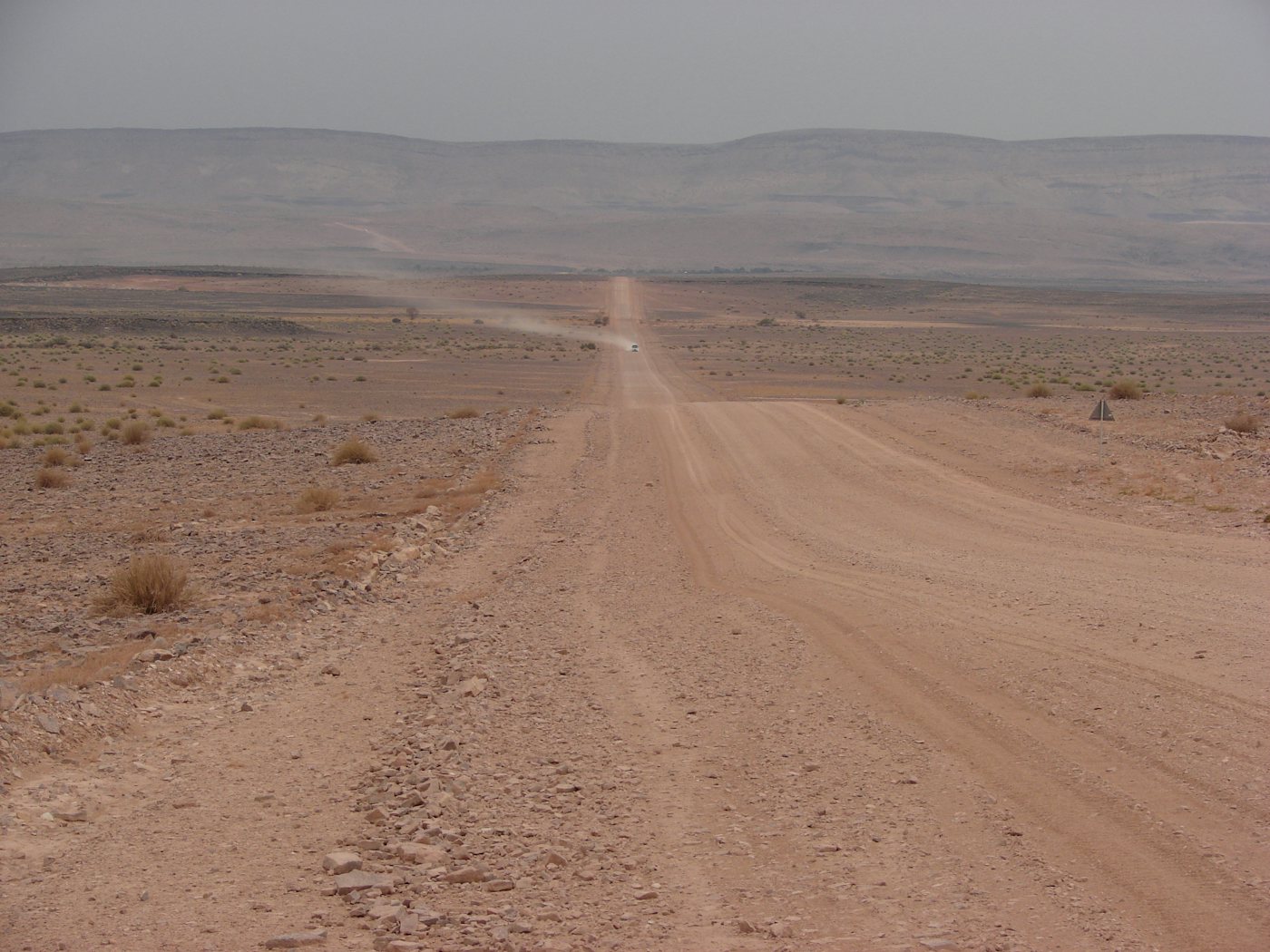
Self-Drive Namibia
Route-planning guidance for the coast and beyond.
Nearby destinations
Swakopmund, Henties Bay further up the coast, and the wider Namib-Naukluft dune sea towards Sesriem and Sossusvlei are the destinations most commonly combined with a visit to Walvis Bay.
Planning your Namibia coast stop?
Walvis Bay pairs naturally with Swakopmund and the road south to Sesriem and Sossusvlei.
Self-Drive Namibia guide See all destinationsSee the Namibia Coast regional guide for wider context. Last reviewed: 23 July 2026.
Planning a longer trip? See our Namibia itineraries to see how Walvis Bay fits into a 7-, 10-, 14- or 21-day route.
Weighing up Walvis Bay against its neighbour? Swakopmund vs Walvis Bay compares them on lagoon access, activities and atmosphere.