
Destinations > Etosha and Central North > Etosha National Park
Etosha National Park
Namibia’s flagship wildlife park, built around a vast salt pan and the waterholes that ring it.
Etosha National Park is Namibia’s best-known wildlife destination and one of the most reliable places in Africa for self-drive game viewing. At its centre lies the Etosha Pan, a vast, shimmering salt flat that dominates the landscape and gives the park its name (widely translated as “great white place”). Around the pan’s margins, a ring of natural springs and artificial waterholes concentrates wildlife in the dry season, making it possible to park at a single waterhole and watch elephant, zebra, springbok, giraffe and predators come and go over the course of an hour without driving anywhere at all. Etosha rewards patience more than distance covered, and it is equally accessible to first-time self-drive visitors and experienced safari travellers.
Etosha National Park at a glance
The pan and its ecosystems
The Etosha Pan is a vast, largely flat depression that was once part of a much larger lake fed by rivers draining from the Angolan highlands; over millions of years, shifts in regional drainage cut off the lake’s water supply, leaving behind the salt-encrusted pan seen today. For most of the year the pan is a dry, cracked white expanse, but after good rains parts of it can hold shallow water, attracting large numbers of flamingos and other waterbirds. Around the pan’s edges, mopane woodland, open grassland and dense bush create a range of habitats, and the transition zones between them are often the most productive areas for wildlife sightings.
Wildlife and conservation significance
Etosha supports large populations of elephant, plains zebra, springbok, gemsbok (oryx), blue wildebeest, giraffe and greater kudu, along with all of Namibia’s large predators, including lion, leopard, cheetah and spotted hyena. The park is also one of the most important strongholds for the black rhinoceros in Africa, though for security reasons rhino sightings and locations are never advertised or discussed in detail, and visitors should not press guides or other travellers for specifics. Etosha’s waterhole system, both natural springs and boreholes, is central to its conservation model: because water is the limiting factor in this semi-arid environment, wildlife management here focuses heavily on maintaining a reliable, well-distributed network of water points.
Main gates and visitor areas
Etosha has three main public entrance gates. Andersson Gate, in the south, is the usual entry point for visitors arriving from Windhoek or Outjo and leads to Okaukuejo, the park’s oldest and most famous rest camp, known for its floodlit waterhole. Von Lindequist Gate, in the east, is reached from Tsumeb and leads to Namutoni, a rest camp built around a converted German colonial fort. King Nehale Gate, in the north, provides access from the Owambo region and is used less often by international visitors.
Each rest camp inside the park (Okaukuejo, Halali and Namutoni, along with newer camps) has its own floodlit waterhole, fuel, a shop and a restaurant, and these camps anchor most visitors’ daily routines of driving out to waterholes and returning before the gates close.
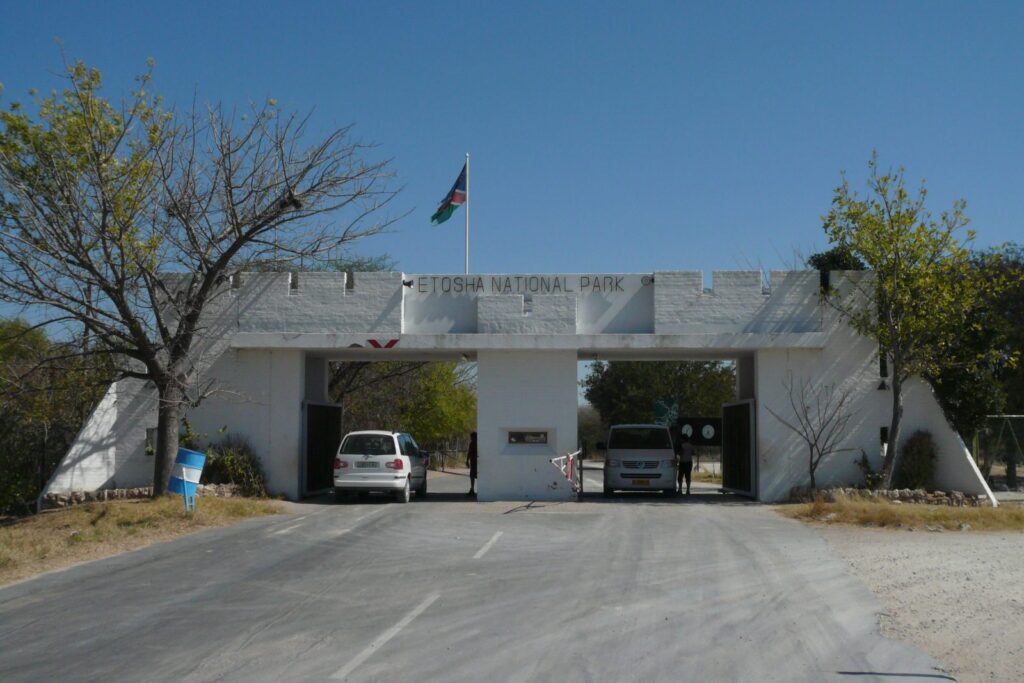
Self-drive visitors enter through one of three gates, each opening onto a different part of the park and a different rest-camp base.
Waterhole viewing
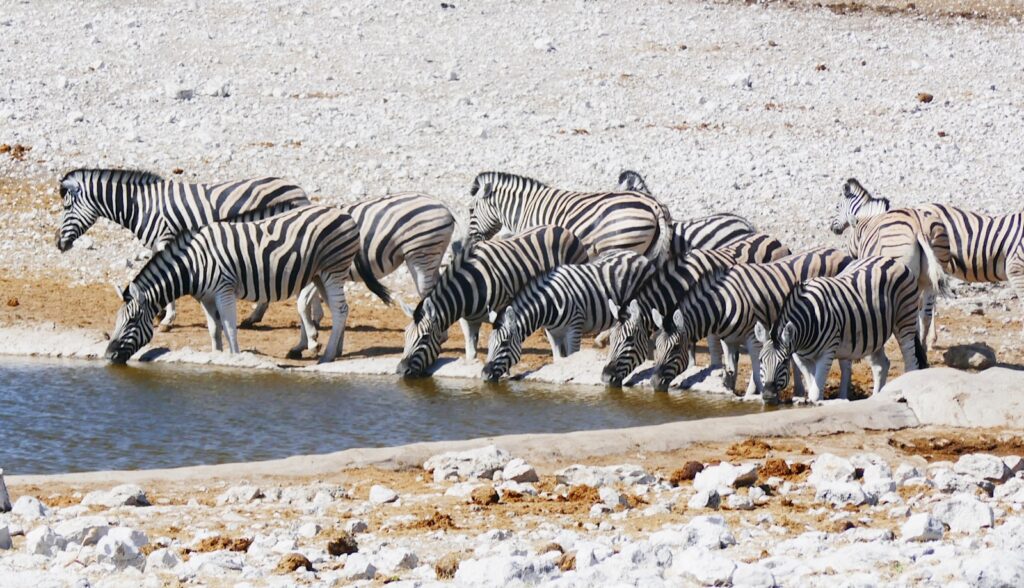
The single most distinctive way to experience Etosha is to park at a waterhole and wait. Unlike parks where game viewing depends on active tracking, Etosha’s dry-season waterholes act as natural magnets, and a stationary vehicle with patient occupants will often see far more wildlife than one that keeps moving. Camp waterholes at Okaukuejo, Halali and Namutoni are floodlit at night and can be watched from a viewing area within the camp, often producing sightings of rhino, elephant and predators after dark that are impossible to see anywhere else in Namibia without specialist guiding.
Where to stay and what to book near Etosha
Etosha has rest camps inside the park and lodges on every gate road. These three sit at very different points on the price range; the live map and availability search cover the whole area.
Places to stay near Etosha
Etosha Trading Post Campsite
Etosha Trading Post Campsite sits on the southern approach to Etosha, within convenient reach of the Andersson…
Price Guide: N$585
View Property DetailsOnguma Forest Camp
Onguma Forest Camp sits on the Onguma reserve on Etosha’s eastern boundary, close to the Von Lindequist gate…
Price Guide: N$7,300–N$9,500
View Property DetailsOngava Lodge
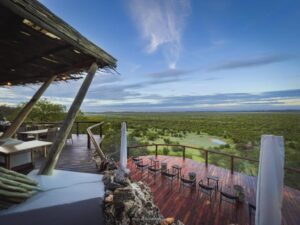
Ongava Lodge sits on the private Ongava reserve on Etosha’s southern boundary, immediately outside the…
Price Guide: N$26,000
View Property Details
Check live availabilityBrowse all Etosha accommodation
Tours and activities in Etosha
Etosha Full-Day Game Drive Safari
Spend a full day inside Etosha National Park on this guided 4x4 Etosha game drive with a local guide.
View Tour DetailsEtosha Wildlife Safari with Local Guides
Search for the big four with local guides on this private Etosha wildlife safari.
View Tour Details3-Day Etosha Budget Camping Safari from Swakopmund
This 3-day Etosha camping safari travels from Swakopmund to Etosha National Park for two full days of game viewing…
View Tour Details

See all Etosha tours and activities
Some booking links are affiliate links. We may earn a commission at no extra cost to you. See our affiliate disclosure.
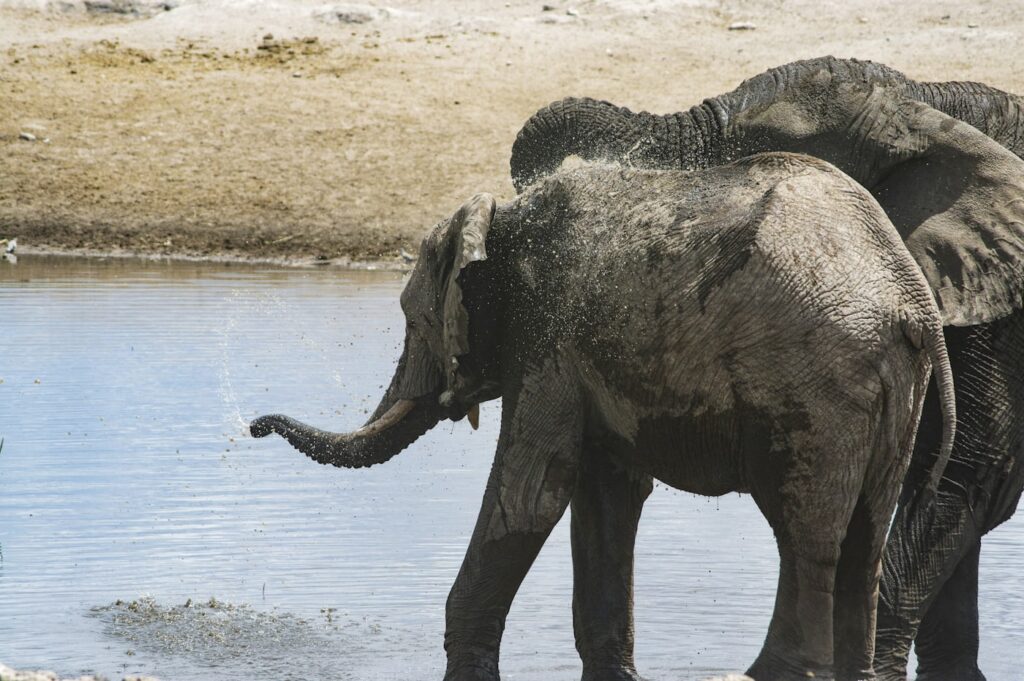
Waterholes are where Etosha’s game viewing happens: park, wait, and let the wildlife come to you rather than covering long distances.
Tours and Activities
Whether you are self-driving or travelling without your own vehicle, a guided game drive adds an experienced spotter and driver who knows the park’s waterholes and current sightings. Options range from a single game drive out of Okaukuejo to multi-day camping safaris that combine several days inside the park with an overnight journey from Swakopmund or Windhoek, plus a nearby Himba cultural visit for those wanting to combine wildlife with a cultural stop.
We’ve researched and compared the main bookable options, including departure points, duration and traveller reviews, on a dedicated page. Explore tours and safaris in Etosha National Park for the current options.
Self-drive planning and road considerations
Etosha is one of the most self-drive-friendly parks in southern Africa. The main roads linking rest camps and waterholes are well-maintained gravel, passable in a standard sedan in dry conditions, though a higher-clearance vehicle is more comfortable and gives better visibility over roadside bush. Speed limits inside the park are strictly enforced and kept low both for safety and to give animals and other vehicles time to react.
Visitors must be inside a rest camp or have exited the park by the official gate closing time, which is tied to sunset and changes throughout the year; gate and camp times are published at the entrance gates and should be checked on arrival rather than assumed from previous visits. Leaving vehicles or walking outside designated rest camp areas is not permitted, for obvious safety reasons around free-roaming dangerous wildlife.
Seasons
The dry season, roughly from May to October, is generally considered the best time for game viewing, since sparse natural water forces animals to concentrate at the park’s waterholes, and thinner vegetation improves visibility. The wettest months, typically January to March, bring green landscapes, dispersed wildlife (as animals no longer depend solely on permanent water points), and strong birding as migrant species arrive; game viewing is less concentrated but the park is quieter and lusher. Conditions vary year to year, so travellers planning a trip around a specific season should still allow flexibility.
Which months suit you depends on whether wildlife concentration or landscape matters more, and the trade-off is not the same across the country. Our guide to the best time to visit Namibia sets Etosha’s dry-season waterhole viewing against the green-season birding and scenery, month by month.
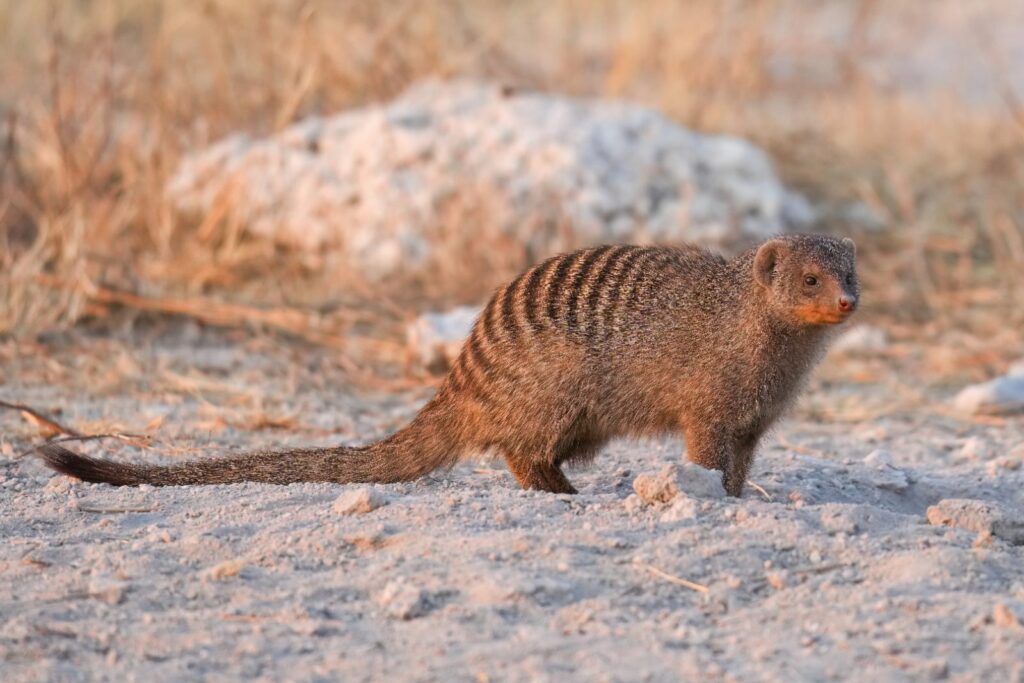
Where to stay
Accommodation options fall into three broad categories: the government-run rest camps inside the park (Okaukuejo, Halali, Namutoni and others), each offering a range of rooms, chalets and campsites with the advantage of being inside the gates and beside a floodlit waterhole; private lodges just outside the park boundary, particularly around the Andersson Gate and Von Lindequist Gate areas, which often offer more comfort and sometimes their own private waterholes or game drives; and camping, both inside park rest camps and at private sites nearby, for self-sufficient travellers.
Booking rest camps well in advance is strongly advised during the dry-season peak months. You can browse Etosha accommodation, including rest camps and private lodges, with an estimated price guide on the accommodation hub. Our guide to the best places to stay near Etosha narrows that down to lodges just outside the park, grouped by gate.
Suggested length of stay
A minimum of two nights allows a full day of driving and waterhole watching; three to four nights, moving between two or three rest camps, allows visitors to cover the different landscapes around the pan (open plains near Okaukuejo, denser mopane woodland near Halali, and the fort and springs area near Namutoni) without rushing.
Park rules and conservation context
Etosha is managed as a formally protected national park, and rules exist for good reason: staying in vehicles except at designated rest camps and picnic sites, respecting speed limits, not feeding or approaching animals, and observing gate times are all both legal requirements and basic safety measures. Off-road driving is not permitted, both for visitor safety and to protect the fragile pan and surrounding vegetation from unnecessary disturbance. Fees, permits and specific regulations are set and updated by the Namibian park authorities and should be confirmed directly with them or at the gate before travelling, since these details change over time and should not be assumed from older sources.
Responsible wildlife viewing
Because so much of Etosha’s game viewing happens from a stationary vehicle at a waterhole, responsible behaviour is straightforward: keep noise to a minimum, do not crowd a waterhole with engines running unnecessarily, never leave litter, and give other vehicles room to see and photograph. As noted above, rhino sightings should never be shared with location details on social media or with strangers, since specific location information can be used by poachers.
History of the park
Etosha was first proclaimed a game reserve in 1907 under German colonial administration, making it one of the oldest protected areas in Africa, though its boundaries and management have changed substantially since then.
Under South African administration in the twentieth century the park’s borders were redrawn several times, in some cases displacing local communities, including Hai||om San people who had long lived in and around the pan and who were resettled outside the park under apartheid-era policy. Since Namibian independence there has been ongoing engagement, including through land and resource-access processes, with communities who trace historical ties to the park, and visitors interested in this history can find more detail through Namibian heritage and land-rights organisations rather than relying on the park’s tourist-facing signage alone.
Birdlife
Etosha is a strong birding destination alongside its mammal viewing. The pan itself, when it holds water after good rains, can attract large flocks of flamingos and pelicans. Raptors are well represented, including bateleur, martial eagle and various vultures, and the woodland and grassland areas around the pan hold a wide range of smaller species. Birding is generally best during and just after the rainy season, when migrant species are present and food is abundant, though resident species can be seen year-round.
Photography considerations
The stark white pan creates strong, high-contrast light in the middle of the day, and many photographers prefer the softer light of early morning and late afternoon both for colour and for more active animal behaviour. A vehicle used as a mobile hide at a waterhole, with the engine off and windows down, often produces the best results, since animals become accustomed to a stationary, quiet vehicle far more quickly than one that keeps starting and moving.
Combining rest camps
Because each rest camp sits in a slightly different habitat and offers a different waterhole character, many self-drive visitors choose to split a stay across two camps rather than basing themselves in only one. A common pattern is two nights at Okaukuejo in the west, known for its dramatic floodlit waterhole and open plains game viewing, followed by a further night or two at Halali (central, denser bush, good for leopard sightings) or Namutoni (east, built around the old fort, with its own strong waterhole and easy access from Tsumeb). The rest camps inside the park are operated by Namibia Wildlife Resorts and are booked separately from the private lodges outside the gates.
How to get there
Etosha is most commonly reached by self-drive from Windhoek via Okahandja and Otjiwarongo to Outjo and Andersson Gate (roughly four to five hours), or from the Namibia Coast via Swakopmund and Omaruru. Visitors coming from the north-east typically approach via Tsumeb and Von Lindequist Gate. Scheduled and charter flights serve nearby airstrips for guided safari operators, though most independent travellers drive in via one of the main gates.
Where to go next
Most itineraries approach Etosha from the south through Outjo and Andersson Gate, or from the east through Tsumeb and Von Lindequist Gate. Which you choose usually decides where you spend the first and last nights.
Leaving the park, the natural onward legs are south to the Waterberg Plateau, west towards Damaraland via Kamanjab, or north-east towards the Kavango and the Zambezi. See the full Etosha and Central North region guide for how these connect.
Nearby destinations
Etosha anchors the Etosha and Central North region and combines naturally with routes west, south and onward through the centre of the country.
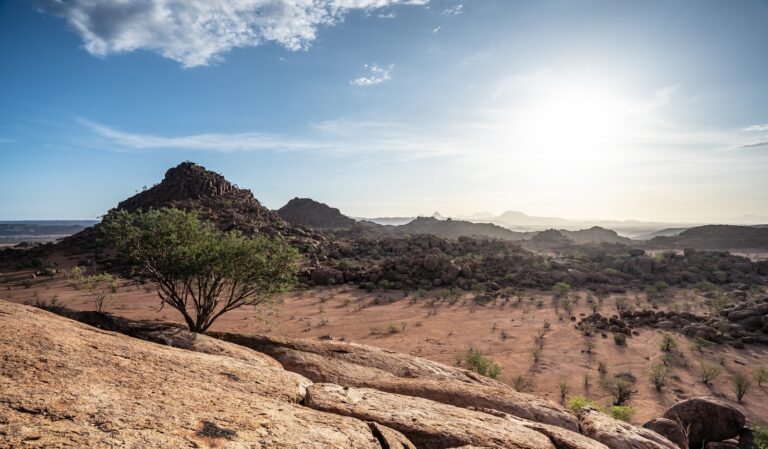
Damaraland
Rocky desert-adapted landscapes to the west, on the route toward the coast.
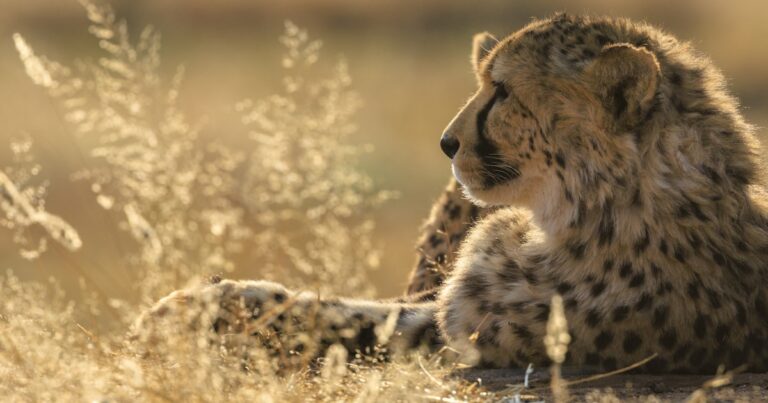
Waterberg & Otjiwarongo
A wildlife and plateau region south of Etosha, en route to Windhoek.
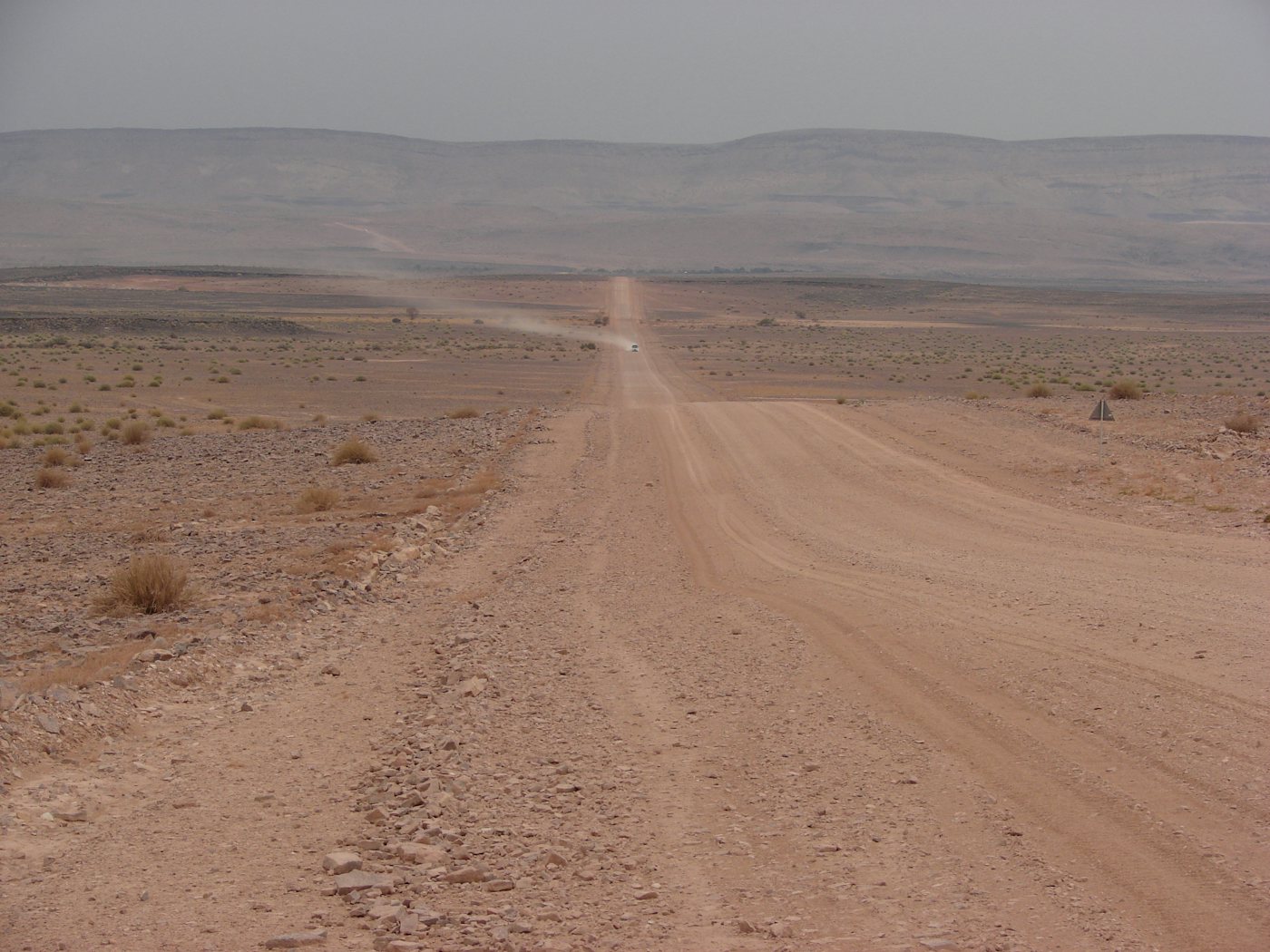
Self-Drive Namibia
How Etosha fits into a wider self-drive circuit around the country.
Frequently asked questions
Do I need a 4×4 to visit Etosha?
No. The main tourist roads between rest camps and waterholes are well-graded gravel, usually passable in a standard sedan in dry conditions, though higher clearance is more comfortable.
Can I get out of my car in Etosha?
Only at designated rest camps and marked picnic sites. Getting out elsewhere is both against park rules and genuinely dangerous given the presence of lion, elephant and other wildlife.
How many days should I spend in Etosha?
Two nights is a reasonable minimum; three to four nights allow a more relaxed pace across different parts of the park.
Last reviewed: July 2026.
Planning the rest of your trip?
See how Etosha fits into a full Namibia route, and what to prepare before you drive there.
Choosing an entrance? Etosha east vs south vs west compares the gates and explains why being early through one matters more than which one you pick.