
Namibia with young children can be rewarding when the route is designed around energy, shade, food and predictable sleep rather than the adult wish list. The country’s long distances are the main planning challenge. A route that looks elegant on a map may still contain several days that are too long for a toddler or early-school-age child.
The manageable version of Namibia with young children uses fewer bases, two- or three-night stays and activities that can be shortened without losing the day. Families should also discuss medical needs, malaria risk and car-seat requirements with qualified professionals and the rental provider well before departure.
In this guide
Namibia with young children: a practical overview
A first family circuit might link Windhoek, one desert base, Swakopmund and one wildlife area over twelve to fourteen nights. Namibia with young children becomes harder when Damaraland, the far south or the north-east is added without removing something else. Protect a recovery day after the flight and keep the final night within a sensible transfer of the airport.
Limit long driving days
Break the route into legs with reliable toilets, food and safe stopping places. For Namibia with young children, two consecutive all-day drives are usually more disruptive than one longer transfer followed by several stationary nights. Leave early enough to stop without sacrificing daylight.
Pack a small in-car bag with water, simple snacks, wipes, spare clothes and familiar entertainment. Keep it accessible without unpacking the vehicle at every stop.
Confirm the correct restraint before payment
Ask the rental company for the child-seat type, age or weight range, installation method and whether a photograph is available. Travelling in Namibia with young children requires a restraint that fits both the child and vehicle; a vague promise of a ‘baby seat’ is not enough.
Inspect the seat at handover and request help if the installation is unclear. Do not place loose luggage where it can become dangerous during sudden braking.
Choose stays that reduce daily friction
Useful family features include a refrigerator, early meals, a shaded outdoor area, laundry, flexible room arrangements and a pool with clear safety controls. Namibia with young children is easier when one adult can prepare food or rest while the other handles luggage.
Ask about stairs, unfenced water, wildlife around camp and the distance from parking to the room. ‘Family friendly’ is less useful than specific answers about the property.
Find family-friendly bases
Compare stays by room layout, meal flexibility, shade and driving location before choosing the lowest nightly rate.
Keep game drives flexible
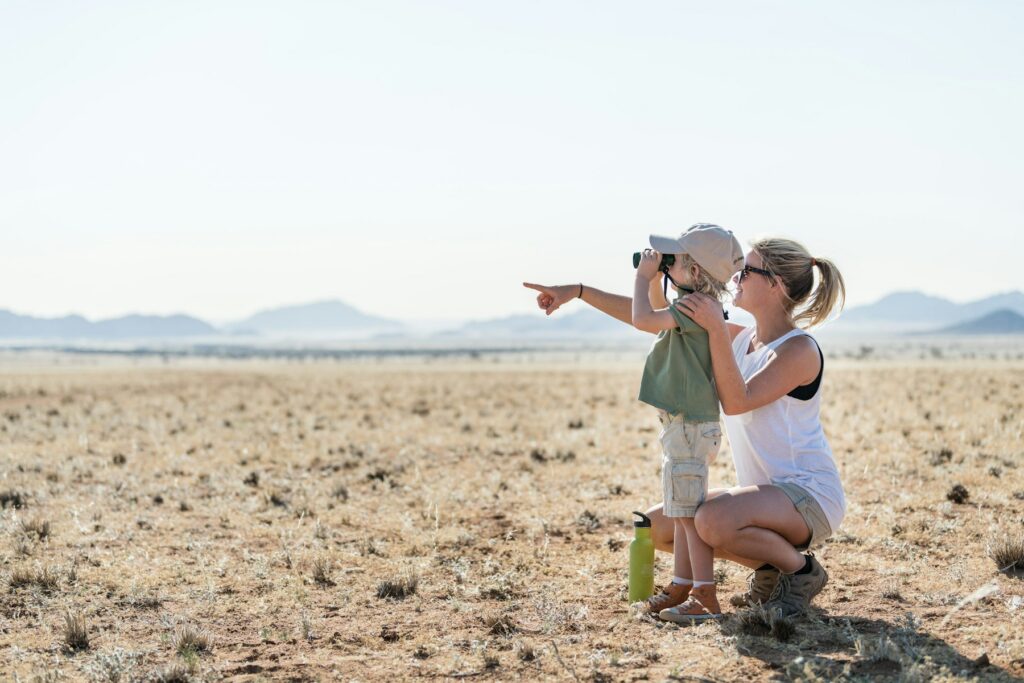
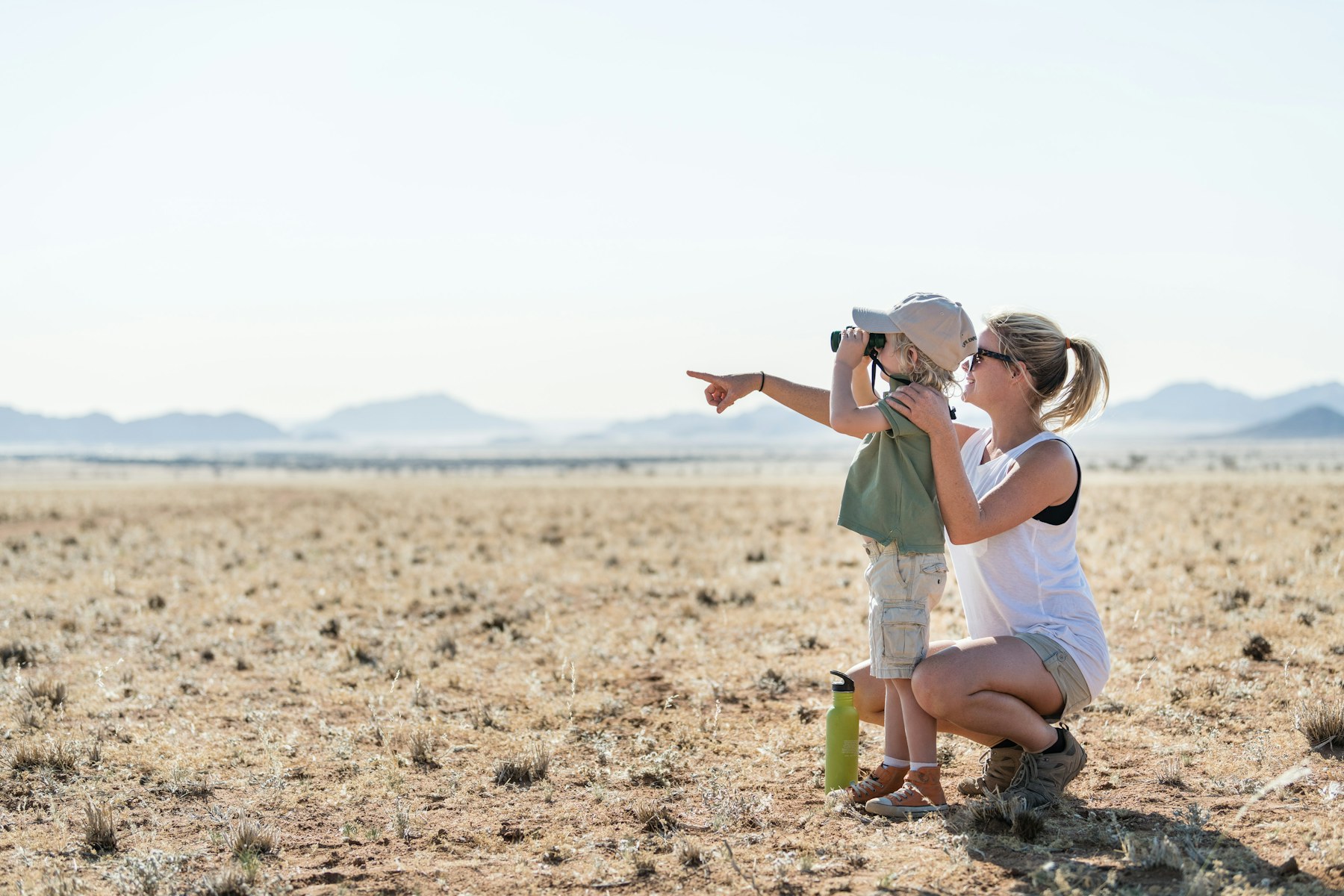
Children vary widely in how long they can sit quietly. Plan shorter loops with toilets and a camp break rather than a single dawn-to-dusk drive. Namibia with young children works best when wildlife viewing includes binoculars, animal tracks and waterhole observation instead of pressure to find a particular species.
Never let children stand through an open roof or leave the vehicle outside authorised areas. Explain the rules before entering the park and model quiet behaviour around animals.
Plan for heat, sun and healthcare
Use high-protection sunscreen, hats, breathable clothing and frequent water breaks. Never leave a child in a parked vehicle. Families visiting Namibia with young children should obtain personalised travel-health advice, especially for malaria areas and routine vaccinations.
Carry prescribed medicine in original packaging and know where the nearest suitable clinic is along remote sections. Travel insurance should cover the planned activities and medical evacuation where appropriate.
Final checks before you travel
- Reduce the route to fewer bases and longer stays.
- Confirm child restraints for the exact ages and vehicle.
- Pack familiar food, water and comfort items.
- Choose short game-drive loops with regular breaks.
- Get qualified health advice for the actual itinerary.
Use the Namibia Tourism Board visitor information as a starting point and obtain current medical advice from an appropriate professional. Our itinerary hub helps families remove unnecessary transfers. Namibia with young children succeeds through margin: more time, fewer promises and room for an ordinary afternoon.