

Oshakati
The commercial heart of north-central Namibia’s densely populated Owambo-speaking regions.
Oshakati is the largest town in north-central Namibia and the commercial heart of the densely populated Owambo-speaking regions, set on the flat Cuvelai floodplain close to the Angolan border. Alongside the neighbouring towns of Ongwediva and Ondangwa, it forms an urban corridor that functions as the effective capital of the north, though it remains far less visited by international travellers than Namibia’s desert and wildlife circuits.
Oshakati at a glance
North-central Namibia’s urban corridor
Oshakati sits in one of the most densely settled parts of Namibia, in clear contrast to the sparsely settled desert and bush regions further south, reflecting the long-established Owambo farming and settlement pattern based on mahangu (pearl millet) cultivation and cattle-keeping. Together with Ongwediva and Ondangwa, with the region’s main airport, it forms a built-up corridor connecting all three – unusual in a country where most towns are separated by long stretches of open country.
Historical development and present-day role
Oshakati grew from a small administrative and mission station into a significant town during the South African administration of Namibia, expanding considerably as a military and administrative base during the Namibian war of independence, when the wider Owambo region was a focal point of the conflict between South African forces and SWAPO’s liberation fighters. Since independence in 1990, Oshakati has developed rapidly as a civilian commercial centre, with substantial private investment in retail, banking and services. Today it is the main shopping and business centre for the four densely populated north-central regions, with shopping centres, banks, a large hospital and a wide range of services.
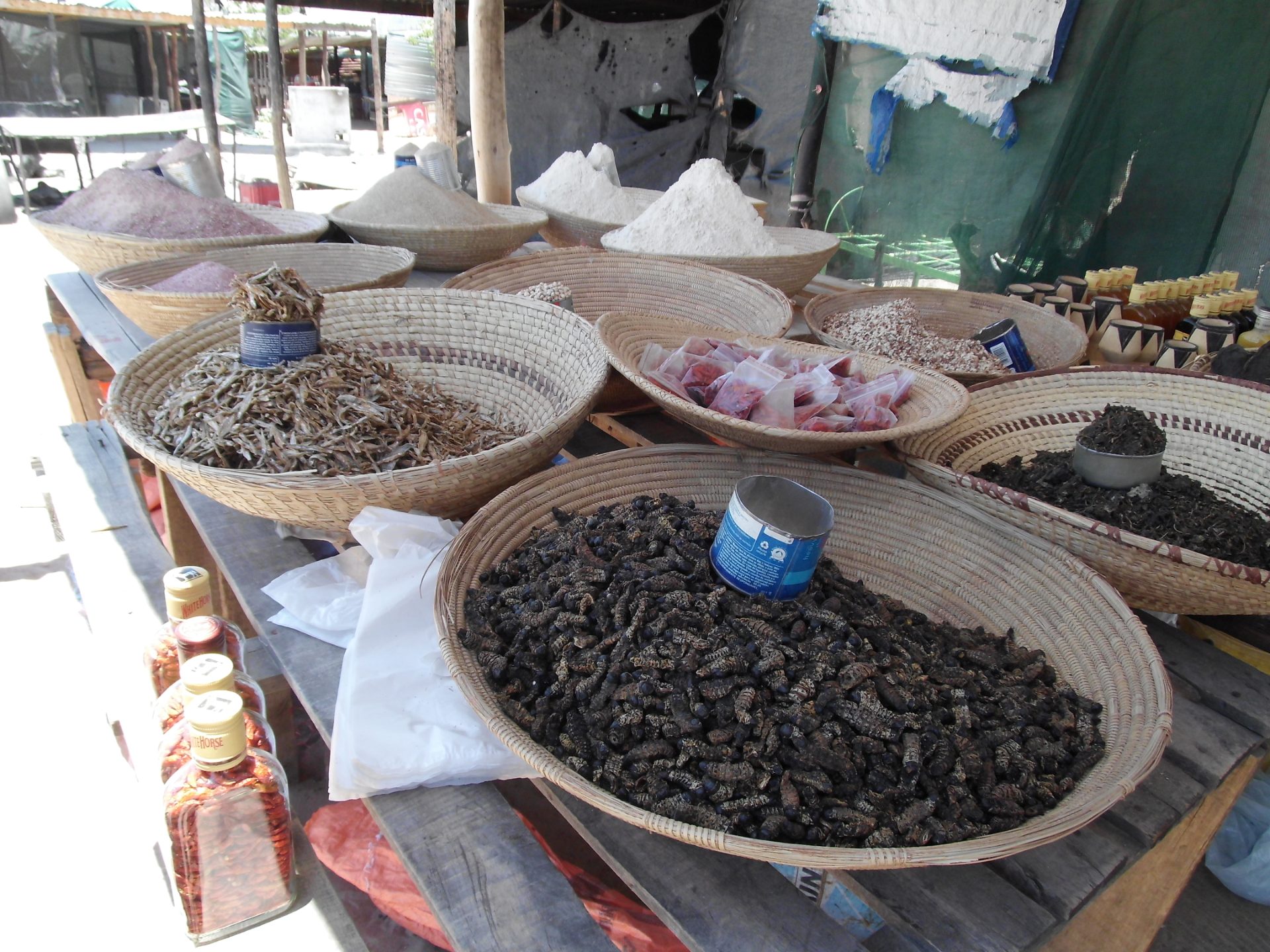
Markets and shopping
The Oshetu Community Market in Oshakati is one of the largest open-air markets in Namibia, selling fresh produce, traditional foods and drinks such as oshikundu (a fermented mahangu drink), household goods and crafts, alongside modern shopping centres and supermarkets typical of a regional commercial hub.
Photo: Pemba.mpimaji, CC BY-SA 4.0, via Wikimedia Commons.
Cultural and historical context
The wider region is the historical heartland of the Owambo peoples, made up of several related groups with their own traditional authorities and homesteads. Traditional Owambo homesteads, distinguished by their enclosed wooden palisade compounds, can still be seen throughout the surrounding countryside, alongside more modern housing in the towns themselves.
Road and air access
Oshakati connects onward towards Etosha National Park’s northern King Nehale gate, to Ruacana and the Kunene River on the Angolan border, or across the border itself via the Oshikango crossing further north, making it a useful, if unconventional, link between the northern parks and the wider Owambo region.
Seasonal landscape and climate
The Cuvelai floodplain’s oshanas typically fill during and after the rainy season, from around December to April, when the flat landscape can become dotted with shallow water and, in significant years, cause localised flooding known as efundja. Outside this period, the land is dry and dusty, reverting to its more typical semi-arid character.
Road, safety and practical considerations
The B1 and other main roads in the area are tarred and well maintained. During the rainy season, some minor roads across the floodplain can be affected by standing water, so local advice should be sought if travelling off the main routes at that time of year. As with any busy Namibian town, normal urban precautions apply, such as securing valuables and being alert in crowded market areas.
Where to stay in Oshakati
Oshakati is the commercial centre of the north but has far fewer visitor rooms than its size suggests — most beds serve business travel rather than tourism. Live availability below shows what is actually bookable.
Places to stay near Oshakati
Omulunga Bush Camp
Quiet bush camp near Ruacana on the Kunene, with room-only tents — a quiet, affordable stop at the top of the…
Price Guide: N$1,848
View Property Details

Some booking links are affiliate links. We may earn a commission at no extra cost to you. See our affiliate disclosure.
Where to stay in Oshakati
As the largest town in the north-central region, Oshakati offers the widest local choice of hotels and guesthouses. Use the accommodation finder above, or browse the Namibia accommodation hub.
Nearby destinations
North-Central Namibia. The wider region Oshakati belongs to.
Ondangwa. The neighbouring transport and airport town.
Ongwediva. The neighbouring residential and educational town.
Frequently asked questions
Is Oshakati a typical stop on a Namibian holiday itinerary?
Not usually. Most international visitors focus on Etosha, the desert regions and the coast, so Oshakati is more often visited by travellers with a specific interest in the region, business in the area, or those routing between Etosha and Ruacana.
What is the Oshetu market like?
It is one of Namibia’s largest open-air markets, selling fresh produce, traditional foods and drinks, and household goods, offering a genuine slice of everyday commercial life in the region.
Can I fly to Oshakati?
The nearest airport is at Ondangwa, a short distance from Oshakati, with scheduled domestic flights connecting to Windhoek.
Last reviewed: 27 July 2026.
Planning a stop in Oshakati?
See the wider North-Central Namibia region, build a self-drive route towards Etosha or Ruacana, or check the practical planning guides before you go.
North-Central Namibia hub Self-Drive Namibia guide Itineraries Travel Planning