
Lüderitz
A remote German colonial port on a rocky Atlantic peninsula — Namibia’s most atmospheric, windswept coastal town.
Destinations > Southern Namibia > Lüderitz
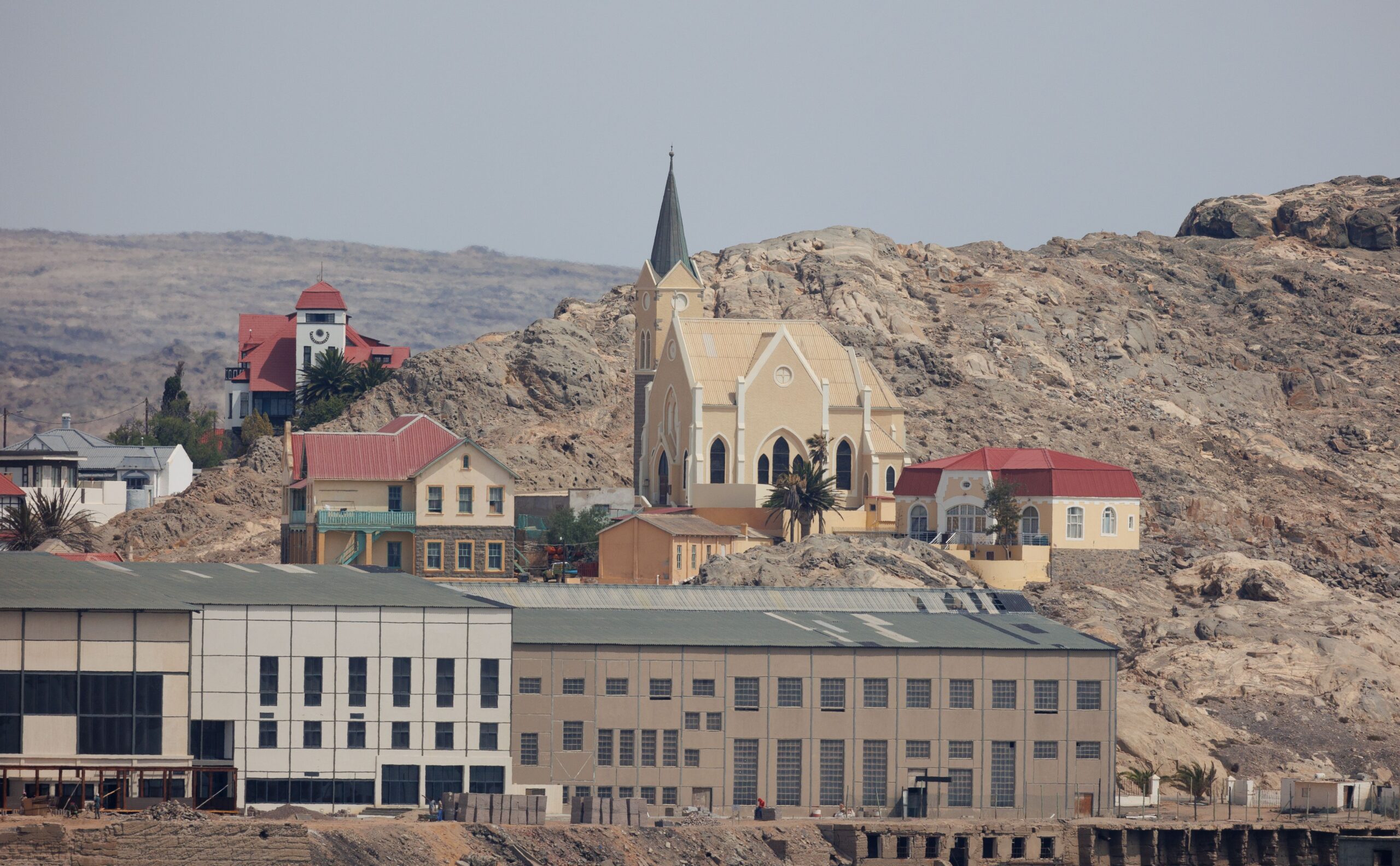
Lüderitz is Namibia’s most remote and atmospheric coastal town: a cluster of restored German colonial and Art Nouveau buildings perched on a rocky Atlantic peninsula, surrounded on the landward side by the shifting dunes of the Sperrgebiet, the former diamond exclusion zone. Cold, windy, and often wrapped in sea mist, it is a strikingly different coastal experience from Swakopmund further north, with a smaller town, a harder edge of isolation, and a history of diamond wealth, forced labour and colonial violence that visitors should engage with directly rather than treat as a picturesque backdrop.
From Nama coastline to colonial diamond port
Before European contact, the harsh, arid coastline around present-day Lüderitz was used seasonally by Nama pastoralist groups, though its lack of fresh water and exposed conditions meant it never supported large settlements. Portuguese navigator Bartolomeu Dias landed near here on his 1487 to 1488 voyage and erected a stone cross at what is now Diaz Point, one of the earliest recorded European contacts with this stretch of the African coast, though no lasting European settlement followed for centuries afterward.
The Nama presence in this region long predates European contact and continued alongside and after it; Nama clans in southern Namibia maintained their own political structures and seasonal grazing routes through this arid coastal strip well into the colonial period, and Nama resistance to German rule, alongside that of the Herero further north, was central to the events that later unfolded at Shark Island.
The modern town takes its name from Adolf Lüderitz, a German merchant whose 1883 purchase of coastal land here (via an agent, from a local Nama leader, under terms later disputed as exploitative) became the basis for Germany’s declaration of a protectorate over the territory in 1884, the beginning of German South West Africa. The town grew slowly as a minor port until the discovery of diamonds nearby in 1908 transformed it almost overnight into a boomtown, with grand municipal and commercial buildings built in a short burst of German colonial and Art Nouveau architecture that still defines the town centre today.
The 1908 diamond discovery near Lüderitz led to the declaration of the Sperrgebiet (“forbidden zone”), a vast restricted area along the coast that remained largely closed to the public for most of the twentieth century and is still only partially accessible today, generally through organised tours. Diamond wealth built the elaborate buildings of Kolmanskop, a company town a short drive inland that was abandoned once richer deposits were found further south, and is now a preserved ghost town slowly being reclaimed by the dunes.
Architecture
Lüderitz’s town centre preserves an unusually intact collection of early-1900s German colonial buildings, many in a decorative Art Nouveau (Jugendstil) style unusual for a small African port town, funded by the diamond boom of the period. Goerke House, built for a diamond company official, is the best-known example and is open to visitors; the Lutheran Felsenkirche (“church on the rock”), perched above the town, is another landmark, along with the old railway station and various restored merchant buildings along the main streets.
Many of the surviving buildings were designed in a Wilhelminian/Art Nouveau style imported directly from Germany and adapted, sometimes awkwardly, to the desert coast: turrets, gables and decorative brickwork built with imported materials in a location with almost no local timber or fresh water, at considerable expense during the diamond boom years. Goerke House, one of the most photographed of these buildings, was built for a colonial official and is open to visitors, though opening hours are limited.
Harbour and waterfront
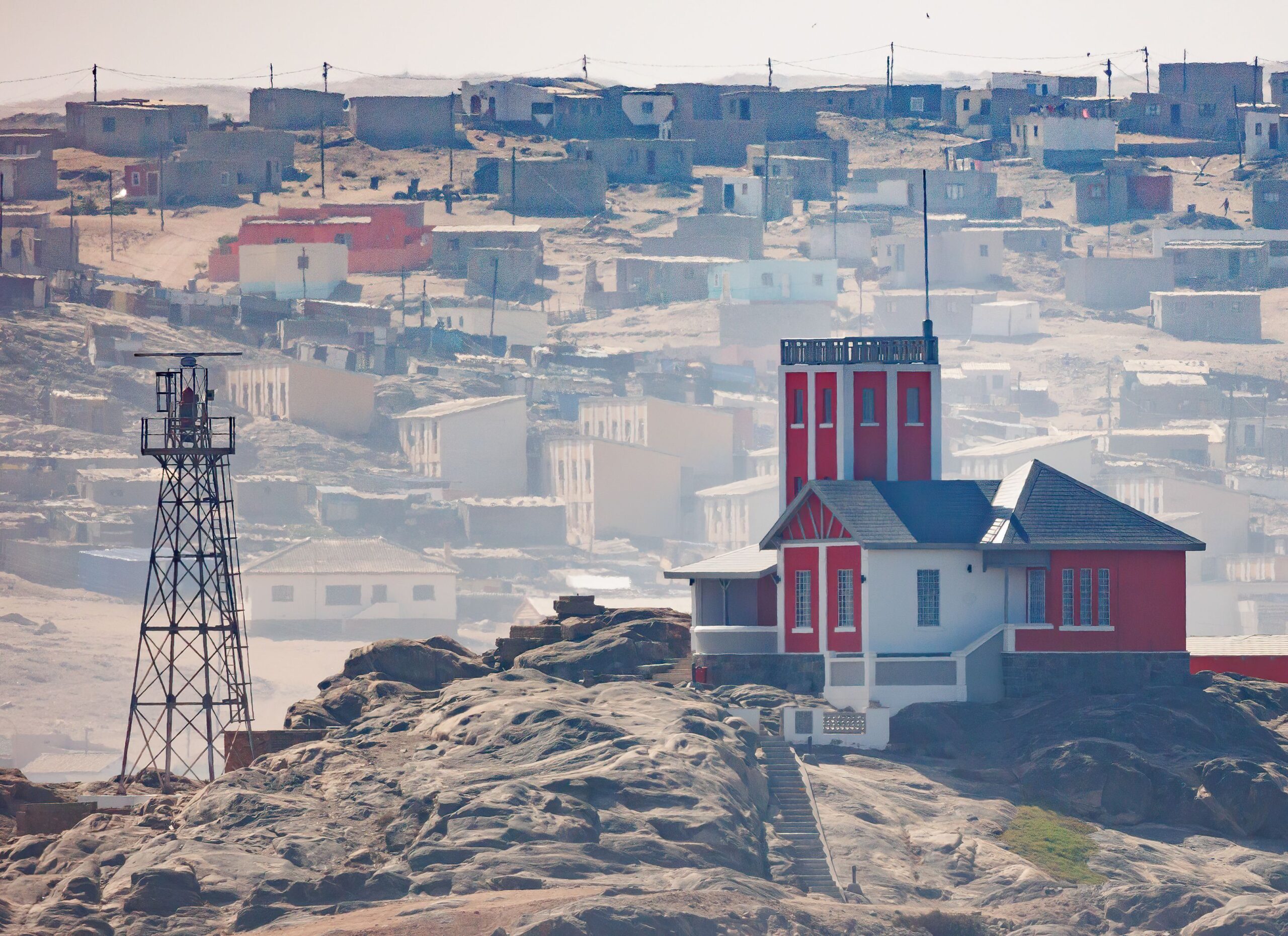
Lüderitz’s natural harbour has supported fishing and, historically, rock lobster and oyster industries, and the waterfront area retains a working-port character alongside its tourism role. Small boat trips from the harbour offer views of the peninsula’s rocky coastline and its seabird and marine life.
Shark Island and its difficult history
Shark Island, now a small peninsula connected to the town and used as a campsite with harbour views, was the site of one of the most severe atrocities of the German colonial period: a concentration camp where, during and after the 1904 to 1908 war against the Herero and Nama peoples, German colonial forces imprisoned Nama and Herero people, including women and children, under conditions of forced labour, starvation and extreme mortality that scholars and Namibian and German institutions have since recognised as genocide. Visitors to Shark Island should be aware of this history; it is not a neutral or purely scenic site, and its present-day use as a campsite exists alongside this history rather than erasing it.
Germany officially recognised the events against the Herero and Nama as genocide in 2021, and discussions between the German and Namibian governments over acknowledgement, restitution and memorialisation have continued since, including debate over whether a formal memorial should be established on Shark Island itself. Some descendant communities and historians consider the current absence of a dedicated memorial on the site, given its continued informal use as a campsite, to be an unresolved and sensitive issue rather than a settled one, and visitors researching this history further are encouraged to consult Namibian and Herero and Nama community sources rather than relying on colonial-era framings alone.
Museums and heritage

The small Lüderitz Museum covers the town’s natural and colonial history, including its diamond-mining past. The area’s most-visited attraction, though, lies a short drive inland: Kolmanskop, the diamond town abandoned in the 1950s and now steadily filling with sand. Entry is by permit or guided tour — our full Kolmanskop guide covers the history, how access works and what you actually see.
Kolmanskop, the abandoned diamond-mining town near Lüderitz. Photo: Chris Stenger / Unsplash.
Diaz Point and coastal excursions

Diaz Point, a short drive from town along the peninsula, marks the site of Bartolomeu Dias’s 1488 cross (a modern replica stands today, the original having weathered away or been removed) and offers dramatic rocky coastal scenery, seabird colonies and, seasonally, views of Cape fur seals and occasionally whales offshore.
Boat trips around the peninsula and nearby islands can encounter African penguins (at one of the few colonies in Namibia), Cape fur seals, various seabirds and occasionally dolphins or whales. The cold Benguela Current and frequent wind make the water rough at times, and trips are sometimes cancelled or altered in poor conditions.
Getting there and around
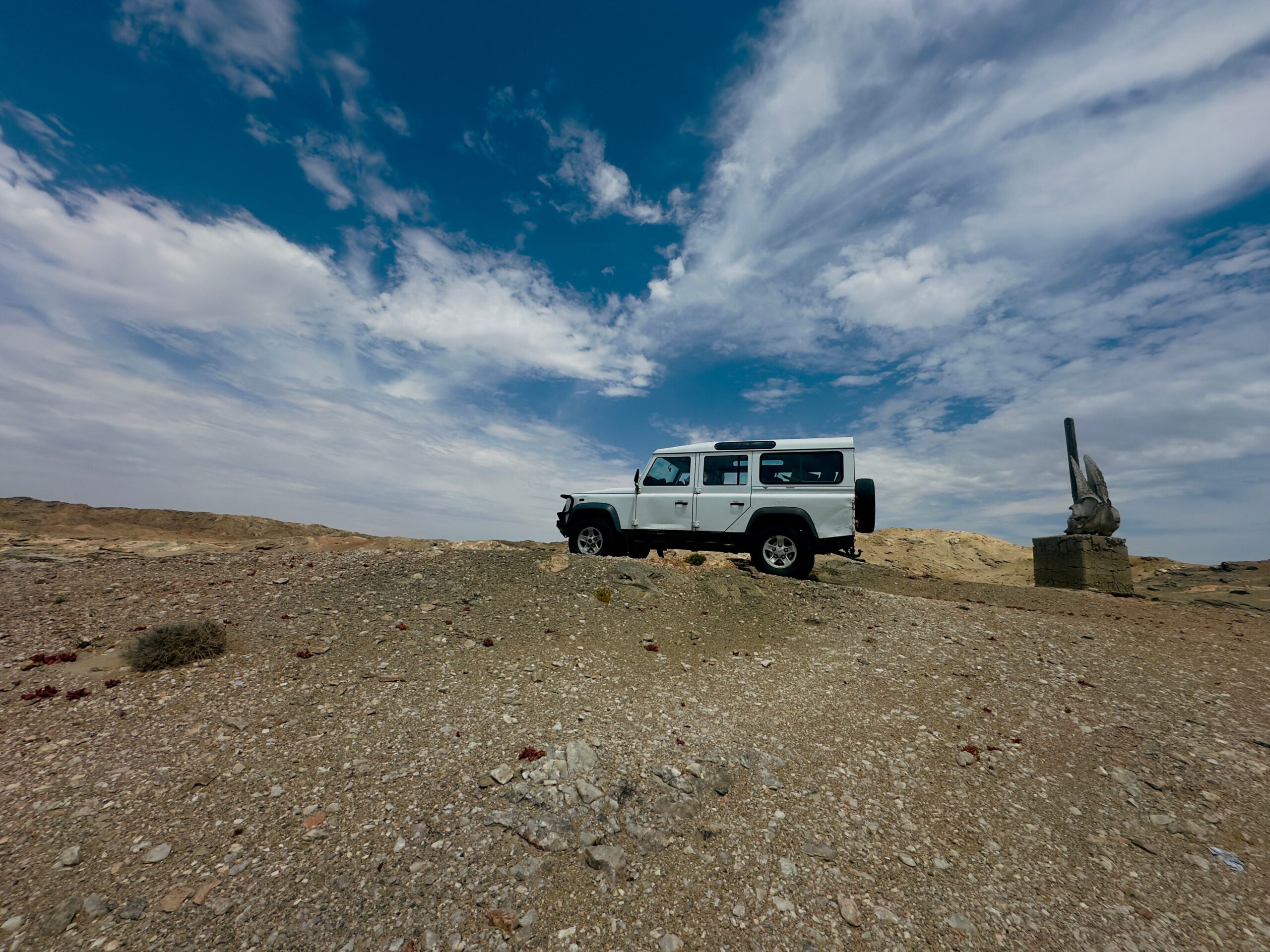
Lüderitz is reached via a tarred road from Aus (roughly 120 kilometres, about 1.5 hours), itself on the main road between Keetmanshoop and the coast. The drive from Aus to Lüderitz crosses striking, empty desert scenery, including areas where wild horses are occasionally seen near the road. From Keetmanshoop, the full drive takes around 3.5 to 4 hours.
Lüderitz Airport has at times had domestic flights to Windhoek, but scheduled service is intermittent – check current availability before planning to fly, as most visitors arrive by road.
Lüderitz is one of the windiest towns in southern Africa, with strong south-westerly winds common, particularly in the afternoons, alongside the same cold Benguela Current influence that keeps Swakopmund cool. Visitors should pack windproof layers even in summer, and be prepared for boat trips or outdoor activities to be affected by wind on any given day.
Lüderitz’s historic centre is compact and easily explored on foot, with most of the notable colonial-era buildings, the harbour and the waterfront within a short walking distance of each other. A vehicle becomes useful mainly for reaching Diaz Point, Grosse Bucht and other coastal viewpoints outside the town itself, and for the short drive out to Kolmanskop, which lies just off the main road back toward Aus and requires a permit purchased in town or at the site gate. There is no public transport network to speak of, so self-drive or organised tours are the practical options for anything beyond the town centre.
Where to stay in Lüderitz
Lüderitz has a small stock of guesthouses and self-catering flats rather than large hotels, so rooms can be tight in peak season. These three span the range in town; the map and availability search cover the whole peninsula.
Places to stay near Lüderitz
Windy Dunes Self-Catering Accommodation
Windy Dunes Self-Catering Accommodation is a small independent apartment on Erf 739 in Lüderitz, about 0.8 km from…
Price Guide: N$880–N$1,056
View Property DetailsShark Island Guesthouse
Shark Island Guesthouse sits on Insel, right on the water in Lüderitz, about 1.1 km from the town centre, giving…
Price Guide: N$1,200
View Property DetailsLüderitz Nest Hotel
Lüderitz Nest Hotel sits on Diaz Street directly on the bay in Lüderitz, a colonial-era port town on Namibia's…
Price Guide: N$4,400–N$4,700
View Property Details


Check live availabilityBrowse all Lüderitz accommodation
Some booking links are affiliate links. We may earn a commission at no extra cost to you. See our affiliate disclosure.
Good to know
Accommodation is concentrated in the town centre, within walking distance of the main historic buildings and waterfront, ranging from historic guesthouses to modern hotels; camping options exist at Shark Island and elsewhere on the peninsula for self-sufficient travellers. You can browse Lüderitz accommodation by price and type on the accommodation hub.
One full day allows a Kolmanskop tour in the morning (best done early, both for light and before tour groups arrive) and an afternoon exploring the town centre and Diaz Point; a second day allows a boat trip or a more relaxed pace given the long drive most visitors have already made to get here.
Frequently asked questions
Do I need a permit to visit Kolmanskop?
Yes — Kolmanskop lies within the former Sperrgebiet and entry requires a permit or a booked guided tour, normally arranged in Lüderitz or at the site. Confirm current arrangements locally, since access rules can change. Full detail is on our Kolmanskop guide.
Is Lüderitz worth the long drive?
Most visitors who make the trip find the combination of Kolmanskop, the town’s architecture and the dramatic, empty coastal scenery worthwhile, though it suits travellers with enough time for the detour rather than a very tight itinerary.
Is Lüderitz worth visiting if I am short on time?
Even a single night allows time to walk the historic centre, visit the waterfront and fit in a half-day trip to Kolmanskop, though travellers with an extra night can also reach Diaz Point and the coastal viewpoints beyond town at a more relaxed pace.
Where to go next
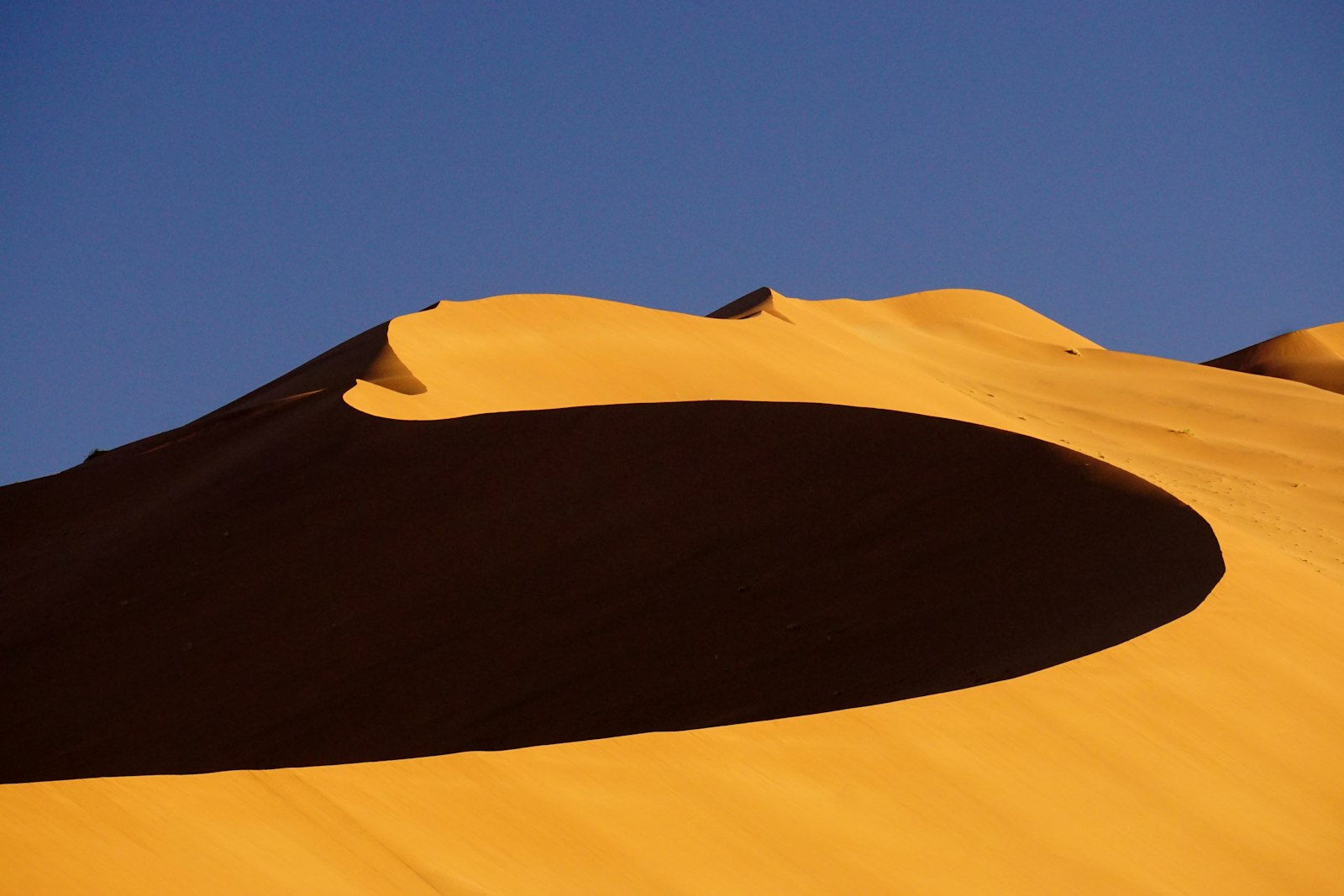
Sossusvlei
Namibia’s iconic red dunes, reachable on a longer southern-route drive.
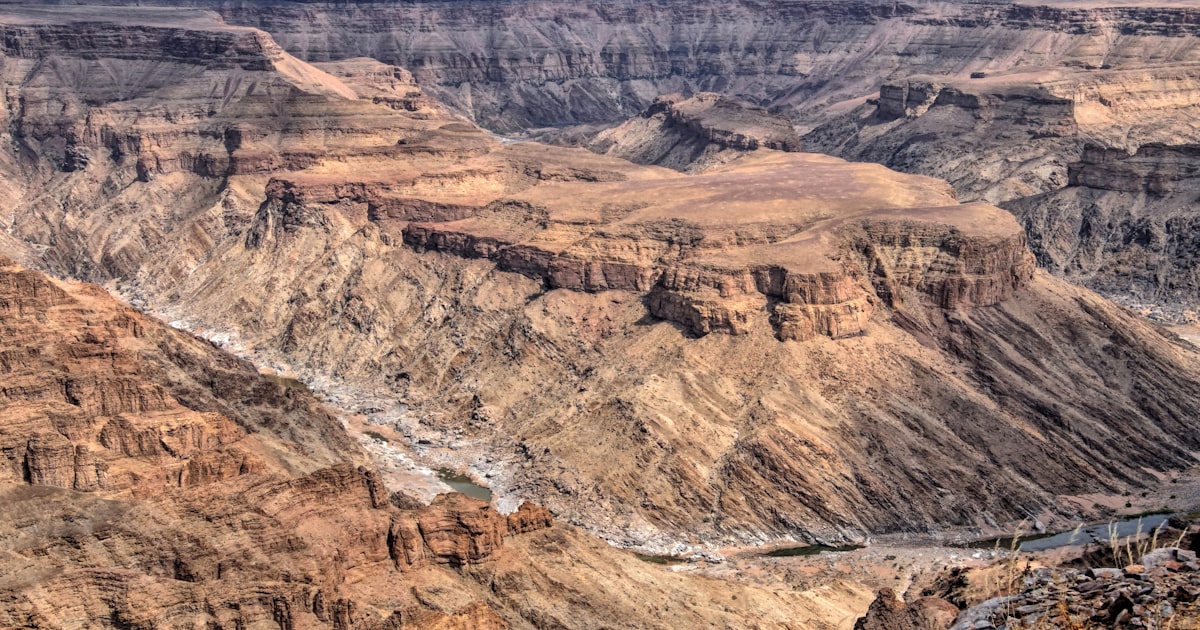
Fish River Canyon
One of the world’s largest canyons, part of the same southern circuit.
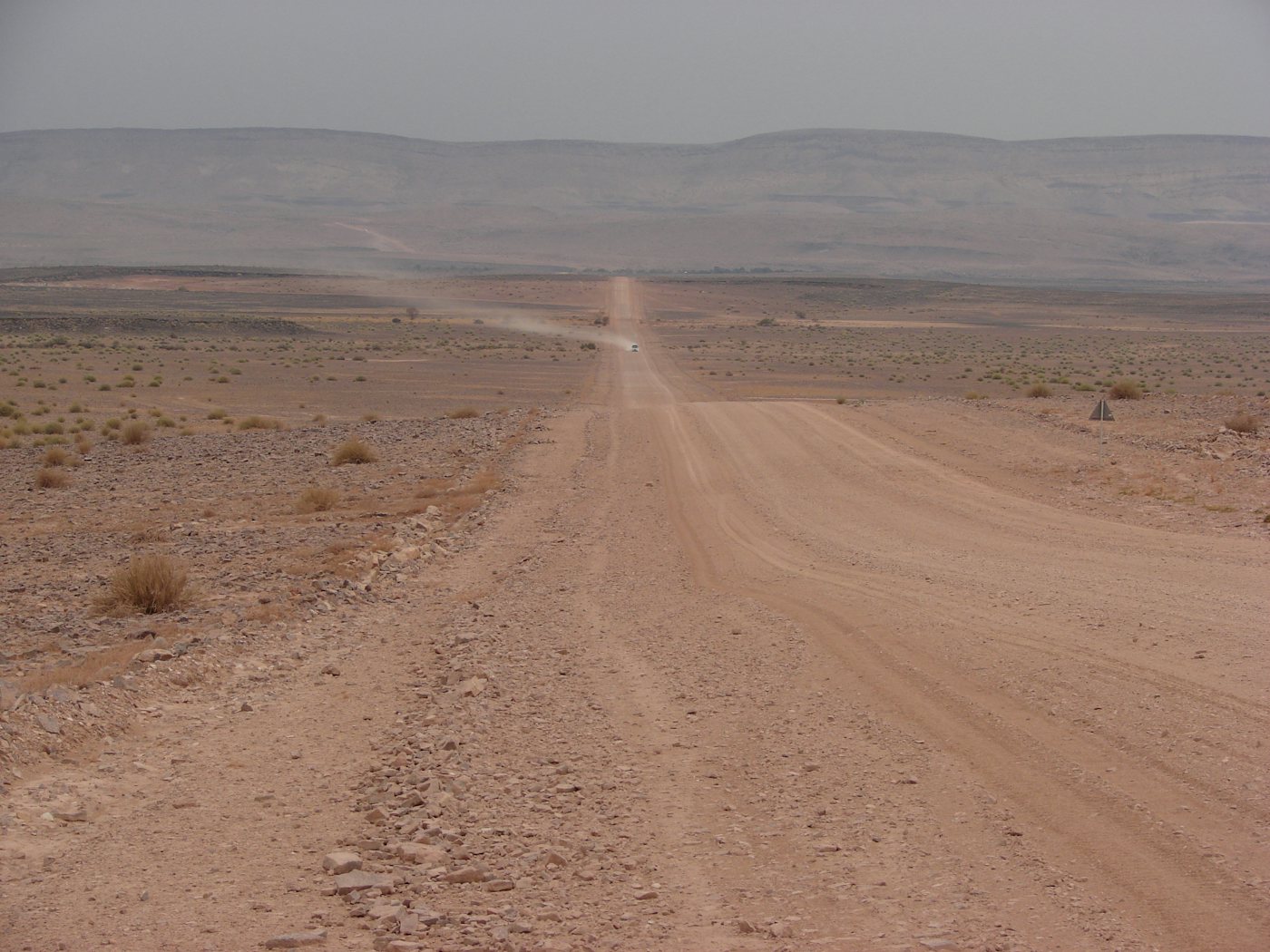
Self-Drive Namibia
Route-planning guidance for the long roads to and from Lüderitz.
Nearby destinations
Lüderitz is part of the Southern Namibia region, close to Aus, Kolmanskop and the Sperrgebiet National Park, and forms a natural stop on longer southern routes connecting to Sossusvlei and the Fish River Canyon area. See the Self-Drive Namibia guide for route planning.
Planning a trip to the south?
Lüderitz rewards travellers with time for the detour — pair it with Kolmanskop, Sossusvlei and Fish River Canyon on a southern Namibia route.
Self-Drive Namibia guide See all destinationsLast reviewed: July 2026.
Planning a longer trip? See our Namibia itineraries to see how Lüderitz fits into a 7-, 10-, 14- or 21-day route.