
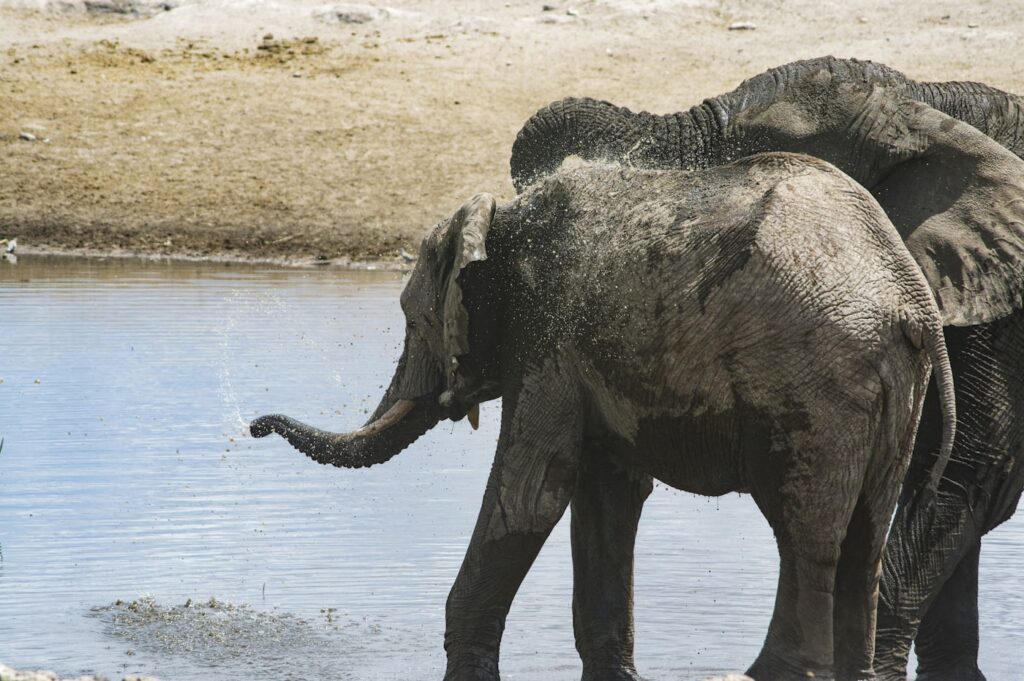
Etosha’s waterholes are the single best reason many visitors plan their trip around the dry season: as natural water becomes scarce, wildlife concentrates at permanent and pumped waterholes, turning patient, quiet waiting into one of the most reliable ways to see a wide range of species in a single sitting. This guide focuses specifically on planning a waterhole-centred visit; for full park logistics, gates and accommodation, see our main Etosha National Park destination guide.
Why Waterholes Matter in Etosha
Etosha’s landscape is dominated by a vast salt pan that holds little surface water for most of the year. Outside the rains, wildlife depends heavily on a network of natural springs and artificially pumped waterholes scattered along the pan’s edges and rest-camp areas. This makes waterholes a far more concentrated and predictable wildlife-viewing strategy than driving widely across the park hoping to encounter animals on the move.
Seasonal Variation in Waterhole Activity
Waterhole activity is strongly seasonal. In the dry season, particularly from July to October, waterholes can be busy for much of the day and are often the single most productive place to wait rather than drive. In the green season, rain-filled pans elsewhere in the park reduce dependence on fixed waterholes, and sightings become more dispersed and less predictable at any one point, though the surrounding landscape is greener and quieter of other visitors. See our best time to visit Namibia guide for the wider seasonal picture.
Natural and Artificial Water Sources
Etosha’s waterholes fall broadly into two categories: natural springs, often fed by underground water reaching the surface at the pan’s edge, and pumped waterholes maintained by park management specifically to support wildlife through the dry months. Both types can be excellent for viewing; natural springs sometimes attract more consistent long-term activity, while pumped waterholes near rest camps offer the convenience of viewing without needing to drive far, including some that are floodlit and visible from camp at night.
Planning a Waterhole-Focused Day
Rather than trying to cover the whole park in one day, choose two or three waterholes along a realistic driving loop and commit real time to each one — often 30 to 60 minutes of quiet waiting produces better results than a quick five-minute stop. Early morning and late afternoon tend to bring more movement as temperatures shift, though waterholes can be productive at any time of day in the hottest, driest months when animals need water regardless of the hour.
Patience and Observation
Waterhole viewing rewards patience over movement. Turn off the engine where safe to do so, keep noise to a minimum, and resist the urge to move on after only a few minutes of apparent inactivity; species often approach cautiously in stages, checking for predators before committing to drink.
Ethical Viewing Distance
Stay within designated viewing areas and do not attempt to approach closer than the layout of the waterhole allows. Crowding a waterhole with vehicle noise or movement can disrupt cautious species such as black rhino, which rely heavily on a sense of safety before approaching to drink.
Vehicle Position and Road Etiquette
Park in designated viewing spots rather than blocking the road or other vehicles’ sightlines, and be prepared to move along if a viewing area becomes crowded and other visitors are waiting. Reversing or repositioning slowly and predictably reduces disturbance to both wildlife and other visitors.
Noise and Crowd Behaviour
Keep voices low, avoid slamming doors, and resist using external sound to attract animal attention. Busy waterholes with multiple vehicles require extra discipline from every visitor, since noise carries further across open pan landscapes than it might elsewhere.
Heat and Time of Day
Midday heat in the dry season can be intense, and waiting in a closed vehicle without shade requires some planning around water and comfort. Some of the most reliable dry-season activity actually happens around midday, when animals cannot avoid the need to drink, so it is often worth persevering through the hottest hours rather than retreating to camp.
Photography Etiquette at Waterholes
Avoid resting long lenses on the vehicle horn or window in a way that risks accidental noise, and be considerate of other visitors’ sightlines and photography when a waterhole is busy. Early morning and late afternoon light generally produce the most flattering conditions for photography, alongside better animal activity.
Official Maps and Current Information
Pick up or confirm a current park map at the gate, since waterhole conditions, road access and floodlit night-viewing arrangements at rest camps can change. Camp reception staff are usually a good source of recent sighting information for specific waterholes.
Floodlit Rest-Camp Waterholes
Several of Etosha’s rest camps include a floodlit waterhole within walking distance of accommodation, allowing quiet evening and night viewing without needing to drive. These can be extremely productive after dark, particularly for species that are more active at night, and require nothing more than patience and a comfortable seat.
No Sighting Guarantees
Even with excellent planning, wildlife sightings cannot be guaranteed on any given day. Waterhole viewing significantly improves the odds compared with driving alone, but it remains a matter of probability and patience rather than certainty.
What to Expect by Species
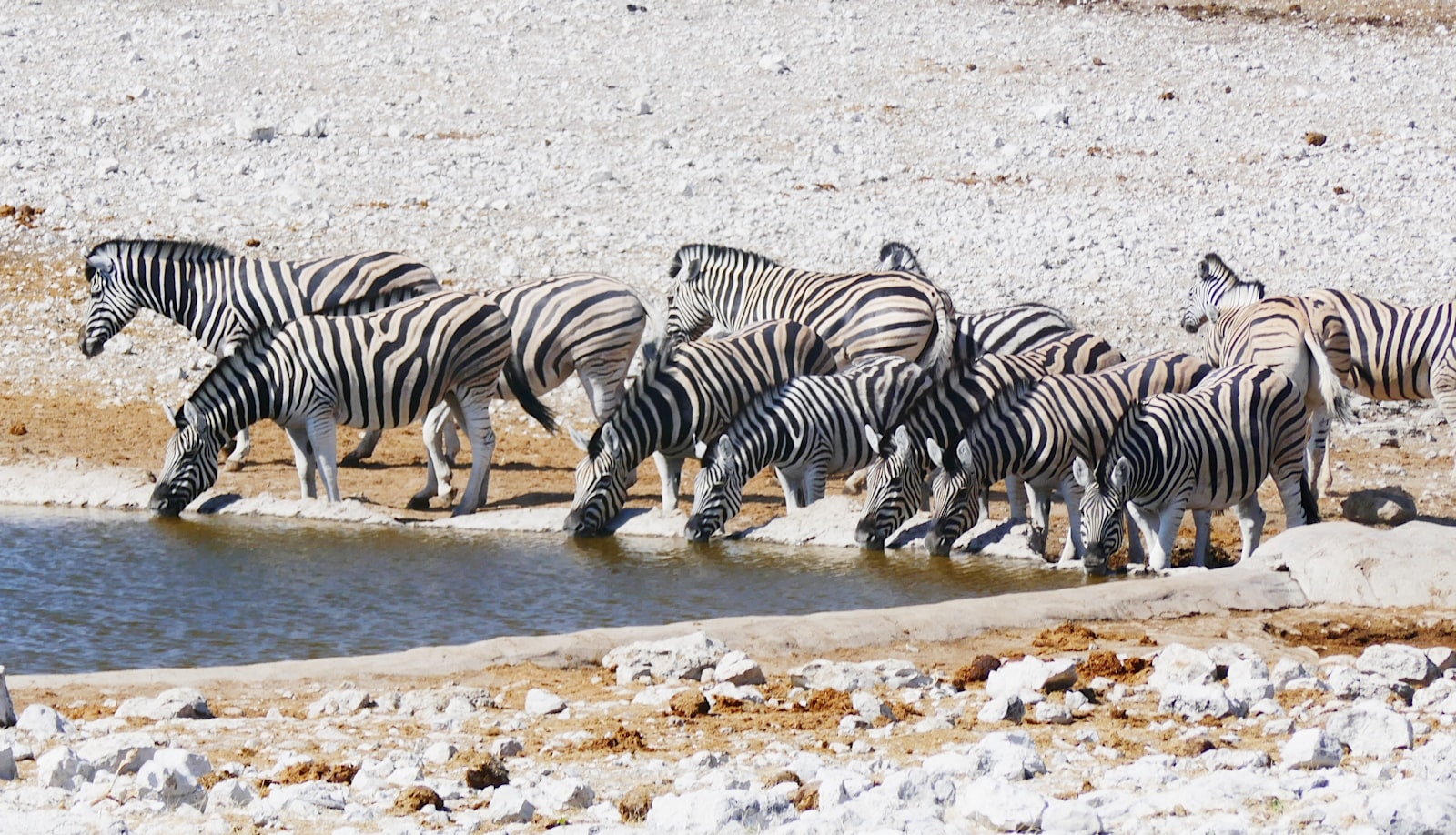
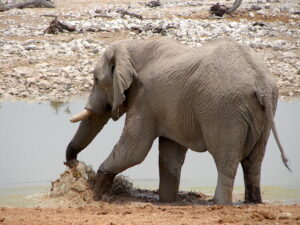
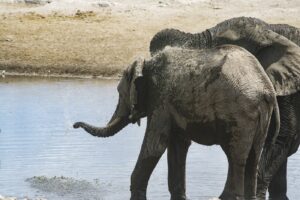
Elephant, zebra and various antelope species are generally the most consistent daytime waterhole visitors in the dry season, often arriving in loose succession throughout the day. Predators such as lion tend to appear more around dawn, dusk or after dark, making floodlit rest-camp waterholes particularly valuable for these sightings. Black rhino are more cautious and often favour quieter waterholes away from heavy vehicle traffic, frequently visiting in the very early morning or overnight.
Birdlife at Waterholes
Waterholes are also productive for birdwatching, particularly in the green season when migratory species pass through the wider region. Raptors are frequently seen near waterholes where they can take advantage of concentrated prey activity, and wading birds appear at pans holding standing water after rain.
Combining Rest Camps for a Waterhole Circuit
Staying at more than one rest camp across a multi-day visit allows access to a wider range of waterholes without excessive daily driving distances, since each camp area tends to have its own nearby cluster of productive sites. Planning two or three nights at each of two camps, moving in one direction across the park, is often more rewarding than attempting to cover the entire park from a single base.
Balancing Waterhole Waiting with Driving
A common tension for first-time visitors is the temptation to keep driving in search of something better, rather than settling in. A reasonable approach is to alternate: drive a loop between two or three chosen waterholes, but commit meaningful time at each rather than treating the drive itself as the primary activity.
Where to stay for the waterholes
Which waterholes you can reach at dawn and dusk depends entirely on which camp or gate road you book. These three sit at very different points on the price range, and the live map covers the whole park.
Places to stay near Etosha
Etosha Trading Post Campsite
Etosha Trading Post Campsite sits on the southern approach to Etosha, within convenient reach of the Andersson…
Price Guide: N$585
View Property DetailsEagle Tented Lodge
Eagle Tented Lodge sits west of the main southern approach to Etosha, on rocky ground with dolomite outcrops that…
Price Guide: N$8,800
View Property DetailsOngava Lodge
Ongava Lodge sits on the private Ongava reserve on Etosha’s southern boundary, immediately outside the…
Price Guide: N$26,000
View Property Details

Check live availabilityBrowse all Etosha accommodation
Tours and activities in Etosha
Etosha Full-Day Game Drive Safari
Spend a full day inside Etosha National Park on this guided 4x4 Etosha game drive with a local guide.
View Tour DetailsEtosha Wildlife Safari with Local Guides
Search for the big four with local guides on this private Etosha wildlife safari.
View Tour Details3-Day Etosha Budget Camping Safari from Swakopmund
This 3-day Etosha camping safari travels from Swakopmund to Etosha National Park for game viewing, with two nights…
View Tour Details

See all Etosha tours and activities
Some booking links are affiliate links. We may earn a commission at no extra cost to you. See our affiliate disclosure.
Common Waterhole-Planning Mistakes
- Moving on too quickly after only a few minutes of apparent inactivity
- Trying to visit too many waterholes in one day instead of committing time to fewer locations
- Arriving at midday in the green season and expecting dry-season-level concentration
- Making excessive noise or leaving the vehicle where prohibited
- Ignoring rest-camp floodlit waterholes in favour of driving further afield in the evening
Frequently Asked Questions
Which Etosha waterholes are best?
This varies by season and recent conditions; ask current camp staff for the latest activity rather than relying on a fixed list, since conditions change through the year.
How long should I wait at a waterhole?
At least 30 to 60 minutes is a reasonable starting point; many rewarding sightings happen after initial quiet periods that feel uneventful.
Are night waterhole viewings safe and worthwhile?
Floodlit rest-camp waterholes are designed for safe evening viewing from within camp boundaries and can be highly productive, particularly for nocturnal species.
Last reviewed: July 2026.
Related Guides
Etosha National Park Guide
Full destination guide covering gates, accommodation and access.
Best Time to Visit Namibia
Plan your visit around peak dry-season waterhole activity.

Sossusvlei vs Deadvlei
Another landscape and wildlife-viewing guide worth pairing with Etosha.
Continue Planning Your Trip
See the full Etosha National Park destination guide for gates, accommodation and access, or explore our best time to visit Namibia guide to plan your visit around peak waterhole activity.
Etosha National Park Best Time to Visit