

Omaruru
A quiet arts and mission town on the Omaruru River, overlooked by the granite domes of the Erongo Mountains.
Omaruru is a small, leafy town on the Omaruru River in the Erongo Region, overlooked by the granite domes of the Erongo Mountains to the south. Founded around a nineteenth-century Rhenish mission station, it has grown into a quiet arts and farming centre known for its galleries, historic buildings and easy access to some of central Namibia’s most striking granite scenery.
Photo: Bernd Dittrich / Unsplash.
Geographic setting
Omaruru lies in a broad valley along the usually dry Omaruru River, with the weathered granite bulk of the Erongo Mountains rising immediately to the south. This dramatic backdrop, one of Namibia’s most recognisable inselberg landscapes, shapes both the scenery around the town and the wildlife-rich conservancies that surround it.
Historical context
Omaruru grew up around a Rhenish mission station established in the 1870s, and the town later became a German colonial garrison, with a fort built in the 1890s that still stands today. Like Okahandja, the area was directly affected by the Herero-German war of 1904-1908, including a notable siege of the town, and this history remains part of Omaruru’s identity alongside its Herero and Damara communities.
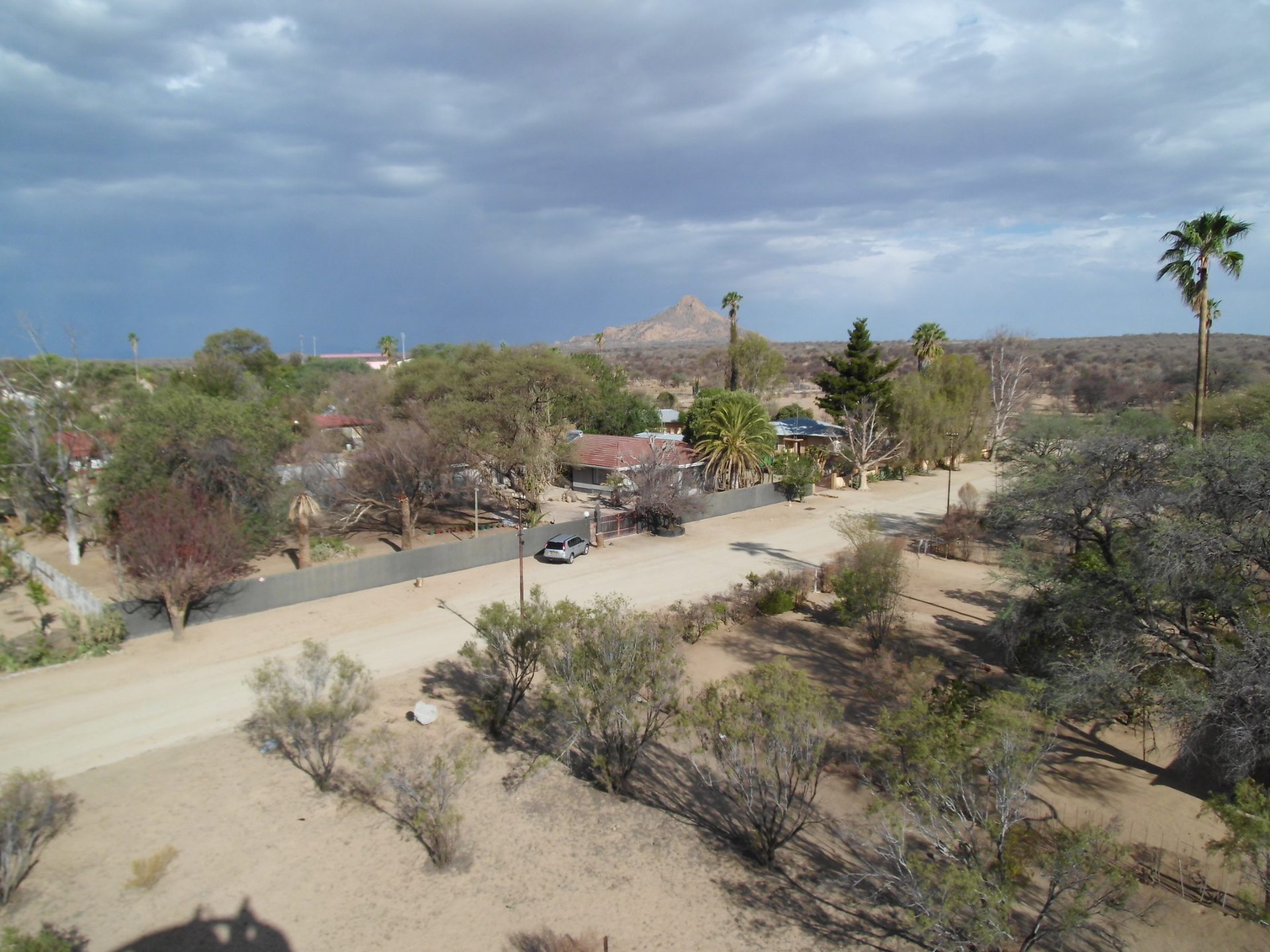
Present-day character
Today Omaruru has a reputation as a relaxed arts town, with a number of galleries and studios run by local and resident artists, alongside its ordinary role as a service centre for surrounding cattle and game farms. The old German fort, mission buildings and a handful of colonial-era structures give the compact town centre a distinct historical character.
Photo: Pemba.mpimaji, CC BY-SA 4.0, via Wikimedia Commons.
Why visit
Omaruru suits travellers who enjoy a slower pace: browsing galleries and craft studios, looking at colonial-era architecture, and using the town as a base for exploring the Erongo Mountains and nearby conservancies, which are known for rock art, rare desert-adapted wildlife and dramatic granite scenery.
Main sights and experiences
The town centre holds several historic buildings, including the old German fort (Ompundja Fort) and Rhenish mission church, alongside a cluster of art galleries and studios showcasing Namibian painters, sculptors and craftspeople. Outside town, the Erongo Mountains offer some of the country’s finest granite scenery, with numerous rock art sites, hiking possibilities and private nature reserves protecting black rhino, leopard and other wildlife.
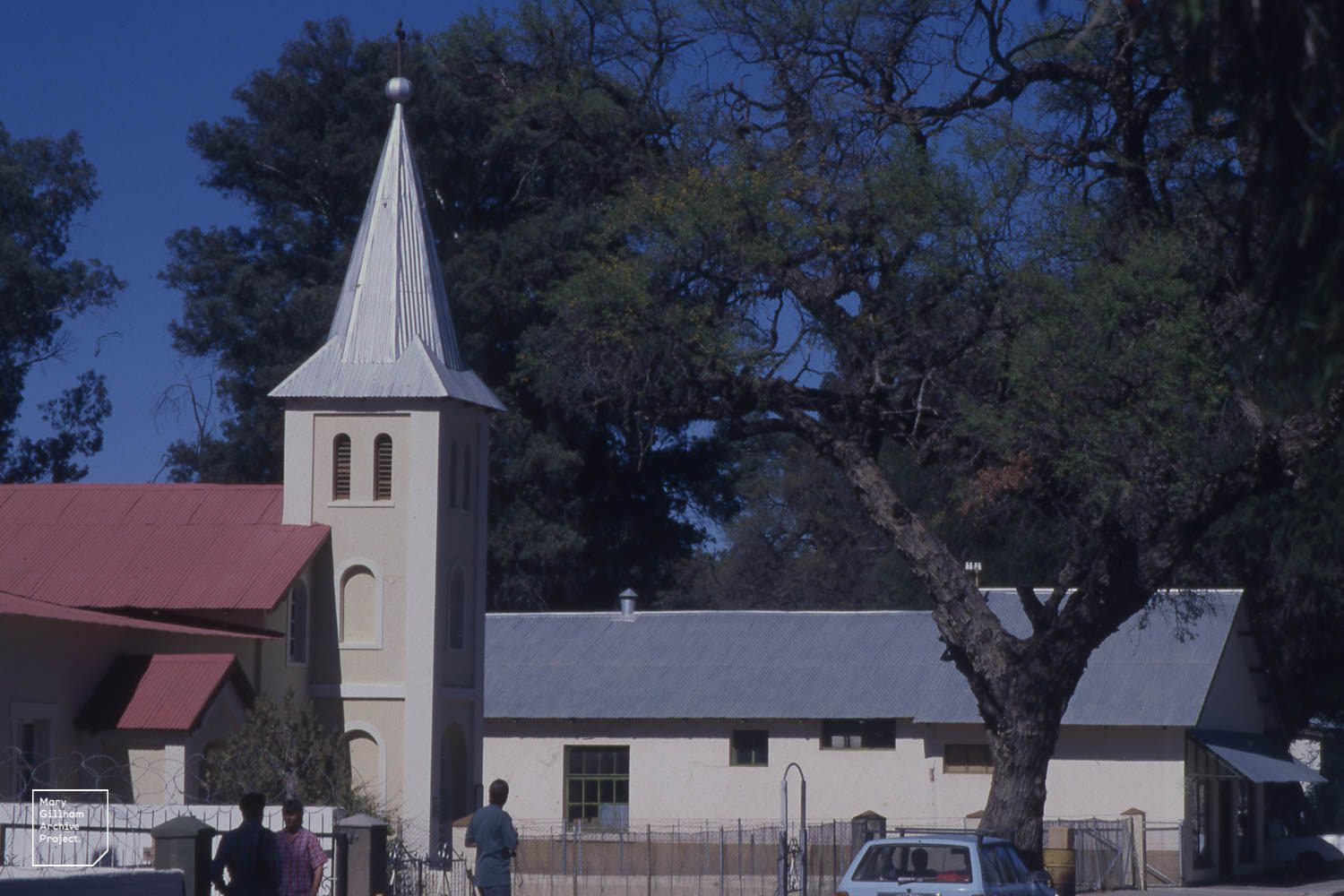
The town centre
Omaruru’s compact main street reflects its long history as a mission and garrison town, with several colonial-era buildings now sharing the street with galleries, shops and cafes.
Photo: Dr Mary Gillham Archive Project, CC BY 2.0, via Wikimedia Commons.
Cultural and heritage context
Omaruru’s mission and garrison history sits alongside long-standing Herero and Damara presence in the area, and the town’s colonial-era buildings should be understood within this fuller history rather than viewed only as architectural curiosities.
Accommodation context
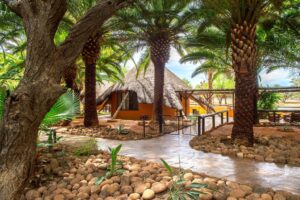
Omaruru has a small selection of guesthouses and hotels in town, plus guest farms and lodges in the surrounding Erongo countryside, some directly bordering private conservancies with their own wildlife and rock art. See our accommodation hub for accommodation across Namibia.
For places to stay in town and out in the Erongo foothills, see our Erongo Inland accommodation listings, which cover the Omaruru guesthouses, lodges and guest farms with indicative nightly rates.
Where to stay in Omaruru
Omaruru has an unusually good spread for a town its size, from riverbed campsites to guesthouses on the main street and game lodges a short drive out. These three span the range.
Places to stay near Omaruru
Ozohere Campsite
Serviced camping pitches at Uis below the Brandberg, the cheapest bookable overnight in the area.
Price Guide: N$661
View Property DetailsOmaruru Guesthouse
Central Omaruru guesthouse with air-conditioned twin rooms and breakfast included, walking distance from the…
Price Guide: N$1,137
View Property DetailsOmaruru Game Lodge
Established game lodge outside Omaruru with thatched bungalows on a half-board basis and resident plains game.
Price Guide: N$5,170
View Property Details
Check live availabilityBrowse all Omaruru accommodation
Some booking links are affiliate links. We may earn a commission at no extra cost to you. See our affiliate disclosure.
Food, shopping, fuel and supplies
The town has supermarkets, a bakery, banks with ATMs, a pharmacy and fuel stations, making it a convenient stop for travellers heading between Windhoek, the coast and Damaraland.
How to get there
Omaruru is reached via tarred roads from the B2 highway between Windhoek and Swakopmund, or via the C33 from Karibib and Otjiwarongo. Self-drive is the usual way to arrive, as with most inland Namibian towns.
Getting around
The compact town centre is easily walkable; a private vehicle, ideally with high clearance for some farm and conservancy roads, is needed to explore the Erongo Mountains and surrounding reserves.
Best time to visit
Omaruru can be visited year-round. The cooler, drier months from May to September are generally the most comfortable for hiking and exploring the Erongo Mountains.
Suggested length of stay
A half-day is enough to see the town centre and galleries, but an overnight stay at a nearby guest farm allows time to properly explore the Erongo Mountains.
Day trips and nearby attractions
Several private conservancies and guest farms in the Erongo Mountains offer guided walks to rock art sites and opportunities to see desert-adapted wildlife, including black rhino conservation areas. The routes towards Karibib, Usakos, Uis and the coast all pass through striking Erongo scenery.
Road and vehicle considerations
Roads to and through Omaruru itself are tarred or well-maintained gravel, suitable for a standard car; some farm and conservancy tracks in the Erongo Mountains require a higher-clearance vehicle.
Safety and practical considerations
Ordinary town precautions apply. When visiting private conservancies or rock art sites, always go with a knowledgeable guide, both for safety around wildlife and to visit heritage sites responsibly.
Responsible travel guidance
Support local galleries and studios directly, follow guide instructions around rock art sites without touching engravings or paintings, and respect any conservancy rules designed to protect rhino and other sensitive wildlife.
Related destinations
Okahandja. A historic Herero and Nama town to the east, on the B1.
Uis. A former mining town near the Brandberg, north-west of Omaruru.
Spitzkoppe. Dramatic granite peaks on the route between Omaruru and the coast.
Erongo Inland. The wider region Omaruru belongs to.
Frequently asked questions
Is Omaruru worth a detour from the B2?
Yes, particularly for travellers interested in art galleries, colonial-era history, or using it as a base for the Erongo Mountains.
Can I see rhino near Omaruru?
Some private conservancies and guest farms in the Erongo Mountains protect black rhino and offer guided tracking or viewing experiences.
Planning a stop in Omaruru?
See the wider Erongo Inland region, build a self-drive route through central Namibia, or check the practical planning guides before you go.
Erongo Inland hub Self-Drive Namibia guide Itineraries Travel PlanningLast reviewed: 27 July 2026.