
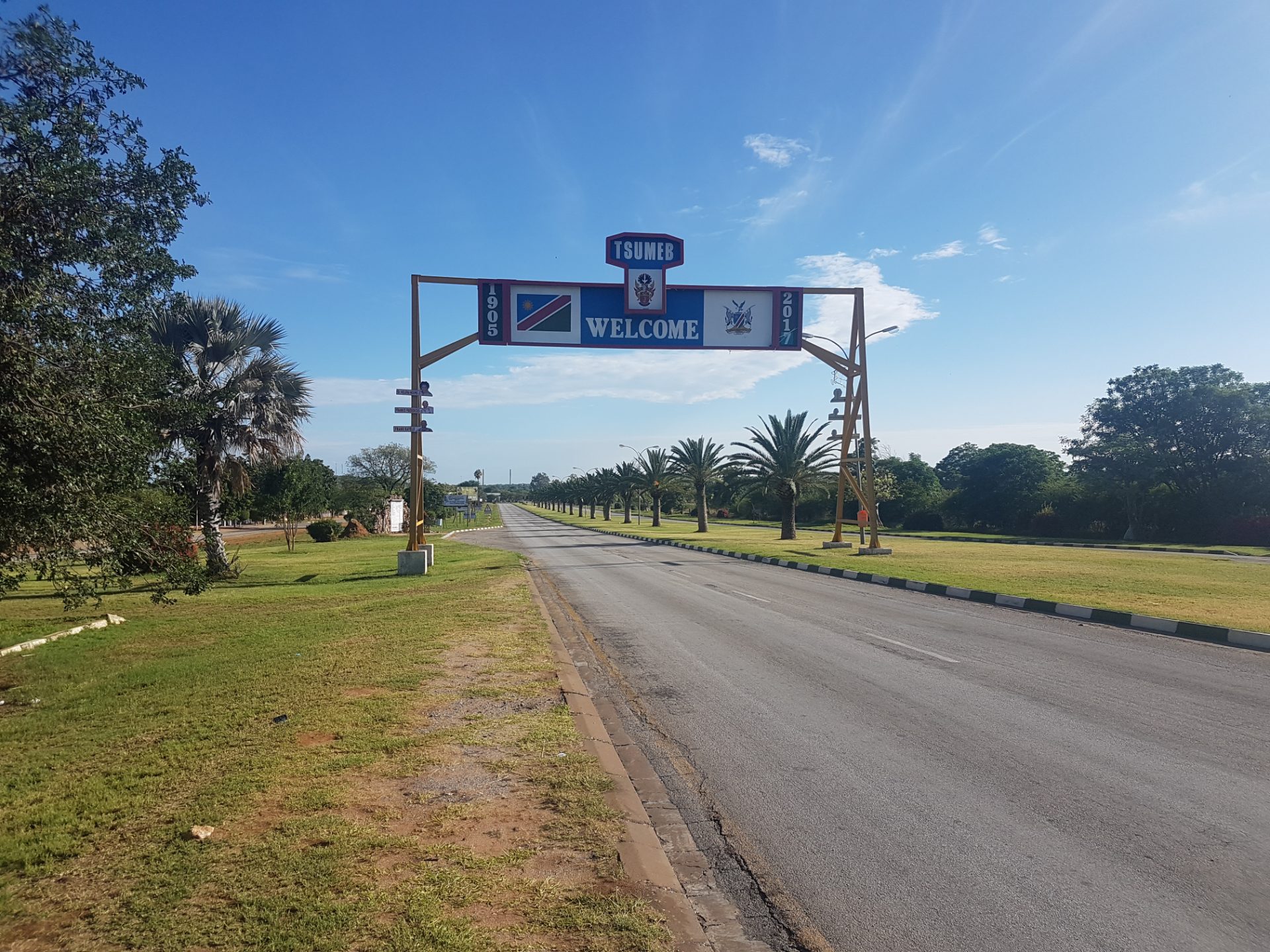
Tsumeb
A historic mining town in north-central Namibia, known for its mineral museum, Lake Otjikoto and easy reach of Etosha’s eastern gate.
Tsumeb is a former mining town in north-central Namibia, around 60 km north-east of Otavi and within easy reach of Etosha National Park’s eastern Von Lindequist Gate. Built on one of the most mineralogically diverse ore deposits ever discovered, it grew from a small colonial-era mining settlement into the main service town for the surrounding farming and conservation region, and remains a practical base for travellers exploring Etosha from the east.
Tsumeb at a glance
Geographic setting and history
Tsumeb sits on the edge of the Otavi Mountainland, a limestone and dolomite region known for its karst features, including sinkholes and underground water. This karst geology is also what created the exceptionally rich and varied ore body beneath the town, and nearby Lake Otjikoto, a collapsed sinkhole filled with water.
Surface copper deposits at Tsumeb were worked on a small scale by local communities long before colonial contact. Industrial mining began in the early twentieth century under German colonial administration, led by the Otavi Minen- und Eisenbahn-Gesellschaft (OMEG), which built a narrow-gauge railway from Tsumeb to the coast at Swakopmund specifically to move ore for export.
The Tsumeb orebody became renowned among geologists for its exceptional mineral diversity, eventually yielding several hundred distinct mineral species, some found here for the first time anywhere in the world. Mining continued under South African administration through most of the twentieth century, with copper, lead, zinc, silver and germanium all extracted at various times, before the original Tsumeb Mine closed in the 1990s. Smelting operations in the town have continued intermittently under different owners since.
Present-day character
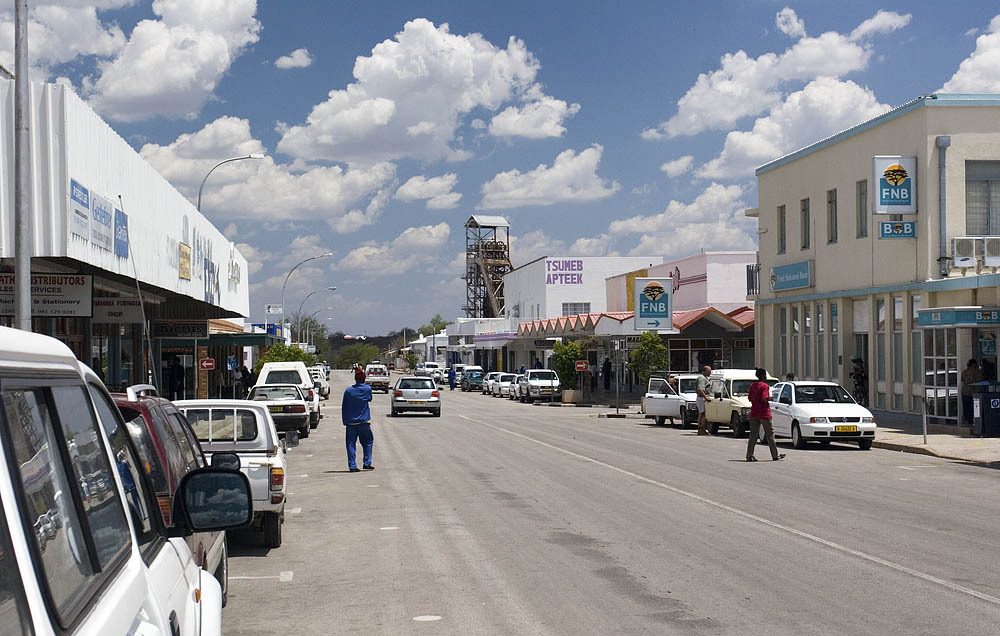
Tsumeb today functions as an administrative and commercial centre for the surrounding farming and conservation area, with a legacy of German colonial-era architecture in parts of the town centre. It is one of the more comfortable bases in the region, with a wider range of accommodation, shops and services than most towns of similar size in northern Namibia, making it worth more than a fuel stop for travellers with time to spare.
Main sights and experiences
The Tsumeb Museum, housed in a former German colonial school building, holds one of Namibia’s best mineral collections alongside exhibits on mining history, the Otavi railway and the town’s cultural past. Lake Otjikoto, around 20 km north-west of town, is a striking, near-circular sinkhole lake best known as the place where retreating German forces dumped weapons, vehicles and railway equipment in 1915 to prevent their capture during the First World War; some recovered items are displayed at the Tsumeb Museum and in South Africa.
Photo: Greg Willis, CC BY-SA 2.5, via Wikimedia Commons.
Cultural and heritage context
The Otavi Mountainland has a long history of small-scale indigenous copper working prior to industrial mining, and the Ovambo, Herero and other communities in the wider region have their own histories connected to labour migration to the mines. The Hoba meteorite, the largest known meteorite on Earth, lies around 20 km west of Grootfontein and can be combined with a Tsumeb stay as a half-day trip.
Where to stay in Tsumeb
Tsumeb is the usual overnight stop for travellers approaching Etosha from the east or heading on towards the Kavango. Rooms are mostly in town, with a couple of lodges just outside. These three span the range.
Places to stay near Tsumeb
Makalani Hotel
The Makalani is the second of Tsumeb’s two established town hotels, a short walk from the museum and the mining…
Price Guide: N$1,150
View Property DetailsOhange Namibia Lodge
Ohange lies east of Otavi on the road towards Tsumeb, on farmland in the Otavi Triangle. It is the kind of…
Price Guide: N$2,784
View Property DetailsGabus Safari Lodge
Gabus sits on the karst country outside Otavi, in the belt of dolomite hills that separates the central plateau…
Price Guide: N$5,280
View Property Details


Check live availabilityBrowse all Tsumeb accommodation
Some booking links are affiliate links. We may earn a commission at no extra cost to you. See our affiliate disclosure.
Road, safety and responsible travel notes
All main routes into and around Tsumeb are tarred and suitable for any vehicle; the short gravel access road to Lake Otjikoto is generally in reasonable condition but should be driven at a sensible speed. Lake Otjikoto’s steep-sided sinkhole walls mean visitors should stay on marked viewing areas. As with other historical and mining sites, removing rocks, minerals or artefacts is inappropriate and, in the case of protected heritage sites, may be unlawful.
Nearby destinations
Etosha and Central North. The wider region Tsumeb belongs to.
Etosha National Park. Reached via the eastern Von Lindequist Gate.
Outjo. Another Etosha gateway town, to the west.
Frequently asked questions
What is Tsumeb known for?
Tsumeb is known for its exceptionally diverse mineral deposit, its mining history, its mineral museum, and nearby Lake Otjikoto.
Is Tsumeb a good base for Etosha?
Yes; it is one of the more comfortable towns near Etosha’s eastern Von Lindequist Gate, with a wider choice of accommodation and services than most nearby towns. Browse lodges and guesthouses covering this side of the park in our Etosha accommodation guide.
What happened at Lake Otjikoto?
In 1915, retreating German colonial forces dumped weapons, vehicles and equipment into the lake during the First World War to prevent their capture; some items have since been recovered and are displayed locally.
Last reviewed: 27 July 2026.
Planning a stop in Tsumeb?
See the wider Etosha and Central North region, build a self-drive route towards Etosha, or check the practical planning guides before you go.
Etosha and Central North hub Self-Drive Namibia guide Itineraries Travel PlanningWhere to stay near Tsumeb: Tsumeb is a well-established base on the eastern side of Etosha National Park. Browse accommodation near Etosha for lodges and guesthouses convenient for this side of the park.
Further reading: if you are entering Etosha from the east, our Etosha waterholes guide covers the Namutoni-side waterholes and how to work them.