
Kalahari and Eastern Namibia
Red sand, cattle country and the quiet route towards Botswana
Destinations › Kalahari and Eastern Namibia
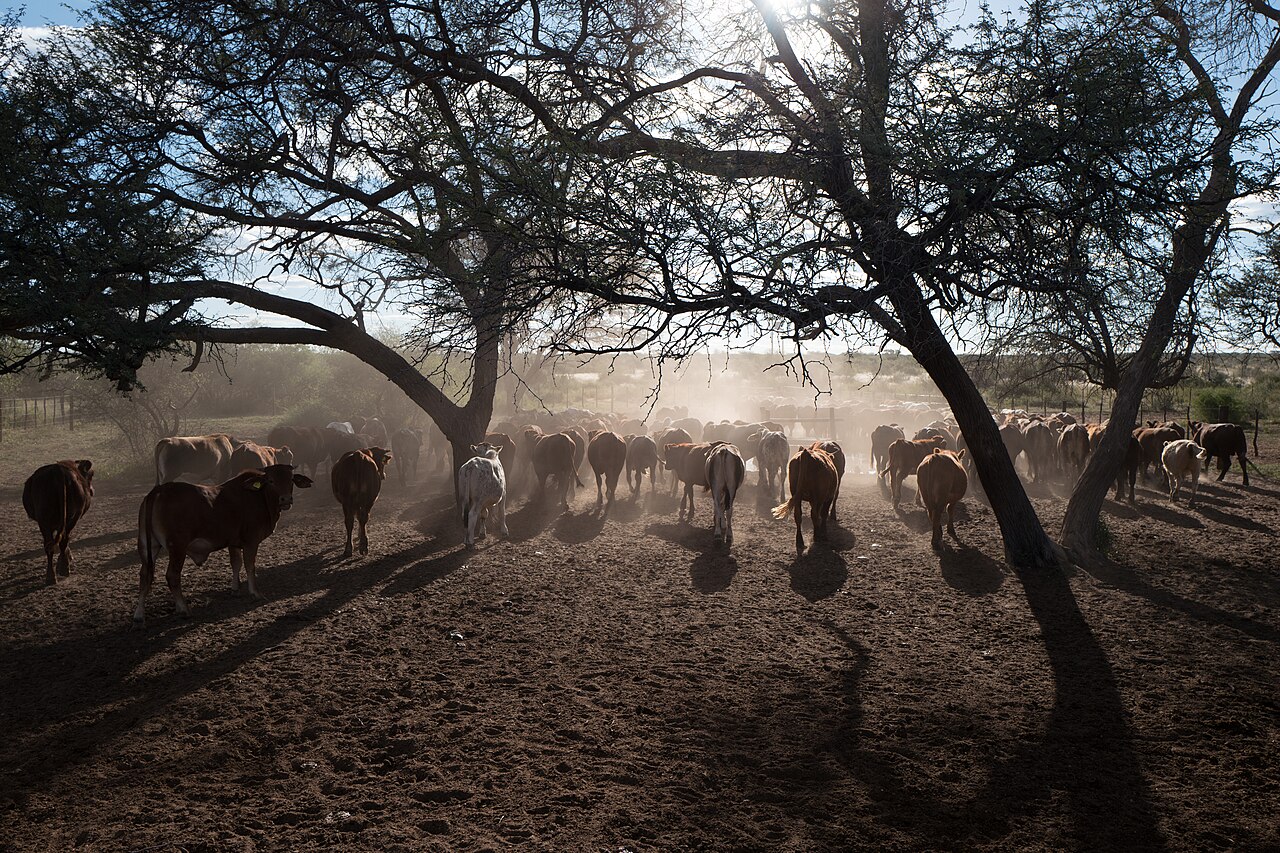
Kalahari and Eastern Namibia is a quiet, sparsely visited region of red vegetated dunes, camelthorn savanna and vast cattle and game farms stretching toward the Botswana border. It lacks a single headline attraction on the scale of Etosha or Sossusvlei, and most travellers pass through it only briefly, usually en route to or from Botswana via the Trans-Kalahari Highway. For those with time, it offers a genuinely different Kalahari landscape from its more famous counterparts in Botswana and South Africa, along with a handful of San cultural tourism experiences.
Kalahari and Eastern Namibia at a glance
- Region: eastern Namibia, along the Botswana border
- Main towns: Gobabis, Stampriet, Buitepos
- Known for: red Kalahari dunes and cattle country, San cultural heritage, the Trans-Kalahari Highway to Botswana
- Suits: travellers transiting to or from Botswana, or seeking a quiet, off-the-main-circuit Kalahari experience
- Tourist infrastructure: limited outside a small number of guest farms and lodges
Geographic setting
This region occupies Namibia’s eastern Omaheke region, part of the wider Kalahari basin that extends across Botswana and into South Africa. Unlike the bare dune sea of the Namib, the Kalahari here is a semi-arid savanna of vegetated red sand dunes, camelthorn trees and grassland, supporting extensive cattle and game farming.
Landscape and climate
The Kalahari’s fixed, vegetated dunes create a gently undulating red-sand landscape quite different from the shifting dunes of the Namib further west. Rainfall is somewhat higher than in the true desert regions, supporting the grasses that sustain the region’s cattle industry, and summers bring a real chance of good thunderstorms, while winters are dry with cold nights.
Historical context
The Omaheke region has long been home to San communities, including Ju|’hoansi groups, whose traditional hunter-gatherer life across the Kalahari was progressively disrupted by farm expansion and land enclosure through the twentieth century, a history that continues to shape land rights and livelihoods today. Gobabis developed from the late nineteenth century as a farming and trading centre serving the surrounding cattle ranches, a role it retains as the region’s largest town.
Cultural context
San communities in this wider region maintain distinct cultural traditions and knowledge, and a small number of community-based tourism initiatives, generally located further north around Tsumkwe in neighbouring Otjozondjupa, offer respectful, consent-based ways for visitors to learn about San culture and history directly from community members rather than through generic “Bushman” stereotyping, which visitors should be wary of in more commercialised settings.
Why visit
Most travellers see this region only in transit, driving the Trans-Kalahari Highway between Windhoek and Botswana via Buitepos. Those with a specific interest in Kalahari landscapes distinct from Sossusvlei’s dune sea, or in respectful San cultural tourism, may choose to spend a night or two at one of the region’s guest farms.
Main towns and settlements
Gobabis is the region’s main town, a farming and trading centre often described as the heart of Namibia’s cattle country. Stampriet, further south, is a small farming oasis built around artesian groundwater, supporting market gardens in an otherwise dry landscape. Buitepos, on the Botswana border, is the main crossing point on the Trans-Kalahari Highway. Gochas and Leonardville are small farming settlements with limited services, while Aminuis is a communal farming area with San and Herero residents.
Towns and places in this region
Distinct, individually photographed imagery is not yet available for every settlement in this region, so these are presented as text-led links through to each destination guide.
Gobabis. The region’s main town, known as cattle-farming country.
Explore »Stampriet. A small farming settlement in the southern Kalahari.
Explore »Buitepos. The border post on the route into Botswana.
Explore »Natural attractions
The region’s main appeal is its landscape itself: rolling, vegetated red Kalahari dunes and camelthorn savanna, best appreciated through a stay at one of the guest farms scattered across the area, several of which offer game drives and walks focused on Kalahari-adapted wildlife such as oryx, springbok and a range of raptors.
Suggested self-drive routes
Most itineraries treat this region as a transit corridor, driving the Trans-Kalahari Highway between Windhoek and Buitepos in a single day. Travellers with more time can detour via Stampriet or overnight at a Kalahari guest farm to break the journey and experience the landscape rather than simply passing through it.
Typical route connections
The B6 (Trans-Kalahari Highway) links Windhoek and Central Namibia directly to Gobabis and on to the Botswana border at Buitepos. Minor roads connect Gobabis south toward Stampriet and Southern Namibia, and south-west toward Windhoek via Dordabis.
Best time to visit
This region can be visited year-round; the dry winter months (May to September) offer easier travelling conditions, while summer (November to March) brings a chance of impressive thunderstorms over the open Kalahari landscape.
Suggested length of stay
Most travellers spend no more than a single overnight here, usually while transiting to or from Botswana. A stay of one to two nights at a Kalahari guest farm is a worthwhile addition for those with a specific interest in the landscape.
Accommodation context
Gobabis has a small number of guesthouses and hotels aimed mainly at farming visitors and travellers in transit. Several guest farms scattered across the wider region offer more tourism-oriented accommodation with game drives and Kalahari-focused activities.
Ready to compare places to stay? Browse our Kalahari and Eastern Namibia accommodation listings for guesthouses, lodges, guest farms and campsites across Gobabis, Mariental and Stampriet.
Where to stay in the Kalahari and eastern Namibia
This region’s accommodation is spread between Mariental, Gobabis and the red-dune Kalahari lodges off the B1. These three span a town guesthouse to a game ranch.
Places to stay near the Kalahari and eastern Namibia
Koha Guesthouse
Mariental guesthouse with double rooms at modest nightly rates, quoted room-only.
Price Guide: N$970
View Property DetailsWest Nest Lodge
Gobabis lodge with en-suite double and twin rooms plus chalets and camping, set on the western side of town.
Price Guide: N$1,490
View Property DetailsBagatelle Kalahari Game Ranch
Kalahari game ranch south-east of Mariental with dune and garden rooms on a half-board basis.
Price Guide: N$7,680
View Property Details


Check live availabilityBrowse all the Kalahari and eastern Namibia accommodation
Some booking links are affiliate links. We may earn a commission at no extra cost to you. See our affiliate disclosure.
Road and vehicle considerations and route-planning limitations
The B6 Trans-Kalahari Highway is fully tarred and suitable for any vehicle. Minor farm roads off the main highway are generally gravel or sand and can require higher clearance; services away from Gobabis and the main highway are limited, so fuel and supplies should be arranged in Windhoek or Gobabis before heading onto smaller roads.
Border considerations
Buitepos is a straightforward, well-used border crossing into Botswana on the Trans-Kalahari Highway, connecting onward to Gaborone. Standard vehicle and passport documentation applies; confirm current requirements before travelling.
Nearby regions
This region borders Windhoek and Central Namibia to the west, Southern Namibia to the south-west, and Waterberg and Otjozondjupa to the north.
Existing and future destination guides
No individual destination guides for towns in this region are published yet; this hub page currently provides the only available information on Gobabis, Stampriet and the surrounding area.
Frequently asked questions
Is the Kalahari and Eastern Namibia region worth a dedicated stop?
For most travellers it functions mainly as a transit route to or from Botswana. Those with a specific interest in Kalahari landscapes or a guest-farm stay may wish to allow an extra night.
How long does it take to drive from Windhoek to the Botswana border?
The drive from Windhoek to Buitepos on the tarred Trans-Kalahari Highway takes roughly three to three and a half hours in normal conditions.
Can I visit a San community in this region?
Some community-based cultural tourism exists in the wider region, mostly further north around Tsumkwe. Choose an initiative that is clearly community-led and consent-based rather than a generic staged performance.
Last reviewed: July 2026.
Continuing your Namibia route?
The Kalahari and Eastern Namibia region is often visited as a route corridor. See Destinations and Itineraries for how it fits into a wider trip.
Self-Drive Namibia guideHero image: existing Namibia Travel Guide media library (cattle farm near Gobabis, Kalahari and Eastern Namibia). Last reviewed: 27 July 2026.