
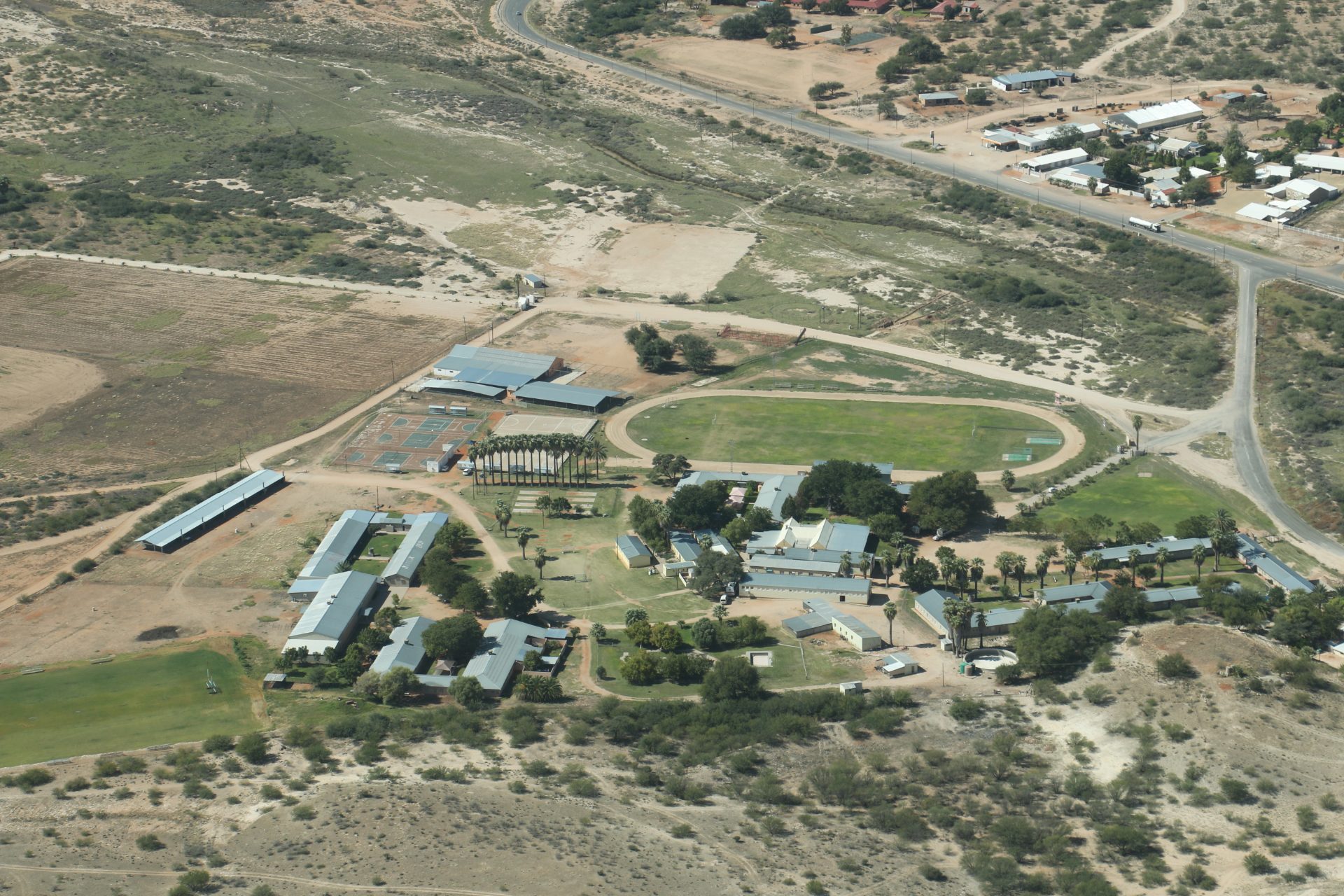
Stampriet
A small Kalahari farming village sustained by artesian springs, and a quiet waypoint on the route east from Mariental.
Stampriet is a small farming village on the edge of the Kalahari, notable chiefly for the artesian water that has sustained agriculture in this otherwise dry region since the early twentieth century. It is a modest, practical stop rather than a tourist destination in its own right, useful mainly as a waypoint for travellers exploring the wider Kalahari.
Photo: Hp.Baumeler, CC BY-SA 4.0, via Wikimedia Commons.
Geographic setting
Stampriet sits at the edge of the Kalahari sandveld, an area of red sand and scattered camelthorn trees that extends east towards Botswana. Unusually for this dry region, the area benefits from artesian groundwater that rises naturally to the surface, supporting irrigated farming in an otherwise arid landscape.
Historical context
Stampriet developed in the early twentieth century around its artesian springs, which allowed settler farmers to establish irrigated agriculture, including lucerne and other fodder crops, in a landscape that would otherwise support only extensive livestock farming. This agricultural development, as elsewhere in Namibia, took place on land within the traditional territory of San and other local communities.
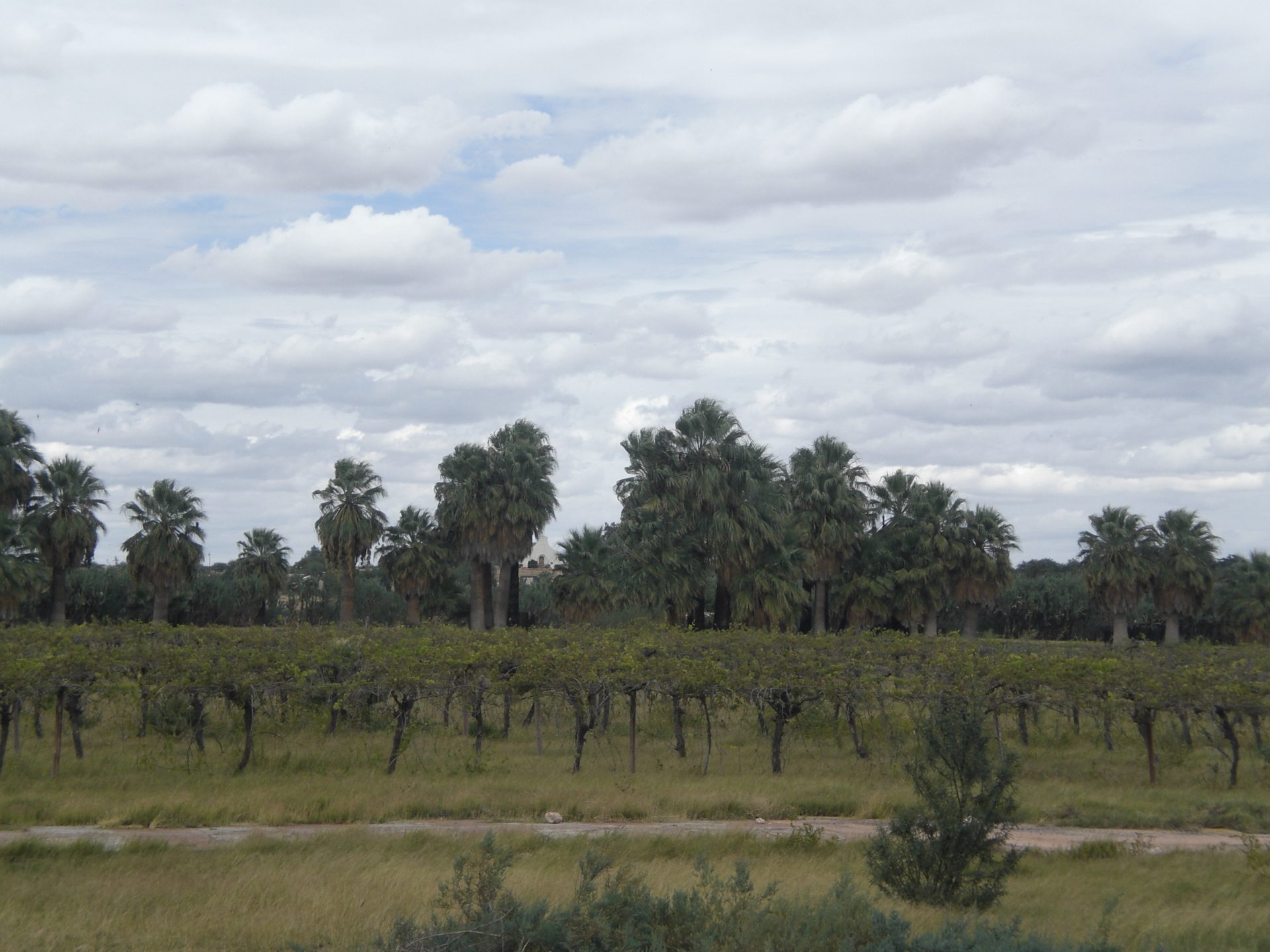
Artesian-fed farming
Naturally rising artesian groundwater supports irrigated fields around Stampriet, a striking contrast to the surrounding dry Kalahari sandveld.
Photo: Chtrede, CC BY-SA 3.0, via Wikimedia Commons.
Present-day character
Today Stampriet remains a small, quiet farming village, with the surrounding artesian-fed farms continuing to produce fodder and livestock for the wider region. It has a very limited range of services and no significant tourist infrastructure of its own.
Why visit
Few travellers visit Stampriet as a destination in itself; it is more commonly passed through en route between Mariental and the Kalahari conservancies and lodges further east towards Gochas and the Botswana border.
Accommodation context
Accommodation in Stampriet itself is very limited; most visitors to the wider area stay at guest farms and lodges scattered across the surrounding Kalahari farmland. See our accommodation hub for accommodation across Namibia.
For places to stay in the valley, see our Kalahari and Eastern Namibia accommodation listings, which cover the Stampriet farm accommodation, chalets and campsites.
Where to stay at Stampriet
Stampriet is a small irrigation village on the Auob, and it has more to stay in than its size suggests — the artesian water supports guest farms and Kalahari lodges within a short drive. These three span the range.
Places to stay near Stampriet
Kalahari Farmhouse Campsite
Serviced camping pitches at the Kalahari Farmhouse in Stampriet, with farm facilities alongside.
Price Guide: N$682
View Property DetailsStampriet Historical Guesthouse
Guesthouse in a historic Stampriet building with twin rooms and breakfast included, in the Auob valley.
Price Guide: N$2,530
View Property DetailsGondwana Kalahari Farmhouse
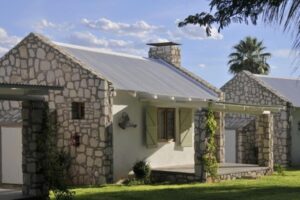
Restored farmhouse accommodation at Stampriet with twin rooms, gardens and breakfast included.
Price Guide: N$3,825
View Property Details


Check live availabilityBrowse all Stampriet accommodation
Some booking links are affiliate links. We may earn a commission at no extra cost to you. See our affiliate disclosure.
Food, fuel and supplies
Stampriet has only basic facilities; travellers should not rely on finding fuel or extensive supplies here and are better served stocking up in Mariental beforehand.
How to get there
Stampriet is reached via gravel roads from Mariental, with further routes continuing east towards Gochas and the Kalahari conservancies near the Botswana border.
Getting around
A private vehicle is necessary; there is little to explore within the village itself, and the surrounding farms and conservancies require their own transport.
Best time to visit
Stampriet and the surrounding Kalahari can be visited year-round; the cooler months from May to September are generally more comfortable for travel in this exposed, hot landscape.
Road and vehicle considerations
Roads around Stampriet are gravel and sandy in places; a standard car can usually manage them with care, though conditions can be soft after rain.
Safety and practical considerations
Distances between fuel and supply points are significant in this area; carry sufficient fuel, water and supplies, and do not assume services will be available in Stampriet itself.
Responsible travel guidance
Respect private farmland boundaries in this agricultural area, and support local farm shops or guest farms directly where you do stop.
Related destinations
Mariental. The nearest larger town, west of Stampriet.
Kalahari and Eastern Namibia. The wider region Stampriet belongs to.
Frequently asked questions
Is Stampriet worth visiting for its own sake?
It is a minor stop rather than a destination in itself, most useful as a waypoint on a wider Kalahari route.
What is Stampriet known for?
Stampriet is known for its artesian springs, which support irrigated farming in an otherwise dry Kalahari landscape.
Planning a stop in Stampriet?
See the wider Kalahari and Eastern Namibia region, build a self-drive route through the east, or check the practical planning guides before you go.
Kalahari and Eastern Namibia hub Self-Drive Namibia guide Itineraries Travel PlanningLast reviewed: 27 July 2026.